Home

A review of Tamboti Tented Camp, Kruger National Park, South Africa

Eye to eye with a wild elephant

Tamboti tented camp is one of my most favourite places to stay in Kruger National Park, South Africa. It’s a satellite camp of Orpen and houses about 40 tents, around ten of which are luxury tents. After an opportunistic last minute upgrade we managed to secure a luxury tent and I was so impressed with the standard of accommodation offered, it’s on par with luxury tented accommodation in Kenya and beyond and I LOVED it!

The main tent had a door (yes, a door), which had a separate insect screen and stable doors, allowing you to view game from your bed 🙂 A separate tented corridor (yes, you read that right, a corridor) housed an electronic safe, a wardrobe and several shelves with dedicated lighting.  This led to a bathroom where there was a very roomy wooden panelled bathroom with separate toilet and a lovely warm, pressurised shower. The entire tent was light by subtle electric lights in the style of old gas lanterns, which was very tasteful and incredibly romantic.

We had an incredibly comfortable bed and, whilst I was worried about the absence of A/C it was really not an issue. A powerful ceiling fan provided adequate relief from the heat in the hottest season of the year (38 degrees by day) and we found ourselves snuggling under additional blankets come nightfall. The tent also housed a full size fridge freezer, away from the prying wildlife, and a sofa.

Outside there was a balcony (the tent is raised on a wooden platform) which had a stunning view over the dried river bed. This balcony housed a table, three chairs and a  fully equipped kitchenette i.e. toaster, kettle, hotplate, sink, lockable cupboards, plates, glasses, sherry glasses (!), cutlery (inc braai tongs etc), bowls etc  Just remember to bring a tin opener!

Each tent is perfectly positioned from the other to allow privacy and silence. It’s enchanting and bewitching. We sat night upon night gazing at the view, watching porcupines run across the river bed, and getting spooked by the sounds of elephants trumpeting nearby.

The tent’s veranda was the perfect location for sundowners and nocturnal wildlife spotting. We were in tent 39 which, we believe, had a honey badger set underneath. Each night we were privileged to be visited by these elusive but dangerous creatures. They’d pop their heads above the top step as we’d be enjoying a late night Amarula and, upon being spotted by our torchlight, they would scutter off as soon as they realised we were present. They’d then  revisit us (and awaken us) around 4am to raid our bins – but we’d be wise to them and would be awaiting behind our protective stable door with cameras ready to catch them in action. It  is an amazing chance to encounter such an incredibly powerful and nocturnal creature of the bush. That’s why I love Tamboti so much.

What’s more, guests are allowed to use the pristine swimming pool at Orpen which, believe me, is much needed after a dusty, hot 10 hours on safari!

It’s worth highlighting there are no shops at Tamboti, but Orpen has a well stocked shop 3k away which is staffed by the friendliest and happiest people we saw.

For further information on Tamboti tented camp, please visits the SAN Parks website at http://www.sanparks.org/parks/kruger/camps/tamboti/default.php

Photos from our South African Safari are available in our Taraji Blue online South African photo gallery.

A review of Bateleur Bush Camp, Kruger National Park

A hornbill has lunch

In January 2012 we were fortunate to ‘bag’ ourselves two nights at one of 7 bungalows in the Bateleur Bushveld Camp in Kruger National park, South Africa. It’s a very popular camp and accommodation is limited, so early booking is definitely advisable.

At first glance it might seem expensive compared to other SANParks accommodation, but each unit take 4 people in two rooms, each with their own bathroom. There is a lovely covered outdoor kitchen featuring a dining table for 4, fridge and fully equipped kitchen, including microwave, hotplate, cutlery etc They don’t seem to have the primate problems of other camps, so the kitchen isn’t as ‘locked down’ as much as elsewhere.

There is a real sense of peace and quiet in camp, mainly due to the fact that you are in the middle of no-where. The description of ‘bush camp’ is perfectly descriptive…you are in the middle of the bush and boy do you notice the difference. Bird and bug life is prolific. Huge bugs, some bigger than hummingbirds, buzz around. Birds wander freely up to your kitchen. Frogs hide  behind your fridge and bats roost in the kitchen ceiling. I don’t in any way want to put you off – I see all these as positives and the absolute reason why you should stay here. It’s the perfect mixture of luxury and bush. But if you are the kind of person who likes their holiday bug free then this (and safaris) are not for you.

The reason there are so many bugs and birds is because the land around the bungalows has not been cleared like in most other camps, so you are surrounded by trees, bushes and grasses which are home to many a wonderful creature.

Your braai is situated by your kitchen in the shade of huge trees and it’s a lovely way to spend an evening.

There is a hide by bungalow 1, which guests are free to use. It provides guides to the birdlife and has a light to illuminate the waterhole in the evening. Lions are known to attend the waterhole, though we did not see any during our stay.

The camp is protected by a fence, the perimeter of which you can walk around. There are benches and picnic tables at regular intervals for you to stop, relax and appreciate the surrounding views.

The staff are very friendly and welcoming. They are unobtrusive and pretty much leave you be – but they are always there should you need them.

There is no shop on site. The nearest is Shingwedzi, so make sure you arrive with all the provisions you need. The reception sells ice and firewood only.

The camp is set within exclusive grounds. The roads leading to the camp are exclusive to guests only, meaning that you’ll have the area pretty much to yourself on game drives.  Within this exclusive zone there are two beautiful  dams which elephants, eland, hippos and birds frequent.

In addition to our own self drive safaris, we took a night drive and game walk with the camp ranger and headed out towards RedRocks. The night drive was the most fruitful we have ever been on. We saw our first honeybadger, civit, bushbaby, small spotted genet and lots of nocturnal deer. Chameleons rested in trees, snakes slid through branches and Night Jars bounced around our jeep. Owls perched on top of leafless trees and hunted by the roadside. It was one of the best 4 hours we’d ever spent in the bush.

It’s a truly beautiful place to stay. For more information, visit the SANParks website.

Photos from our South African safari are available in our Taraji Blue South African photo gallery.

Africa’s visual impact

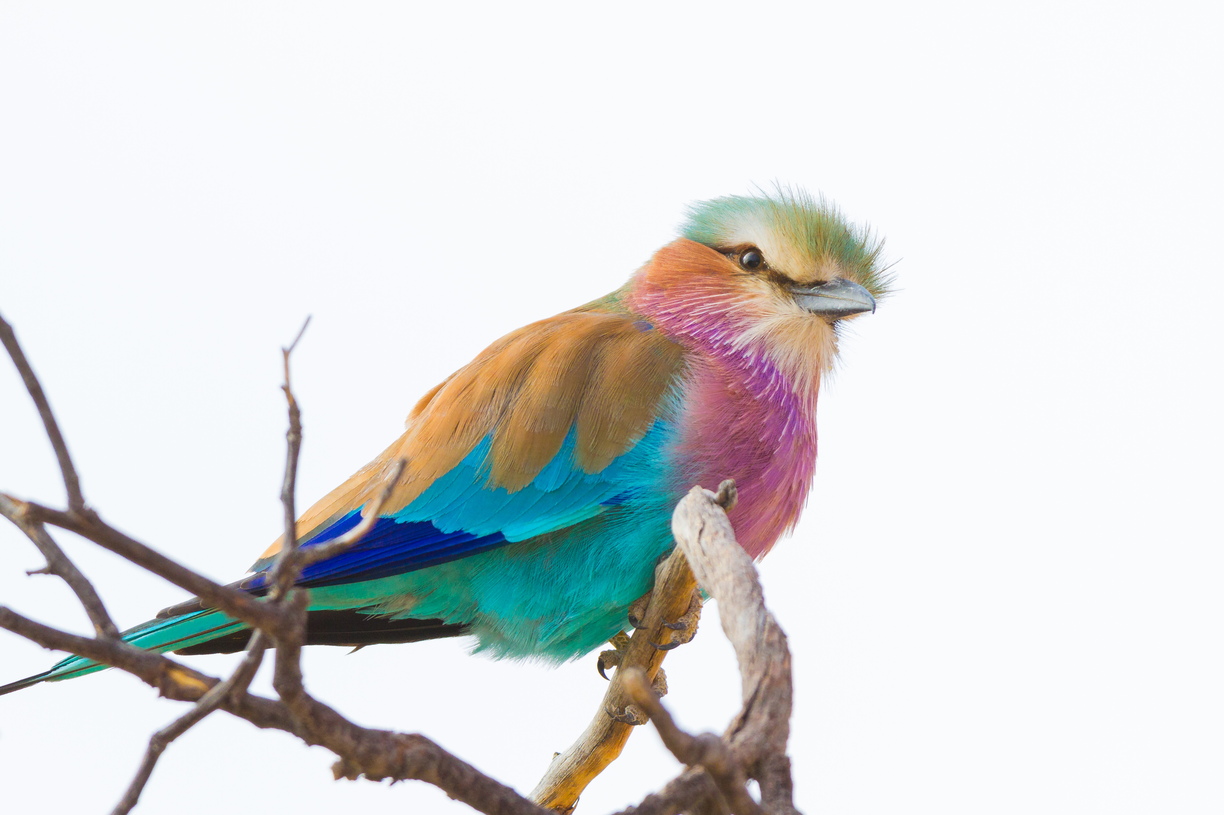
Roadside Rainbow

Never underestimate the beauty of African bird life. We were astonished by it in South Africa. There is an immense variety of colourful and exotic birds, with unusual calls and strange plumage. They are quite fearless and you can get unusually close to them.

  • What surprised me was the incredible amount of birds of prey. Eagles, vultures and Bateleurs are relatively plentiful and stunningly beautiful. To see them swoop to the ground to hunt is amazing – it’s over in a flash. They also spend a lot of time gliding the thermals, which provides great opportunities for you to view their stunning plumage with binoculars and zoom cameras.
  • The lilac breasted roller (above) is an incredibly beautiful bird and seems to adorn every other tree and I never tire of its colourful presence.

Overall, what stood out for me is the texture of the animals skin. Being so close to an elephant that you can study the wrinkles on his skin, or being so close to a leopard that you can study her fur coat is an honour, and it provides a level of detail that you’d never see in a zoo or on TV.

Also, the sheer number of animals in a pack / herd is incredible and visually overwhelming. We have seen a herd of 17 elephants, a pack of at least 20 wild dogs, a herd of hundreds of buffalo, thousands of wildebeest in the Great Migration, Ostrich parents with 11 (!) chicks and a pride of lions with 6 or so cubs.

You never know what visual delights Africa will throw at you next…that’s why we’re addicted to it!

SAN Parks accommodation in Kruger National Park, South Africa

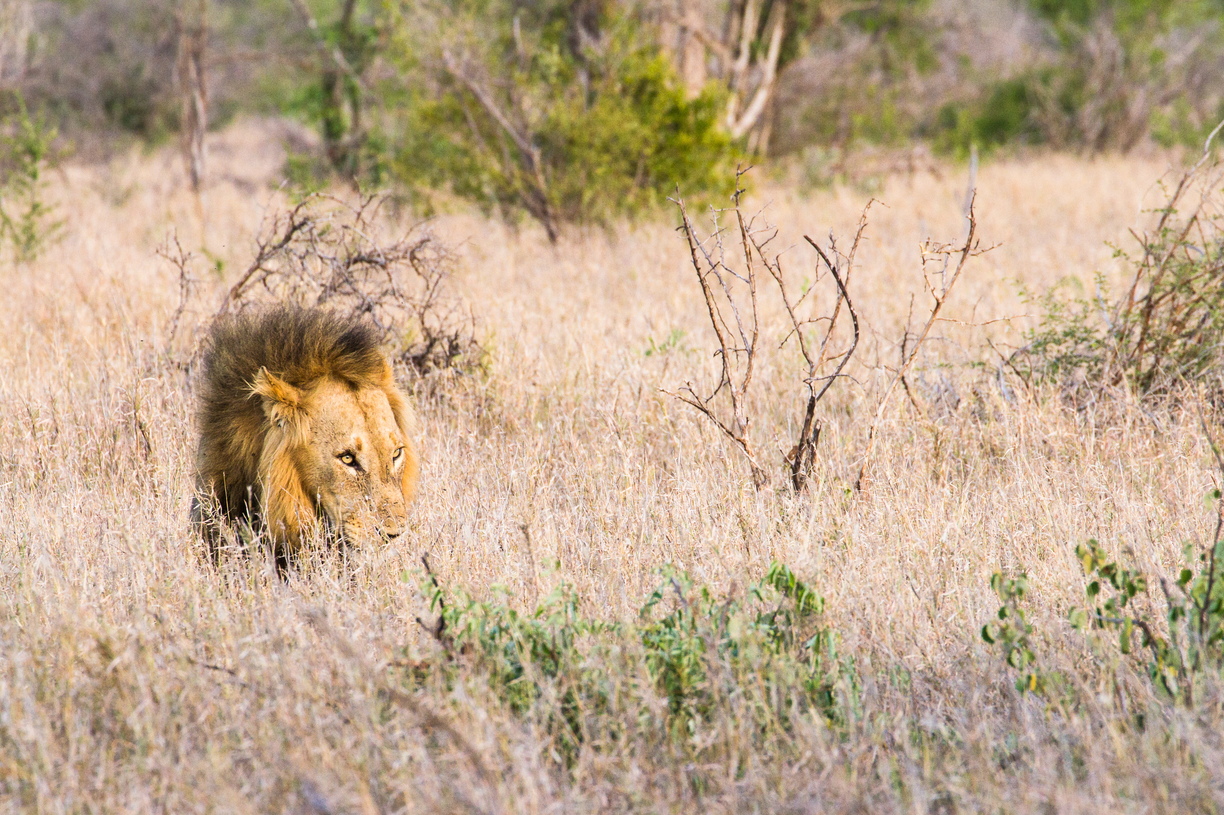
A lion stalks beneath the brush in Kruger National Park.

As part of my Kruger National Park blog series I wanted to offer some insight into the SAN Parks accommodation in Kruger National Park. I hope this will be of use to anyone planning a trip to Kruger.

First things first, the SAN Parks (South African National Parks) website is fantastic! When looking to book accommodation for our adventure I trawled a lot of the forums across the internet and found very little reference to this website or the capability of it. In fact, I was labouring under the misapprehension that you had to call and email to book any SAN Parks accommodation, which would be a slow and cumbersome process. This is not the case. The website http://sanparks.org.za/ is fantastically efficient. Once you have registered you can book all your accommodation online, stating your preferences for accommodation types, check pricing and review up to date availability and make live bookings. One thing to be aware of, the booking engine of the website closes for a couple of hours maximum per day (circa 11pm GMT) to allow updates to occur, though in reality we found that it was back online after half an hour… it’s not a big issue at all, just ensure you don’t try and book a holiday at midnight like we did!

What’s more – if you want to change your accommodation mid holiday, the receptionists at the rest camps are very accommodating. For example, after heeding the words of wisdom from a local Kruger expert, we decided to trade our Mopani accommodation for Satara, to enable us to spend more time in the game rich central area of Kruger National Park. Availability permitting, this was actioned in the drop of a hat by our receptionist at Shingwedzi and no fee was levied – despite the change being requested barely 24 hours in advance. Great service!

I honestly had no idea what to expect of the SAN Parks accommodation. When we’ve safari’d in Kenya and South Africa before we’ve been in lodges and camps where we are cocooned safely in a lush and extremely comfortable environment where everything is done for you…All you need to do is get out of bed in the morning and everything from then on is handed to you. We knew Kruger National Park would be different -that’s why we wanted to try it. Knowing this, and after reviewing the images on the SAN Parks website and visiting trip advisor, I had set my expectations at a hostel (very basic) standard of accommodation and expected little more – boy, was I in for a surprise! The accommodation is fantastic!

We stayed at the following 5 camps, for two nights each…

Punda Maria, see http://www.krugerpark.co.za/Kruger_National_Park_Lodging_&_Camping_Guide-travel/punda-maria-camp.html  I have written a specific review about Punda Maria for anyone interested in staying there.

Shingwedzi, see http://www.sanparks.org/parks/kruger/camps/shingwedzi/default.php I have written a specific review about Shingwedzi  for anyone interested in staying there.

Bateleur Bush Camp, see http://www.sanparks.org/parks/kruger/camps/bateleur/default.php I have written a specific review about Bateleur for anyone interested in staying there.

Satara, see  http://www.sanparks.org/parks/kruger/camps/satara/ I have written a specific review about Satara for anyone interested in staying there.

Tamboti Tented camp, see http://www.krugerpark.co.za/Kruger_National_Park_Satellite_Camps-travel/tamboti-tent-camp.html I have written a specific review about Tamboti for anyone interested in staying there.

In summary, on a self drive in Kruger, for as little as £50 a night you can have access to a fantastically equipped hut with a kitchen, A/C, an amazingly comfy bed, very friendly neighbours, a fantastic warm shower and Big 5 game on your doorstep. To put this into perspective, the price difference between high end Kenya lodge accommodation and SAN Parks rest camps can be as much as $930 a night per couple! The entire holiday to Kruger for us both this year (flights, accommodation, car hire, food, petrol) cost less than our 3 nights in a high end Kenyan lodge in 2010. Would I trade either experience? No way! But after investing in quality guides in our safaris previously we are delighted that we have found a cost effective way to curb our safari obsession. The question is….how soon can we go back and stay in these places again?

Photos taken during our South African safari are available in our Taraji Blue online photo gallery.

Driving from Jo’berg to Kruger National Park

Sunrise in South Africa

It is fair to say that we were both reticent about a self drive in South Africa. Whilst we have done self driving holidays in the US, Jordan and Costa Rica before, the thought of navigating Jo’Berg filled me with dread.

We needn’t have worried. It was a pleasure driving in South Africa. Once you are on the main routes and highways you could be driving in any country. The speed limits are sensible, everything is well signposted and in English, and the traffic signals are nothing out of the ordinary. Sure, it got busy in the few towns we passed en-route from Jo’berg to Punda Maria (Northern Kruger), but nothing that business and usual city driving doesn’t prepare you for.

The rest stops and petrol stations are plentiful and well equipped on the main highways and reminded me a lot of the ones in France. I would recommend stopping at these opposed to ones in towns and side roads, as they can be cleaner if you need to use the facilities / they have rest facilities. We failed to do this, and after leaving the highways it was 3-4 hours before we found a place with a (male) toilet that the petrol stations owners would even recommend we use!

The roads are not overwhelming busy, but there are lots of police, especially around toll gates, so watch your speed and drive carefully. There are a lot of toll gates, so ensure you have lots of change with you before you set off.

It took us about 7 hours to travel from Jo’berg airport to Kruger’s Punda Maria gate. In hindsight we left way too late and cut it very fine for gaining entrance to Kruger before the gates shut for the day. This aside, the most complicated part of the journey was navigating the many flyovers and exits from the airport. Just ensure you know which road you need to take / have a sat nav before you leave the airport and you’ll be fine.

Tambo airport is not located near Jo’berg city, and the route we took from the airport did not take us anywhere near the city…it was plain sailing. The return journey took us into the city outskirts past malls and housing estates, where roadworks caused some congestion, but nothing out of the ordinary. Just ensure you leave plenty extra time to get to your destination in case of roadworks or traffic.

If you want to stock up on provisions before reaching Kruger, I would advise you do so in the towns and cities en-route as there is very little outside the park gates.

For our return journey to Jo’berg we exited Kruger at Orpen gate and were treated to the most beautiful drive through the Mpumalanga valley and mountains past God’s Window and the most incredible scenery. It was a fitting end to an incredible holiday.
Photos from our South African safari are available in our Taraji Blue South African photo gallery.

Hiring a car for Kruger National Park

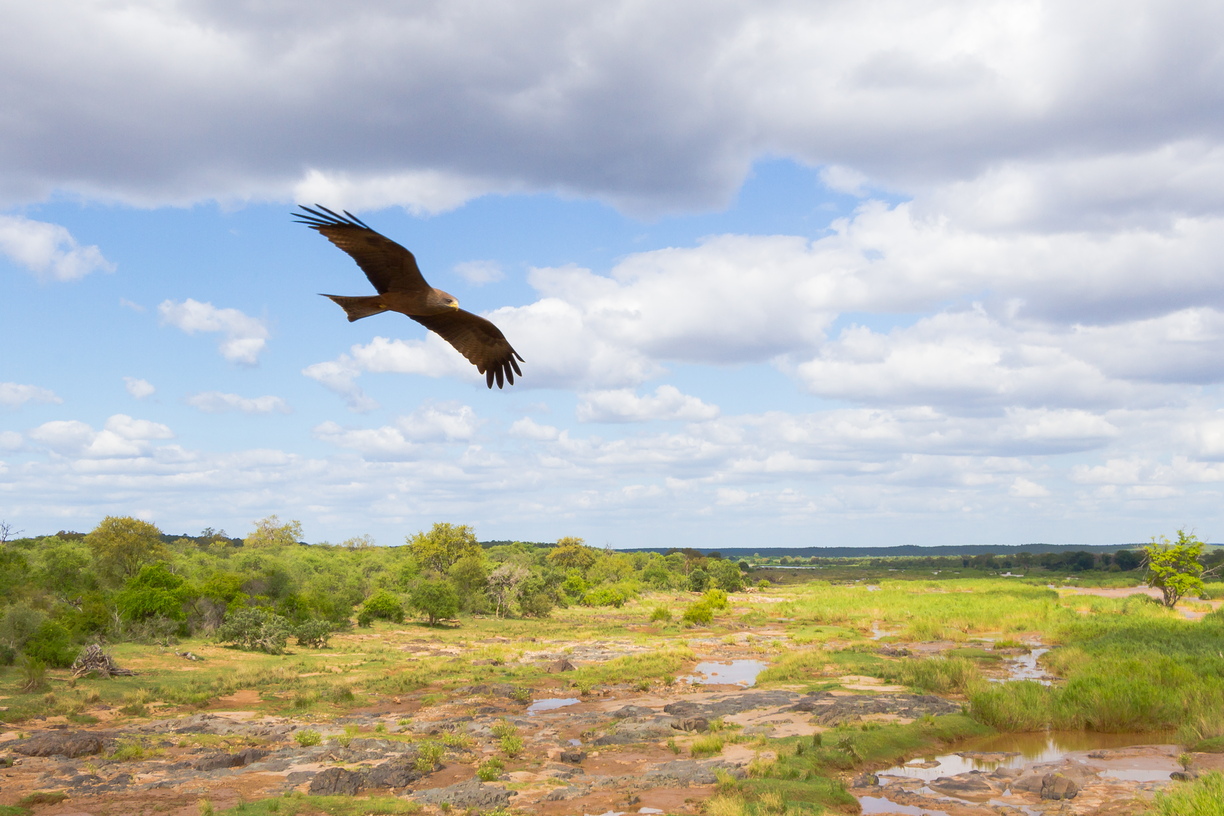
A tawny eagle (I think?) soars over the Kruger landscape below, near Olifants.

We hired our car from Eurocar at Jo’berg airport. We chose that particular supplier on the basis of cost, and the fact that it was one of the few companies that specified a four door and hatchback car in the purchase process.

We felt it was important to have four doors, so we would have four full sized windows from which we could take pictures. Having a decent sized back seat also allowed us the freedom to leap from the driver and passenger seat into the back when animals moved around our vehicle.  We wanted a hatchback specifically so we could store items in the boot and access them from inside the car – thus meaning that the inside of the car is not cluttered with food, drinks and all other necessities for a day’s drive. Also consider that you are not allowed out of your vehicle apart from at designated stations, so if you have placed items in the boot they might not be freely available unless you have access via the back seat of the car.

We debated on the size of the car, and in the end chose a small one. This, I feel was the right choice for two adults. It’s compact nature also meant we could manoeuvre ourselves into tight spaces and get closer to the wildlife. especially relevant as there are plenty of gaps in trees by the riverbeds from which you can get a great view of the wildlife.

We gave no thought to comfort of the car – and thankfully our little Hyundai i20 was very comfortable…but it’s only when you are spending upwards of 12 hours a day in a car when you realise how important comfort is.

Ignore any considerations about speed or power. You spend most of your time at 20mph max on safari, and you’ll find yourself reversing more often than you think. However, brakes are important – emergency stops are plentiful when you spot animals in the bush.

Four by fours are not really needed, though there are a few gravel and sand roads in Kruger that will cause you to wish you had it, as your spine feels like it’ll snap in two with the potholes and vibrations.

Petrol stations are situated at most camps. We found ourselves needing to fill up every 2-3 days depending on the journeys we had done. If you are leaving very early, fill up the night before as some petrol stations don’t open until 6am-7am. They also close shortly after the camp gate closes, so arrive a bit earlier if you need to fill up.

Whilst we were in Kruger there was a fuel shortage, but the majority of stations in the North and central regions had adequate fuel. It was, however, a different story outside the park – we waited over 20 mins to get fuel at a town that had ran dry and was awaiting the arrival of tankers.

When returning your car to the airport, it’s worth knowing there is a petrol station there (Look for the signs to the sky station). You can therefore fill up before returning your car if you have not already done so).

Self driving is a great way to see Kruger and I highly recommend it.

Photos from our South African safari are available in our Taraji Blue South African photo gallery.

Oops, we’ve fallen in love again…

A Zebra pulls a face

I feel like every time we return from a holiday I want to apply the description “trip of a lifetime”. I know I can’t, but our recent trip to Kruger National Park came damn close to obtaining this title. It completely blew us away.

We have been to Kruger once before – ten years ago for our honeymoon – but back then we entered the park  as a day visitor and spent only a few precious hours seeing the Kruger National Park with a guide. This time we opted for an 11 day self drive. Fuelled by the desire for an adventure and our love of wildlife and photography, we wanted to see if it was possible to do a safari on a budget but still see the range of animals desired and obtain the photos we are after.

Having been on safari a few times in Kenya, we were keen to see what difference the absence of a ranger would make when we went off into the bush alone. We had learned a lot from previous safaris and have become acquainted with the symbiotic relationships of animals, tracking via footprints and vegetation and learning how, when and where to spot animals…but this is the bush, and anything can happen.

I am delighted to say it was a great success, and what we have learned on our recent trip I will be sharing over a series of Kruger National Park blogs here on the TarajiBlue website. I will be covering topics such as accommodation, seasonality and its impacts, what to expect on a self drive safari, conservation, what to take with you, car hire and which safaris to take (road and location recommendations). I hope what we have learnt will be useful for anyone planning a trip to Kruger National Park and will inspire many more people to visit this incredible wilderness.

Check back regularly or visit our facebook page for details of the new blogs as they are released. We are also sharing our reviews on Trip Advisor and photos from our trip are available in our South African photo gallery.

New: South Africa photo gallery now online

A baby monkey

We’re delighted to announce that the first batch of photos from our recent South African safari are now available in our Taraji Blue photo gallery. These have been a real labour of love for us. We travelled to Kruger National Park on a self drive in Jan 2012 and spent at least 12 hours in the field every day for 10 days. We gradually grew familiar to the 4am alarm and relished the chance to spend as much time as possible with the animals.

Dusk and dawn are the most fruitful times for wildlife photography. The animals are energised, the air is cool and the light bathes the bush in a gentle amber glow. It’s during these times we had some of our best sightings: jackel, wild dogs, rhino and lions.

These is our first release of our South African safari photos – there is more to follow once we have completed work on them. But we could not wait to share some with you. We hope you like them!


Our favourite place to visit in Africa is…

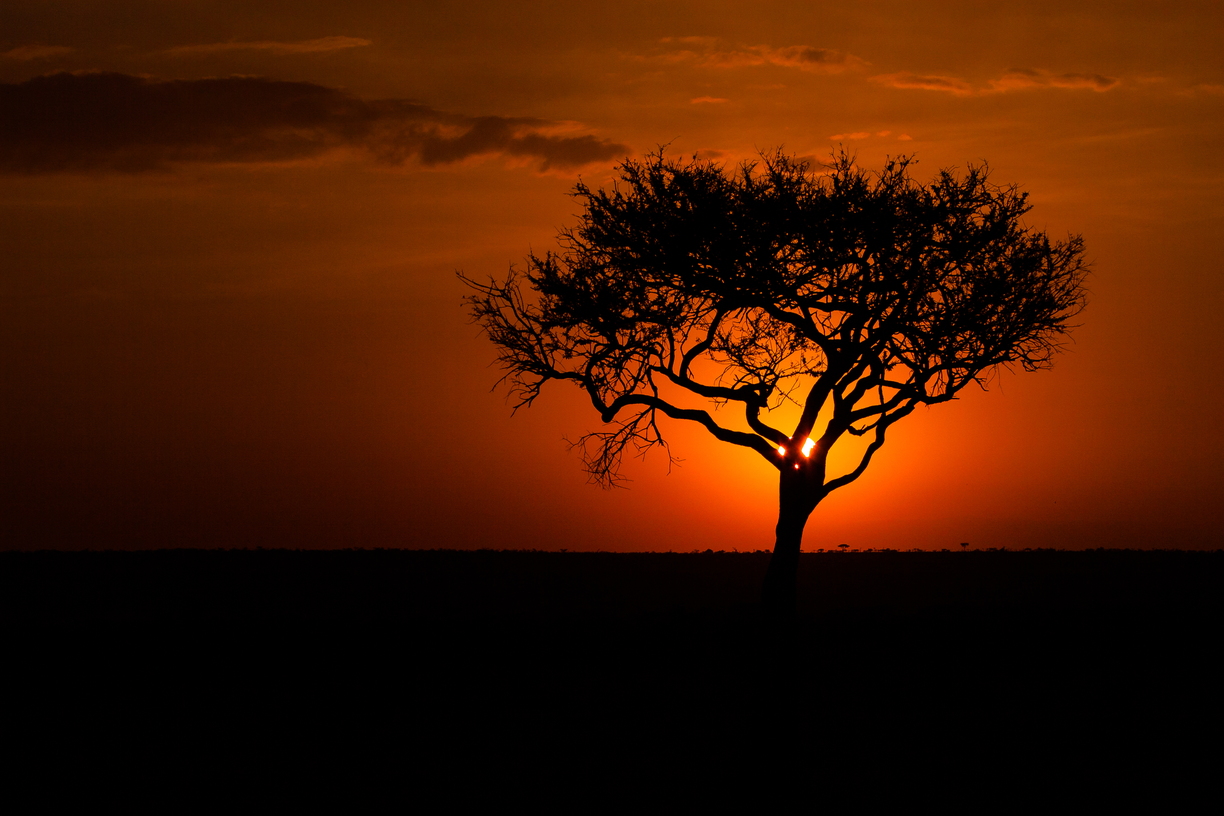
An African sunrise in Kenya

Gosh, that’s a hard question!

Because…

Kenya is incredible, for the sheer volume and variety of animals. It’s also an incredibly friendly country and the tribespeople are so welcoming. We spent quite a bit of time with Maasai and Samburu tribes, and loved interacting with the adults and children and learning from them.

Kenya’s Maasai Mara is just mind blowing. It is the ‘typical’ African bush…large open spaces dotted with the occasional leafless trees. The views extend for miles and miles and take your breath away. The sunrises and sunsets are incredibly quick but some of the most beautiful in the world. There’s nothing quite like watching and hearing the bush wake up / go to sleep every day. It’s a privilege and a dream come true.

But in South Africa we travelled further and saw a wider variety of environment. We had more control over our experiences and could make our own decisions and create our own adventure on a self drive. We had to work hard for what we saw, and put into practice all our learnings and experiences from previous safaris. We had to fend for ourselves, cook every meal, shop and constantly pack and unpack to move from location to location. When you invest so much of your personal effort into a place, it simply has to take over your heart, otherwise it’s not worth it!

It’s a dilemma. Can I go back this year and then let you know?

Countries aside, Africa as a whole has this incredible smell – it’s exotic and herby and it fills your senses the second you step foot off the plane. It’s hard to describe, but once you have inhaled it, it’ll never leave you. It’s alluring and never fails to excite you. It clings to your clothes, hair and nostrils, and on your last few days in the bush you’ll never want to wash the smell off in the hope that it survives beyond the airport and trip home. It never does 🙁

Photos from our Kenyan adventure are available in the TarajiBlue Kenya photo gallery.

Our adrenaline fuelled, nerve wrenching experiences in Africa

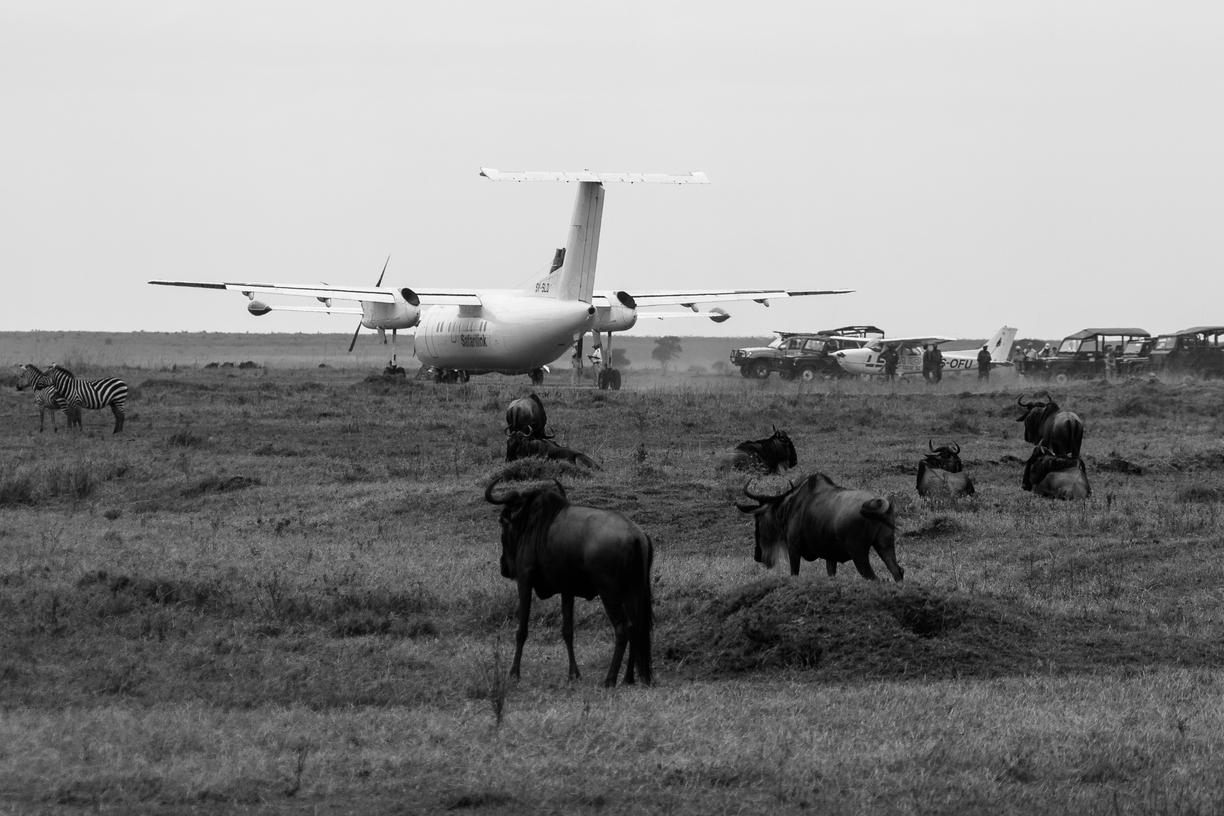
Wildebeest panic

It’s experiences like these that keep the blood flowing and ensure that you empty your wallet with repeat visits to Africa…

a) We have seen two cheetah kills. The first was a grown cub of one of the cheetahs which featured on the BBC’s Big Cat Diary. We watched her catch and kill a deer right before our very eyes. The second, was a mother cheetah and two cubs catching and killing a baby foal. The mother used it as an opportunity to teach the cubs how to hunt. They kept letting the foal escape and then catching it again. It was gruesome, but a true reminder of the circle of life.

b) We’ve witnessed the Great Migration in Kenya. We arrived at a river just in time to see hundreds and hundreds of wildebeest plough across the water, being attacked and drowned by huge crocodiles that would lurk under the water and attack at random. I think I screamed several times and barely drew breath the whole time we watch the spectacle, but it was incredible. You could sense the fear in the herd. They’d edge to the riverside and as the pressure would build and build from the hundreds of animals arriving at the scene, the animal at the front would be forced to either leap into the water or leap backwards, either way it’d cause mass hysteria and the scene would be shrouded by a wall of dust as the herds kicked up sand in all directions and splashes exploded from the water as the crocodiles leapt in to attack.

After the herds left we watched the crocodiles recover the carcasses of the wildebeest from holes in the riverbank (they’d use the river as a refrigerator) and rip the bodies to pieces and eat them. They cannot tear flesh, so they would grab the carcass in their jaws and turn themselves round and round in the water to rip the dead wildebeest to pieces. 

c) A baby bat (a tiny wee thing) got into our hut in South Africa. We worked with the ranger to try and catch it to release it. It was so small and disorientated it could not fly and kept running around our floor like a distressed mouse. We spent an hour trying to safely catch it – but in the process accidentally killed the animal.  It was heartbreaking, so upsetting and went against all we stand for and care about. It was a shocking reminder of our power on the planet and our responsibility to use it correctly.

Photos from our Kenyan safari are available in our TarajiBlue photo gallery.