Home

My Love For Spiders Knows No Bounds

Dew laden spiders web sparkle

As much as I adore the manatees, elephants and big cats of the this world (heck, I have even become a twitcher), there’s nothing quite as satisfying as a spider. Not only are they incredibly intricate and stunningly beautiful to photograph, they also create what I consider to be one of the world’s most beautiful structures…the web.

This love has not emerged overnight – far from it. But over the last few months I have been studying these most fascinating of creatures at home and abroad. I thought my love for them was sealed when I discovered the giggly wee fellow in France – but it was not until a wintery weekend in Yorkshire that  I fully appreciated these incredible creatures.

Whilst wandering in the forest of Fairburn Ings, Yorkshire (a RSPB reserve),  one misty afternoon, my attention was grabbed from sky to ground as I noticed hundreds upon hundreds of stunningly beautiful dew laden spider’s webs, bouncing light around like crystals.  They were on trees, holly bushes and formed a bejeweled carpet under my feet. I did not hesitate to grab my macro lens and jump right in. These images (above and below) were my results.

Both photos were taken with a Canon EOS 7D with my EF 100mm macro lens at f/2.8, ISO 640. On a misty, winter’s afternoon it was quite dark in the undergrowth, hence the need for a higher ISO than usual with my macro shots. I hope you like them as much as I do!

Additional macro shots are available in our online macro gallery.

A spider's web captures the dew on a winter afternoon


Photo of the Week – Once More I Am Betrayed

A captive owl tries to fly away

I like this shot – it doesn’t pretend to be anything. It’s what it is … a captive owl’s failed attempt to escape. It is symbolic and representative and I think it works really well in monochrome. I even like the blur – it’s indicative of the speed and strength of the attempted escape – the tension in the rope is testament to this.

I guess it could be quite a depressing shot too – such a wonderful bird tethered up for man’s pleasure. It says a lot about wildlife conservation and education, and causes the viewer to ponder the scene and circumstance.

That’s why it is my photo of the week.

I wish I’d taken…..

At the 2011 Wild Photos conference all speakers were asked to reveal the image they wish they’d taken. I thought this was a great idea and one I’d start to emulate on this blog.

Quite appropriately, I start this series with an image revealed at the conference as a winner of the Veolia Wildlife Photographer of the Year in the Urban Wildlife category. It’s called ‘Boy Meets Nature’ and it quite literally took my breath away when revealed on the big screen. It’s available to review here.

The photographer is the very talented scientist turned photographer, Alexander Badyaev (USA).   The image was taken in the type of ram-shackled cabin we all dream of owning in North America. The family would visit and Alex became enchanted with the bats that feast on the white moths surrounding the cabin at specific times of the year. It took Alex a few years to figure out how to capture both the bats and moths in photos, and during this time he had a new addition to the family  i.e. the boy in the picture who seemingly shares his passion. The child was supposed to be asleep and not feature in the picture, but I think it is glorious and timeless that he did pop his head up into the shot his Dad has spent years planning.

I love the juxtaposition of rodent and child – not a mixture you’d ever dream of putting together, but that is why it works so well. Alex has done an amazing job to capture both the child’s and the bat’s expression- almost mutual appreciation and curiosity. It’s a perfect medley of human and nature and one I could only ever dream of capturing. I REALLY, REALLY wish I had taken this shot.

I Am Not A Landscape Photographer!

Wind Power

I really am not! The landscape is nothing more than an environment or scene setting for my wildlife photography.

However, I do love the thrill of wildlife photography, the adrenaline rush it provides and the challenges that come with photographing wildlife.

I also adore the tiny wee new world that macro photography opens. It’s like wearing a pair of prescription lenses for the first time: you see detail you’ve never seen before and as a result, you see the world in a new light.

In direct contrast, landscape photography is static and I find it a little boring … So why is it that I always seem to turn my eye to some scenic shots during wildlife and macro photography sessions? I often find myself thinking ‘Oh, that’s pretty, I’ll take a quick picture’….and then the resulting photos often end up being some of my favourite shots.

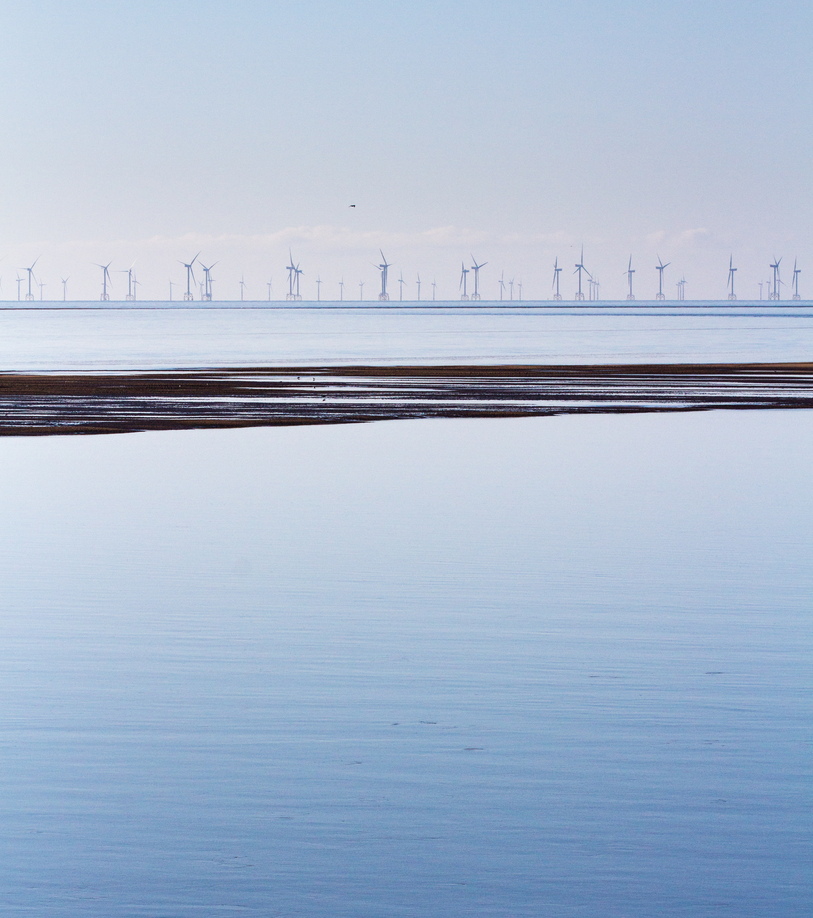
Take, for example, the image above. This was taken with my macro lens (Canon EF 100mm) during a wildlife photography field trip. I saw the wind turbines on our walk back to the car and thought they might be worth a quick shot, but in all honesty I could not be bothered to switch lenses and thought a quick photo with the macro lens might suffice. Despite the lack of effort put into this shot, I love the results.

Now in my defence I did think carefully about the composition – I waited until the foreground was correct and the light maximised…but otherwise I did nothing but point and click with the ‘wrong’ lens and expected nothing spectacular. I was proven wrong!

Maybe, just maybe, I am a closet landscape photographer? Hmmmm.

Can You Help Us Identify This Wee Fella?

My Neck Is Fine, Thanks For Asking


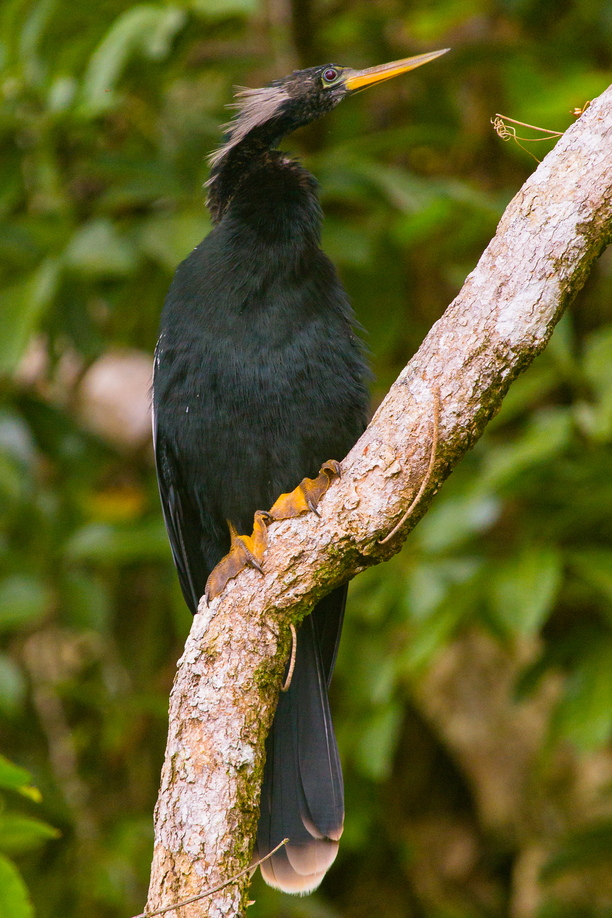
Can anyone help us identify this bird? Taken in Tortuguero, Costa Rica, he’s a wetlands bird but, to date, we’ve been unable to identify him via any wildlife guides.

We are wondering if he’s a juvenile Anhinga? Though the webbed feet are striking, the cormorant like tufts are also notable.

Any help is welcomed..over to you!

Veolia Wildlife Photographer of the Year Competition Now Open for 2012 Submissions

It’s come earlier than expected this year – the Veolia Wildlife Photographer of the Year Competition has opened for 2012 submissions TODAY! The deadline for submissions is February 23rd 2012. It’s a very worthwhile competition – one of the most prestigious in its field. Whether you are an enthusiastic amateur, emerging talent or leading professional, the competition is open to all photographers. We’ve been beavering away for the last few months working on new submissions in eager anticipation of the 2012 competition.

For anyone who is thinking about entering, you might be interested to review the top tips provided by Mark Carwardine, Chair of the Judges at the Wild Photos conference (London) in October 2011.

To enter the 2012 Veolia Environment Wildlife Photographer of the Year Competition visit the NHM website.

Good luck!

One picture you must see….The Price Of Oil


If you haven’t yet visited the Veolia Wildlife Photographer of the Year Exhibition (London), or visited its website, you might not have had the privilege of seeing Daniel Beltra’s winning portfolio of images taken over  BP’s Deepwater Horizon oil spill in April 2010 . They are shocking and beautiful at the same time. They stimulate inner, political and environmental conflicts and are a devastating chronicle of man’s impact on the natural world. I defy you not to gasp and weep when seeing them for the first time.

They make you question so much, but at the same time, no solution presents itself. Can we live without oil? Can we live better with oil? Personally, the biggest questions it raises for me is what damage did this cause? What unknown impacts are there that the media has not yet discovered to report? Will the sea ever be ‘clean’ again?

These are incredibly powerful shots from an incredibly talented photographer who is an inspiration to us all.

Experimenting With Movement

Gulls swoop and fight for seed

I’ve recently been exploring the idea of movement within photography. It was a very dominant theme at this year’s Wild Photos 2011 conference and at the 2011 Veolia Wildlife Photographer of the Year competition, so I have been inspired to give it a go myself.

The easiest and most accessible subject (in theory) is birdlife. I had envisioned the kind of shots I was seeking but I was initially a little uncomfortable with how blurred / out of focus the shots might appear. I soon learned that to obtain a professionally blurred image is harder than it looks. When you want to make something very specifically blurred for a specific composition it can be harder than taking a pin sharp composed shot.

The wetlands of Martin Mere were the perfect place to practice. With thousands of geese and migrant Whooper Swans, there was more than enough feathered action for me to get to grips with this new technique. However, it was the common gulls that I had most success with. A feeding frenzy prompted dozens of gulls from the sky to congregate and compete for seed. As more seed was provided the gulls would swoop down again, and again, and again….allowing me to learn from their behaviour and start to predict their movements. This, in turn, allowed me to repeatedly try new compositions, shutter speeds and ISO settings.  I was particularly happy with the shot taken above – it’s exactly the composition I had in mind, and provides the texture and colours I wanted without extensive post processing. It was taken with a Canon EOS 7D at 320mm, f/5.6, ISO 150.

Not bad for a first trip out with a new camera and trying out a new technique! Watch this space for more ‘movement’ shots over the coming months.

Animals In Their Environment

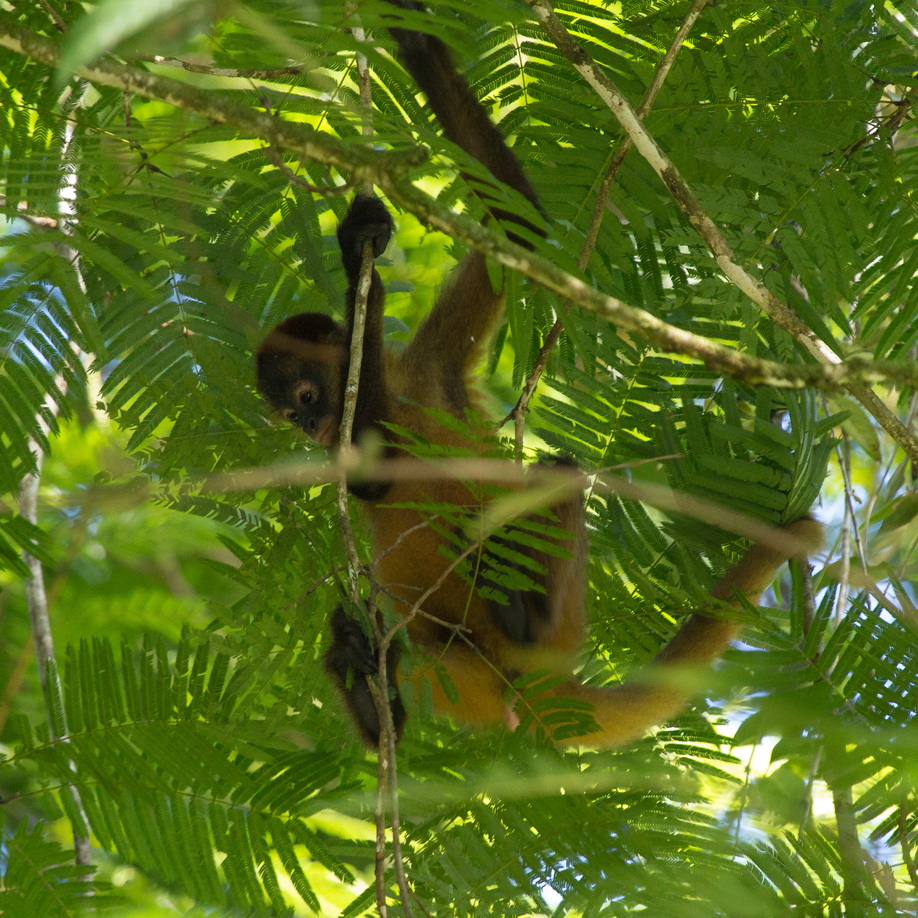
A spider monkey splays its body across a fern-like tree, making it difficult to work out which limb is which.

One of the main ways I have amended my photography style over the past year or so, is to recognise that it’s beneficial to photograph the animal in its habitat. Now this sounds a ridiculously obvious thing to say but trust me, the first time you get your hands on a 400mm zoom lens you become tempted to zoom in fully and photograph the finer detail on the animal, often disregarding the environment its in.  In fact, one of the very first challenges I set myself with my first DSLR was to photograph animal eyes – ideally capturing my own reflection in the catchlight.

Conversely, having use of an f2.8 wide angle lens then switched my obsession toward bokeh, blurring the background so the animal becomes the primary focus.

Now, after years of experimentation, I am enjoying a nice mix of both techniques – always striving to get the animal sharp, but ensuring that the environment they are in is captured in the shot. I am finding this works equally as well in captive and wild environments – it can add drama to an image and help strengthen the story of the photo.

The image above is one of our recent successes – A spider monkey splays its body across a fern-like tree, making it difficult to work out which limb is which. It’s a perfect example of an animal in its environment …imagine the shot without the trees and the colour – a more traditional portrait shot would not provide any sense of place, purpose or behaviour. It’s spurred me on to try and capture similar shots in the future.

..watch this space.

Struggling To Find Christmas Presents?

A Christmas Robin

It’s that time of year again when our minds turn to treating those we love. Sometimes it’s never easy to find presents for those nearest and dearest, so if you are seeking some inspiration why not consider a Taraji Blue photobook?

Taraji Blue offer a range of photobooks for sale via Blurb.com, all of which are available to preview on our website. There’s something to suit everyones’ tastes and preferences:

  • For the birdwatcher, why not consider ‘Take to the Sky’. A pocket sized photobook featuring birds from across the world and at home. It was inspired by the fact that many of our recent bird shots are becoming firm favourites among Taraji Blue fans so we decided to celebrate the best shots in one new book.
  • For anyone with a lust for Africa, why not consider ‘Twiga and Kipepeo’. A photographic journey from 2009 through the Maasai Mara, Kenya. Though the Mara was still relatively green,  many other parts of Kenya continued to be severely affected by drought and the tourism industry was still recovering from the effects of post-election violence in 2008.
  • For fans of conservation – or for anyone with a love of elephants – consider ‘Vulnerable Giants.’  This photobook is a project close to our hearts. It features imagery of wild and orphan elephants taken during our visit to Kenya in September 2009.  After spending a marvellous week in the Maasai Mara watching herds of wild elephants graze, wander and socialise we were lucky enough to visit the David Sheldrick Wildlife Trust (DSWT) orphanage in Nairobi. Here we saw the devastating results of man’s influence on the natural world. Tiny, orphan elephants, separated from their mothers in the most horrendous of circumstances demonstrated that they were capable of love once more.  We were moved to tears by our visit to Nairobi’s David Sheldrick Wildlife Trust and wanted to do something to help support the orphan elephants of Kenya. That’s why we decided to chronicle the lives of wild and orphan elephants in Kenya, and are dedicating all profits from the sale of this book to DSWT.
  • For those who yearn for adventures in the polar regions, consider ‘Where Ice Flows’.  A photographic journey through a tiny fragment of the Antarctic continent. This book documents the Antarctica Peninsula, from ice to water and provides stunning imagery from the Drake passage through the South Shetland islands, to Danco and Damoy, to Neko and Curvervilla, Vernadsky and Melchior. Of course, there are also some cute penguin photos too!

Happy shopping!