Home

A Magical Ocean Voyage

This weekend we took the opportunity to remind ourselves of what precious and rare wildlife we have on our own doorstep.

Yesterday afternoon we embarked on a fantastic RSPB seabird cruise along the coast of East Yorkshire, from Bridlington up past Flamborough Head toward Bempton Cliffs. We saw plenty of puffins, guillemots, razorbills and kittiwakes, even a lone great skua, and of course, the gannets.  Just before 6pm, a full rainbow appeared to the south of the boat, and with plenty activity in the skies as well as the cliffs and water I took the opportunity to capture this image.

I highly recommend the RSBP cruise aboard the Yorkshire Belle – they have a couple of more gannet and puffin cruises in July.  Bempton is a great place to see birds from on top of the cliffs, but seeing the extent of the colonies from sea level is wonderful.

More images of the seascapes from Bempton Cliffs and Flamborough are available in the Taraji Blue Yorkshire photo gallery.  Also, look out for the images of puffins and seabirds – we’ll be uploading these to Taraji Blue within the next week.

Meeting the people of Jordan

The landscape of Jordan
This is a renewal of a previous post – I have been reflecting a lot recently about the people we meet on our travels and I wanted to re-share this post…
I knew very little about Jordan before we visited, and I was not at all prepared to fall so much in love with the country and its people. It’s one of my favourite places in the world – which is saying a lot for a country where wildlife is not the main attraction.

Throughout our stay we were lucky enough to meet and experience the hospitality of a range of people. Take, for example, the gentleman we bumped into on the hike into Wadi Feynan…

It was late afternoon and we’d arrived at Dana later than expected. We hastily threw some overnight things into a small rucksack, grabbed a bottle of water and headed off the hike from the mountain tops to the valley floor where our lodge was located.

Heading deeper into the valley the terrain turned from arid rock formations, into beautiful scented arches of bougainvillea. Momentarily distracted by the scenery unfolding in front of us, we stopped under the shade of a tree to rehydrate. It was then we realised how foolish we’d been. Less than 2 hours into an anticipated 4 hour hike we’d drank most of the water we’d brought! We’d underestimated our supplies and were in danger of dehydration. We took stock of the two options we had a) hike back up the wadi back to the town and obtain more water, by which time it’d be too late to hike and we’d lose our overnight stay b) carry on regardless. We opted for b.

Tired, hot and now quite anxious, we pressed on, hiking faster and harder in an attempt to get to the lodge as quickly as possible.

Through the vegetation we became aware of a figure slowly approaching us. A local elderly and withered man with a donkey emerged from the bushes. He took one look at the sweaty, tired and dehydrated tourists and decided to take matters into his own hands. He beckoned for us to follow him, urging us deeper and deeper into the vegetation, straying further and further from the hiking trail. I became really anxious. The media has taught me to be naturally suspicious of all strangers, and I ashamedly confess that I was not at all comfortable blindly following the local elderly gentleman. My protests fell on deaf ears – my husband is much more trusting than I, and with a large sweep of his hands he cleared a hole in the curtain of vegetation and promptly disappeared through it.  Feeling I had no other choice but to follow, I did so, mumbling as I went about this being the last time we’d ever be ‘seen’. We walked and walked, each step taking us further the valley sides, opposed to into the depth of the valley floor where our lodge was situated.  I noticed the terrain changing – grass started to soften my step, and a breeze filtered through the valley. The sun began to drop lower in the sky and I became very concerned about our ability to reach the apparent safety of the lodge by nightfall. I glanced up to find the gentleman and my husband had ground to a halt. The elderly man was smiling widely to me, gesturing towards an open sided tent. It was a smile I struggled to return and did not deserve. I was petrified, wondering what he was going to ‘do’ to us in the tent. I envisioned this as our last hiding place, the place our bodies would be found in years to come. My feet were rooted to the ground. I started to gently protest, wishing with all my heart that I spoke Arabic. My husband gave me a gentle push towards the tent and we slowly walked in as the elderly gentleman disappeared behind a curtain of canvas strung from the tent’s rigging.

I had never felt so foolish! A few minutes later the gentleman emerged with a huge smile, carrying a tray of Jordanian tea. In spite of my earlier reluctance I eagerly accepted a glass and proceeded to drink the beautiful, sweet amber tea in one. It was the most beautiful tea we’d tasted to date in Jordan – sweet, but full of herbs, rosemary being the dominant taste. The old man laughed he expression of euphoria on my face and promptly refilled my glass.

Drinking the second glass more slowly, and with my initial panic fading, I took time to acquaint myself with my surroundings. The tent was shabby but well constructed and homely. Dotted around the ground sheet were flat faded cushions upon which we were perched. There was little in the way of any other possessions – it was very clear that this man had very little, and yet here he was, offering everything he had to two strangers – one who had the audacity to fear him and suspect his motives. I hung my head briefly in shame as tears swelled in my eyes. I hoped and prayed that this would be a valuable lessons for me – one that would teach me not to be immediately suspicious of people, and to quicker discern harmless from harmful strangers.

I did not get chance to mope for long, as I was snapped out of my contemplation by a gentle braying. Looking up, the gentleman was proudly displaying one of his goats, eager to show us more of his home and possessions. I could not help smiling back, when the second ‘thing’ he chose the bring us was his young daughter. Timidly she emerged from the curtain of the tent – she’d obviously been just as timid of us and I had of them. I gestured for her to sit beside me, and proceeded to dig into our day-pack to bring out our picture postcards of Edinburgh, so we could share with them images of where we lived and what our culture was like. Their eyes shot out of their sockets upon viewing the images of Edinburgh at Christmas. They struggled to understand what the Ferris wheel was, and our mimicry was somewhat to be desired.

After a delightful 20 minutes of so we gestured that we’d have to leave – somewhat reluctantly so. The gentleman protested and drew up his sleeve to display his Casio digital watch. He motioned that the lodge was just 30 minutes away and we had an hour until the sun set. I kicked back against my disbelief as it started to rear its ugly head, and, to the surprise of my husband, agreed to stay for one more cup of tea. When we finally did leave them, it was with much regret, but with a valuable lesson learned. It sounds corny, but that was the making of me – It was a lesson and an experience that has not only changed my outlook on society, but has made me change the way I travel and experience the culture of others.

And of course the elderly gentleman was correct – we arrived at our lodge in little over 30 minutes and plenty time before sunset. In fact, by taking us off the hiking trail he’d actually saved us time by taking us on a shortcut!

More stories from our time in this amazing country are available in our book about Jordan.


The Little Things In Life


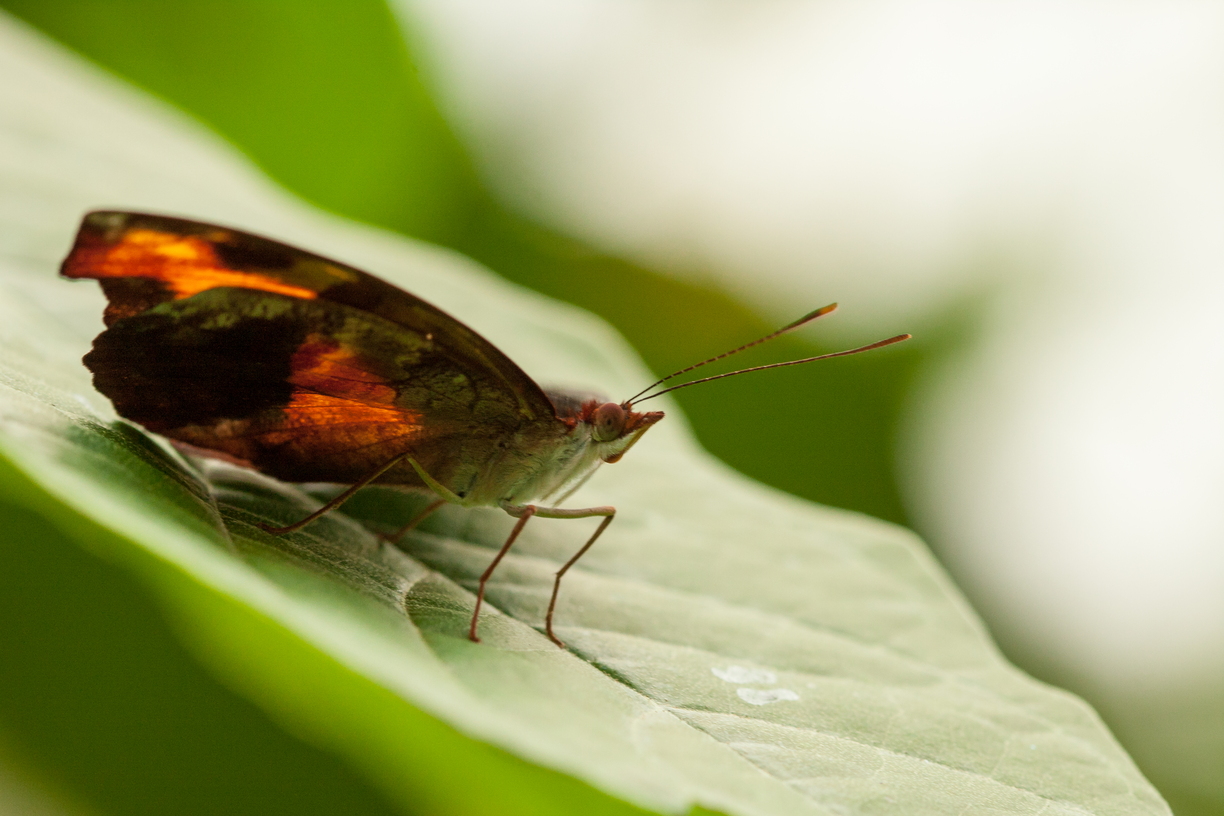
Regular followers of Taraji Blue will know that I have an obsession with macro photography – especially insects. That’s why, on our recent trip to the Kalahari desert, I took time out from spotting big cats and focussed on the little beasties that we were temporarily sharing our living quarters with.

A grasshopper

This wee fella (above) is a grasshopper (I think). He was immobile for three days (apart from a wee twitch when I got too close). He is a real beauty and seemed quite content for me to spend some time photographing him.

I will be honest and say that I have no idea what this wee guy below is. I saw two of them during our stay, one was really rather large – like a fat grasshopper or large dung beetle, and the other identical one was more small beetle sized. He is darn cute and had the most enchanting googly eyes. I suspect he might be some sort of thorn bug?!

An unknown critter from the kalahari desert


A warm welcome home from the local wildlife in the Kalahari Desert

And finally, we were surrounded by these wee guys who lived in the fence outside our cabin. They were very timid, but stunningly beautiful. The longer you spent with them, the more acquainted they became to you, but they repeatedly resisted any close ups.

A wee lizard creeps out of the fence panels to say hello


Bucket list obsessions

A captive owl

Ok, so when I set myself a bucket list in January 2012 I decided what things I wanted to achieve by the time I turned 40. Now not all of them are photography or wildlife related, but two of them were. One was to see a fox in the wild in the UK (and I am delighted that we achieved that), and the second was to see an owl in the wild.

Now I have seen owls in South Africa this year, but for some reason I feel it doesn’t count, maybe it is because it seemed a little easy to be out on a night drive with an expert safari ranger to spot the owls – or maybe it is because I want to find it by myself in the UK where wildlife spotting can be a particular challenge.

Regardless, it remains an ambition of mine, and if anyone has any hints or tips that might help I’d really appreciate it! Until then, owl keep my fingers crossed for a sighting (groan!).

Here’s something you might not have seen…


We tend to upload new shots to TarajiBlue in projects and in bulk when they are ready, so unless you’re one of our loyal followers who regulary delves into our TarajiBlue photo galleries you might not have seen these images. I have posted a broad spectrum of landscape, macro and wildlife images.

I hope you like them! Let us know what you think – we welcome comments and feedback.

The Enchanted Wood

The image above was taken at Fairburn Ings RSPB wildlife reserve in Yorkshire during the onset of Spring.

This asian short-clawed otter played with a small rock for around 10 minutes, tossing it back and forth between its paws while lying on its back.

(Above)  This asian short-clawed otter (captured at Chester Zoo) played with a small rock for around 10 minutes, tossing it back and forth between its paws while lying on its back.

A close up of a poppadom

(Above) A close up of a poppadom.

More photos from TarajiBlue can be found in our photo gallery. 

The day we got caught in a buffalo stampede and lived to tell the tale

A herd of buffalo pause their stampede to regard us

We were on our own this time. Aside from the little red car that had become our home for 14 hours a day for the past week, we had no protection. There was no Maasai guide to teach us the way of the bush, and no ranger to interpret the behaviour of wild animals for us. It was just us and the 7,523 square miles of Kruger National Park.

We’d become besotted with safaris after previous trips to Kenya, but this was our first self drive safari. After a week of successful journeys we nurtured a balance of anticipation and naïve bravery that had put us in various precarious situations, but we’d lived to tell our tales. That’s when it becomes dangerous – when success mixes with bravado and adrenaline you fail to notice circumstances emerging before your very eyes until it’s too late…

On a quiet and uneventful afternoon safari drive, we stumbled upon a small group of buffalo by the side of the road. They lacked the skittish nature others had displayed so we decided to spend some time photographing them. Pulling up alongside them, we were bewitched by their calmness; youths mingled silently with adults who hardly registered our presence. Surrounded by dense bush, they were framed by acacia thorn bushes and an endless African sky that we’d come to love and admire.

Leaping into the back seats of the car provided my husband and I with a window each from which to observe and photograph the group.  Working with a wide angle lens I began to lose perspective on the activity surrounding us. It wasn’t until I removed the camera from my eye that I noticed the group of buffalo had swollen in size until they surrounded the car in a silent semi-circle. Every single buffalo was transfixed on us. Their eyes locked with ours, their heads bowed and they stood in complete silence. Aside from the dust blowing as their breath hit the warm sand and the swarm of flies there was no movement. It was not until the bushes behind them began to shake that we realised the group we were interacting with were just the tip of the iceberg – we had pulled up alongside a herd of hundreds of buffalo and were blocking their path.

Our realisation came too late – buffalo blocked any route out and we were being approached by a huge male who was challenging the car face on.  Wishing we could move invisibly, we slid into the front seats of the car and clicked our seat-belts on, fearing an ambush. It was a stand off for 30 seconds or so, during which time we fought the urge to switch the car engine on to retaliate.

When we finally decided the buffalo were too close for comfort and reached for the ignition we saw that we were flanked either side by other tourists in their cars, blocking any exit route we could try to take. The buffalo seemingly became aware of their presence at the same time we did, sending them into a blind panic. The silence turned to thunder as they began to stampede.

We were temporarily blinded from the action as their hooves threw up the ground around our car, casting huge dust clouds and covering us and all our belongings in a layer of fine red sand. As the ground hardened under their hooves we regained visibility…. in every direction there were running buffalo. I cast my eyes from rear view mirror to window, praying that our tiny red car would not act like a red rag to a bull. Meanwhile buffalo clambered over each other, racing to cross the road and gallop into the bush beyond. The young switched from right to left, left to right to escape the crushing hooves of the adults. We were trapped. There was nothing to do but watch. The only soundtrack was the stomping hooves and the blood thumping in my ears as my heart pounded stronger and stronger. I couldn’t find the time or peace of mind to curse us for our stupidity – nothing mattered but watching and remembering to breathe.

The stampede lasted for 10 minutes before it started to thin and we saw an opportunity to roll the car forward to escape the centre of the stampede. Doing so threw the stampede into an immediate halt and triggered the silent stares from the buffalo once more.

There is something unique about receiving an intense stare from a group of wild animals – time stands still and the respect is palpable. You feel a sense of connection, one which no words can replace. It’s a privileged glimpse into another intriguing world from which we could learn so much.

Softness and peace in photography

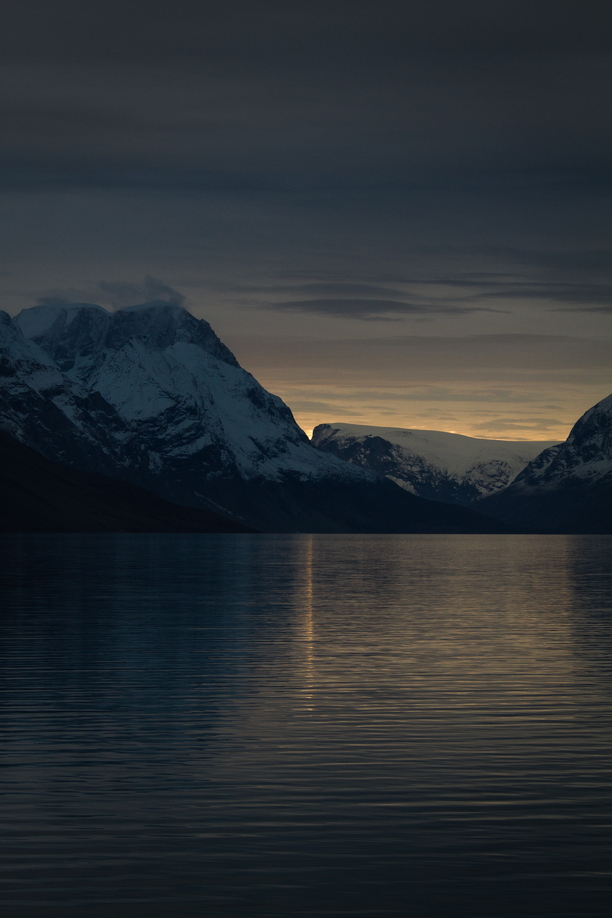
The final moments of sunset diffract up and through the narrow conjunction of two Arctic mountains, reflecting as a thin line across King Oscar Fjord, and peace descends over the landscape.

I wanted to expand a little on a comment I left on Google+ in response to David Bowden and Max Huijgen about the peculiar way this vast internet has very little space.

There are many excellent highly saturated photographs on Google+, 500px, Flickr, 1x and other sites. There are many excellent high-dynamic range photographs, particularly in architecture where the form is being celebrated over the presence. There are many ultra-contrasty monochrome images. They are all well composed, they are well produced, they are visually striking and attention grabbing. They aren’t always loud but they are filled; from start to end, they sing proudly. Some of my images aim in the same direction.

The problem I have, is that they become pop songs. Omnipresent, predictably perfect, histogram and colour lined up just perfectly so there’s no gaps, no discontinuity. Pop is fine, but sometimes you need discord; sometimes you need silence, a place to reflect, a place with rough edges and broken clarity (I do NOT mean Instagram filters!).

But this is just conjecture. What really saddens me is that in most cases, our own eyes should be THE best experience. A photograph should stun you enough to visit a wonderful area of our planet, and when you get there, you should feel the thrill of experiencing such beauty for yourself – you should feel and see more than the photograph. Instead there’s the risk that you’ll feel Petra isn’t pink as you saw on the internet, or the Taj Mahal isn’t quite as sharp, or that cheetah that just TORE ACROSS THE PLAIN AFTER AN IMPALA IN AN EFFORT TO KEEP ITSELF ALIVE was sadly a bit further away than the shots you saw online.

Careful photographs can conjure up dreams. They are suggestive, not expressive; they prompt your imagination to do more work, they take you there but they conceal the best parts. They say, “I need to see more of this” rather than “I have seen the best of this”.

The world is not a product to be shot in a studio environment. It is a world of stories, with all the dirt, imperfections, subtleties and yes, sometimes quiet and silent desaturated realism. There is room for all of us, and this is a plea for you to tell your story because it isn’t perfectly produced. Whisk me away into a moment, not a product.

That’s one item off the bucket list done!


My First Ever Wild Fox


Well, today was a momentous one for me.  I ticked one item off my bucket list – I saw a wild fox.

We had gone up to the University of York campus to take some macro photography and some shots of the cygnets and goslings. After a couple of hours the rain started (well it is Bank Holiday Monday!) so we retreated to the pub for lunch. The skies never seemed to recover, so after a wee glass of something warming we decided to head home. Walking by the main road on the campus I saw what looked like a silver backed jackel bounding down past the library heading straight for a speeding car. I couldn’t stop myself, I shouted to the car to slow down and waved my arms like a loony making husky sledding signals to the driver to slow down (I don’t think it worked). Thankfully the fox escaped unharmed, but ran headlong into a bunch of youths on their bikes who promptly declared “lets get the fox”.  That really got my blood pumping and before they’d even hand chance to mount their bikes I had taken off in a sprint unlike no other to try and find and protect the fox. I went one way, and Ali the other, desperately searching.

I found the fox soon enough and ran as fast as my legs would carry me, weaving in and around buildings, cycleways and into woodland, and somehow I managed to remember to change my ISO and exposure compensation mid sprint.  I managed to out-smart the fox a few times, the youths several more, and soon stopped in my tracks huffing and puffing to see the fox surrounded by bluebells in a small patch of woodland. Unfortunately all I had on me was the Canon EF 100mm macro lens, so there was no time or opportunity for close ups so I made do with what I had. My shots from today aren’t award winning by any means, but they mean the world to me as this is my first ever wild fox! So unexpected and so beautiful.

Conservation in practice in Africa…where to go to meet the experts

David Sheldrick Wildlife Trust, Kenya

If you fancy doing more than observing animals, and wish to find out more about the blood, sweat and tears involved in protecting African Wildlife, then we can recommend the following…

  • We have adopted orphan elephants at the David Sheldrick Wildlife Trust in Nairobi. As foster parents you are allowed to visit at a stated time and day (if arranged in advance) outside public hours and interact with the elephants as they return to their pens in the evening. The keepers assigned to the elephants devote their lives to them – sleeping with them in the evening in their pens, feeding them, acting as replacement mothers. They are humble people who devote their lives to rehabilitating elephants who have broken hearts from seeing their mothers killed by poachers before their very eyes. As a visitor you get the chance to find out more about their efforts, and meet and help comfort the elephants. I spent an good 30 minutes with a young male called Pesi who wrapped his trunk around my finger like a child would grab your finger. And he did not let go. I could not stop crying, thinking how could anyone hurt such an incredible and vulnerable animal. Pesi since died of a broken heart – he’d experienced too much trauma and despite the best efforts of the keepers he died less than 12 months after our visit.

DSWT is an incredible organisation and I urge everyone to do their bit to support it. You can follow them on facebook and visit their website at http://www.sheldrickwildlifetrust.org/

I have also produced a photobook about DSWT and the elephants and 100% of all profits from the sale of the book are personally donated to DSWT. It’s called ‘Vulnerable Giants’ and is available to view online.  Further informatoin is also available in my previous Tarajiblue blog post about DSWT entitled “Too many orphans”.

What do the locals in Africa think of the wildlife?

Out of Africa

Whilst on safari we purposefully speak a lot to our rangers and safari guides who adore the animals. It’s more than a job to them – they love and protect the animals. You can see it in the way they talk about them – so tender, so caring. They are so angry about poachers and disrespectful tourists. They believe that the parks of Africa should be a sanctuary for animals, and only people who respect and help protect that should be allowed in. I agree wholeheartedly with this.

They also get excited about the animals – despite them seeing them day in day out, they still love the close encounters, the near misses and the rare encounters. They carry and use cameras. They have a real sense of pride, and their respect and enthusiasm for the animals is infectious. I cannot recall the amount of times we’ve come back from safari wishing we could up sticks, train as rangers and live a life in the bush with the animals. That’s the dream!

The Maasai and Samburu  tribsepeople we have spoken too are also respectful of the animals. They live harmoniously with them but do not interfere with the animals. The only time I have seen and heard of conflict is when protected land prevents them from farming and gazing cattle. The tourist organisations and camps / lodges do a good job of employing locals, thus reaffirming that the animal’s protection can generate income (an animal is worth far more alive than dead).

If you’d like to know more about life as a game ranger I can recommend the following book and website:

  • Dangerous Beauty: Life and Death in Africa: True Stories from a Safari Guide by Mark. C. Ross. It’s harrowing, engaging and terrifying. You’ll find yourself sobbing and dreaming in equal measures.
  • Ranger Diaries at http://www.rangerdiaries.com/

Read both of these at your peril…it could prompt a career change 🙂