Home

Comparing notes

An owl waits in the darkness
We recently had the privilege of spending the day at the Yorkshire Wildlife Park – a great location for photography. Its open and walk through enclosures mean you’re rarely shooting through glass or wires, which gives you a real opportunity to get up close and personal with the animals.

We went along with family and friends and spent an enjoyable few hours with the lemurs, lions and birds of prey. There’s something that fascinates us so about the birds of prey. Their expressions can flit from quizzical to murderous in a glance. Their speed in flight and their considered poses when motionless gives the photographer a real chance to capture the true beauty of these birds.

Having the opportunity to spend the day with a wee two year old at the zoo inspired many a photo from ground level, seeking to obtain a bird’s eye view of the animals from the ground upwards. None of these pictures have made it into the final cut –exposure and depth of field was a considerable challenge when taking pictures of basking black and white lemurs in the sunny grass or taking birds of prey swooping down to ground level in a dark forest, but it was a worthwhile experiment that we’ll no doubt continue to trial. Watch this space for further attempts……

What we really enjoyed was the chance to return home with guests and critique our shots. We discussed what we should and should not have done, how we altered exposure, depth of field and ISO – learning more from each other over a glass of wine than we might have done out in the field that day. A worthwhile and rare chance to share lessons learned with fellow photographers and one we hope to repeat one day. Volunteers welcome!

About a book – ‘Glimpses from another world’ by Marie & Alistair Knock

Bat suspended upside down
There’s something about the concept of staring into the eyes of another creature which gives me goosebumps. The idea of such an intense connection, of a memory without spoken word – a moment lost in translation. Photography gives you the privilege of getting up close and personal with a number of subjects – and for us, wildlife is our passion. Whether it’s a lingering moment with an animal in captivity or the ferocious lion leaping to protect its cubs in the wild, photography can provide you with an opportunity to get closer to animals in a way you never have before.
Animal eyes became a project of mine for a number of years. Fascinated by the catch light as it reflects off pupils, drawn in by the lingering glances of both cute and dangerous animals, I became obsessed with capturing the essence of an animal through its vision. Choosing to focus on what it stared at, trying to translate the in

The result was a book called ‘Glimpses from another world’ which I am incredibly proud of. What I especially like about this book is that the shots were taken over a number of years and on a range of photography equipment, from Canon EOS 30/40Ds to a Canon powershot, and what’s more, the majority of shots in the book were taken in British zoos – showing that local wildlife and zoological parks can be a veritable playground for wildlife photographers. All you need is lots of patience, a decent UK zoo membership and a sturdy set of waterproofs and the world is your oyster.

From All Colours, Black

An abstract pattern of tinted gray blocks, overlapping

On a recent trip to Berlin, we walked through the Memorial to the Murdered Jews of Europe, commonly known as the Holocaust Memorial. It’s a large square of space just south of Brandenberg Gate, next to the Tiergarten. The space contains over 2,700 concrete blocks, all with slightly different dimensions and angles. It’s very stark from above, as this Google Maps image shows, but from beyond and within, I found it tricky to find angles which gave a true reflection of the subtleties: the way the slants of light differ very slightly from block to block, and the fact that there is much undulation across the top of the blocks as well as on the ground, which slopes up and down in a wave pattern.

This image is cropped down into a square format from the original, creating more abstract forms. Each block has its own scratches which are clearly visible in bright sunlight and appear more by increasing contrast in post-production; the texture disrupts the uniformity of the rectangles. The abstract form also serves to isolate the blocks from the surrounding housing and office blocks. While I was there there it seemed like a good move to blur the boundaries between the memorial and the surroundings, since everything the eye could see was just a block of concrete, but without extra elevation in the form of a ladder/lift and a wider angle lens it’d be difficult to do justice to the idea.

The memorial has courted controversy since it was opened in 2005. I found it interesting from a design perspective, and the slow descent into the blocks which quickly tower over you certainly gives pause for thought. But as a memorial I felt it lacked meaning and relationship with action or people; as an abstract form, it is passive and requires the visitor to add their own context.

The benefit of hindsight – Lessons with leopards

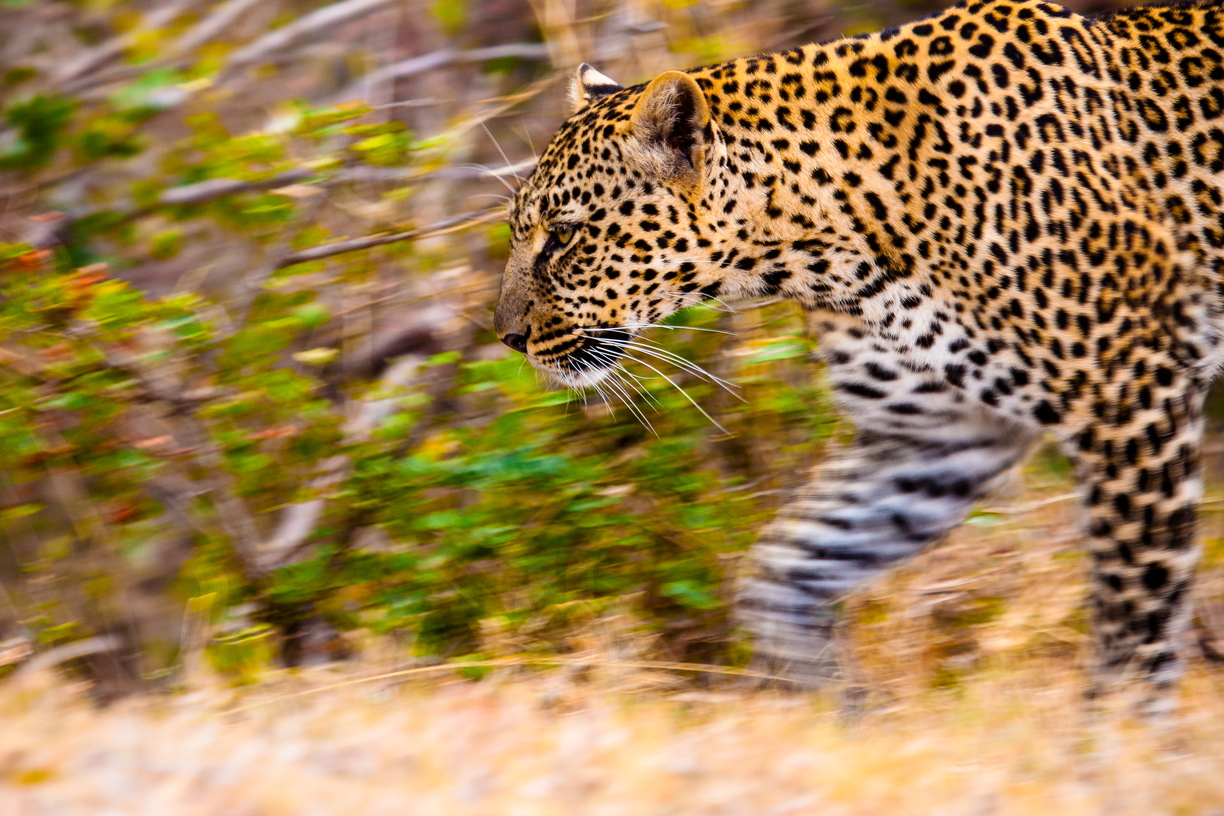
A leopard prowls in the dried stream beds near Kicheche Mara Camp, Maasai Mara, Kenya

I have often heard the criticism that the tourist with a camera sees little of the place they visit. Whilst I understand the sentiment behind this, ironically, some of the best pictures we’ve taken are when we’ve been least prepared – when we’ve been in a situation when our eyes have never been wider and our last thought has been to grab the camera. This is one such shot….

Having been unlucky with leopard sightings previously, we’d been tracking this leopard for hours. Dedicated, committed and it’s fair to say a little obsessed, we’d lost patience with the sight of the occasional glimpse of leopard skin and had downed tools to search eagerly through the bushes, eyes primed for a sighting of the elusive beast. Those sharing the van with us had grown tired hours before and had slipped into peaceful slumber in the back of the truck, but we and the trackers remained ever hopeful as we slipped into hour 3 of our search.

The light grew darker, and false alarm after false alarm led us further and further into the African thicket. Ground cover became heavier and bushes thickened as we penetrated the savannah forests further and further. The light and intense concentration played tricks on us and our eyes started to burn as the contrast between night and day grew more intense.  Hours had passed and it was less of a photographic mission now and more of a personal dream. As we pulled into a dried river bed under the canopy of trees she was there! Standing tall and proud, our presence did not even shake her. With each carefully pondered step she stalked towards our vehicle, turning on occasions to allow her coat to shine in the dappled light of the African sunset. Daring not to remove our eyes from our first leopard sighting, we slunk down into the vehicle to retain our cameras. Each grabbing what was closest to us, I ended up with the EOS 40D, a bad idea having spent most of the week shooting documentary footage with the videocamera. Still, needs must. Aware that it might be another 7 years since we would have this sighting again, we clicked and whirred away. Over 200 pictures taken in what seemed like an instant. Brain failing to engage, I snapped and snapped every opportunity I could get, only pausing once for my husband to whisper furiously about my ISO. Heart sinking I realised I’d been shooting a fast moving and camouflaged animal, in the forest during failing light. The result? One of the pictures I am most proud of – but will fail to replicate again.

With the benefit of hindsight……

new blog topic – with the benefit of hindsight

As well as my ‘Photo of the week’ post, I’d like to add another post called ‘with the benefit of hindsight’ which will share some of the photography mistakes we’ve made along the way, with the aim of sharing lessons learned.

Look out for the first post on the evening of August 18th, 2010.

We hope you enjoy it.

Photo of the week: Going back to the sea

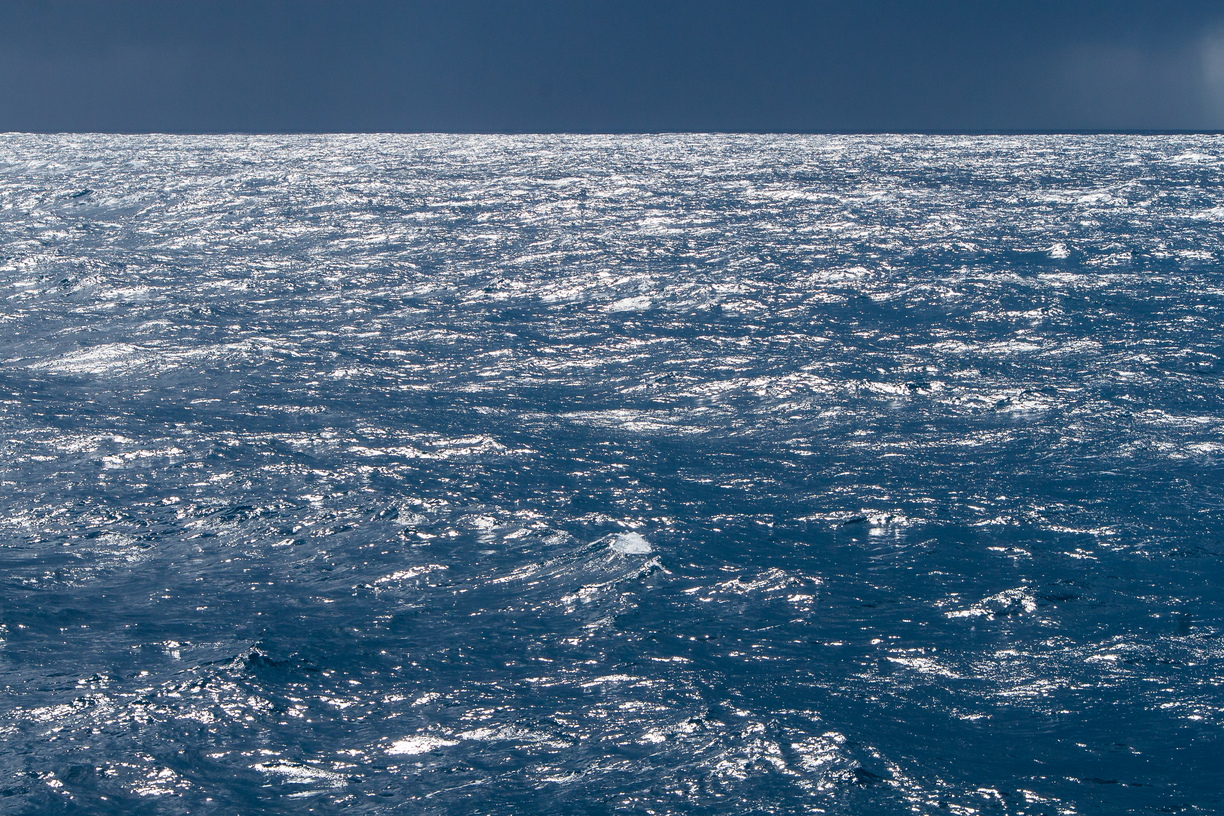
Glistening waves in the Drake Passage

Upon hearing that we’ve been to Antarctica, the first (sensible) question people ask (after ‘Why the heck would you!), is ‘What is it like?’

That’s a really hard question to answer and one I’d struggle to answer in words alone. That’s why our photographs are so precious to us – they take that snapshot in time (no pun intended) and lock it away as a back-up for our memories.

The reason for travelling to the polar regions is a question I find myself answering more and more now – especially as we’re about to embark on an expedition to the Arctic. It’s the natural reaction of people to ask ‘why’, ‘how’ and ‘when’. But for us, it’s not a case of why, more ‘why not?’

Some people are born for travelling and exploring new cultures, new ways, new sights and sounds. For us… well we’ve grown into it. Fuelled by a desire to see beyond what we already know we’re hungry to travel. To see things that challenge us, to discover new emotions, new people and make new discoveries that fundamentally begin to define who we are and what we stand for. The people closest to us no longer question it – nor do they necessarily accept it. I dare say parents and loved ones would prefer us not to sail across some of the roughest seas in the world and would prefer us not to endure freezing temperatures as we camp alone on the ice with nothing but a wee dram of something Scottish and a sleeping bag to protect us – but for us, it’s the only way and it’s the way we grow stronger and better at what we love doing.

That’s why we’re going back to the sea this Autumn. Going back to a place where we know we’ll be challenged, where we know we’ll fall in love with the landscape and wildlife, to a place that we’ll be proud to call home for a brief 2 weeks.

That’s why I’ve picked this Antarctic landscape as our picture of the week. It cements my expectations of the polar regions, allows me to explain to others the ‘what’ and the ‘why’ of travel and exploration. Above all, it daunts and excites me to think that we could be in this landscape again shortly.

We’re going back to the sea…….

Comparison of 300mm L vs 100-400mm L

I hired a Canon 300mm f/4 L IS USM prime lens from Lenses For Hire a few weeks ago, and took it to Chester Zoo to put it through its paces. I was also interested to see how it performed against my existing Canon 100-400mm f/4-5.6 L IS USM, with the assumption that the prime would be sharper as well as having a greater maximum aperture at 300mm. I’ve heard stories about bad 100-400mm lenses, and while it should be obvious if a lens is really bad, it’s harder to say if it’s just a little soft without having an equivalent lens to compare to.

The below shots are full size output from each lens, taken with a Canon 7D. They have been converted from RAW using Bibble with the standard settings and no other colour/sharpness/contrast adjustments. As these were taken with an APS-C sensor, it’s important to note that the images are using the central part of the lens, which is normally sharper than the far extents. Using these lenses on a full-frame camera will yield different results.

The images are of York Minster and are cropped – the left hand side is the far left centre of the image, the right hand side is the centre of the image. Conditions were not optimum as it was getting later in the afternoon, so this isn’t a scientific comparison but should give some indication of real-world results.

Including the full size crops directly in this post is probably a bit insane, but makes it easier to view side-by-side.

Full size images

First up, full size JPEGs converted from the original RAWs without any cropping so you can do your own assessment – click through for each.

300mm f/4 at 300mm f/8

100-400mm f/4-5.6 at 300mm f/8

300mm f/4 at 420mm f/8 (with 1.4 extender)

100-400mm f/4-5.6 at 400mm f/8

300mm, f/5.6

300mm f/4 at 300mm, f/5.6

300mm f/4 at 300mm, f/5.6

100-400mm f/4-5.6 at 300mm, f/5.6

100-400mm f/4-5.6 at 300mm, f/5.6

300mm, f/8

300mm f/4 at 300mm, f/8

300mm f/4 at 300mm, f/8

100-400mm f/4-5.6 at 300mm, f/8

100-400mm f/4-5.6 at 300mm, f/8

300mm, f/11

300mm f/4 at 300mm, f/11

300mm f/4 at 300mm, f/11

100-400mm f/4-5.6 at 300mm, f/11

100-400mm f/4-5.6 at 300mm, f/11

This final image has captured additional contrast accidentally, making it look more defined. I will try to post up a closer match to the previous image. However, across the different apertures the two lenses perform well, with the 300mm prime very slightly sharper in the centre of the image (here, the right hand side), and a slight lack of clarity starting to appear at the edge of the 100-400mm.

400/420mm, f/5.6

3 sets of comparisons now at 400/420mm, with the prime lens affixed to a 1.4x extender and the 100-400mm at maximum focal length.

300mm f/4 at 420mm, f/5.6

300mm f/4 at 420mm, f/5.6

100-400mm f/4-5.6 at 400mm, f/5.6

100-400mm f/4-5.6 at 400mm, f/5.6

400/420mm, f/8

300mm f/4 at 420mm, f/8

300mm f/4 at 420mm, f/8

100-400mm f/4-5.6 at 400mm, f/8

100-400mm f/4-5.6 at 400mm, f/8

400/420mm, f/11

300mm f/4 at 420mm, f/11

300mm f/4 at 420mm, f/11

100-400mm f/4-5.6 at 400mm, f/11

100-400mm f/4-5.6 at 400mm, f/11

The centre of each lens appears to be equivalent here, with both suffering slightly compared to the 300mm shots due to the addition of the 1.4x extender and the extension to the 100-400mm’s maximum focal length. The addition of the 1.4x extender to the 300mm prime lens has introduced some noticeable chromatic aberration, particularly against the stones on the very far left, and the right hand outline of the first tower as it meets the sky. The 100-400mm is also affected, but to a much smaller degree and is disguised by being yellow in colour compared to the cyan of the 300mm.

I’d be interested to hear if you’ve had similar or different results, or if you have any comments on the methodology. As I mentioned, this wasn’t scientific but gives a reasonable real world comparison.

Cautious

Photo & Video Sharing by SmugMug

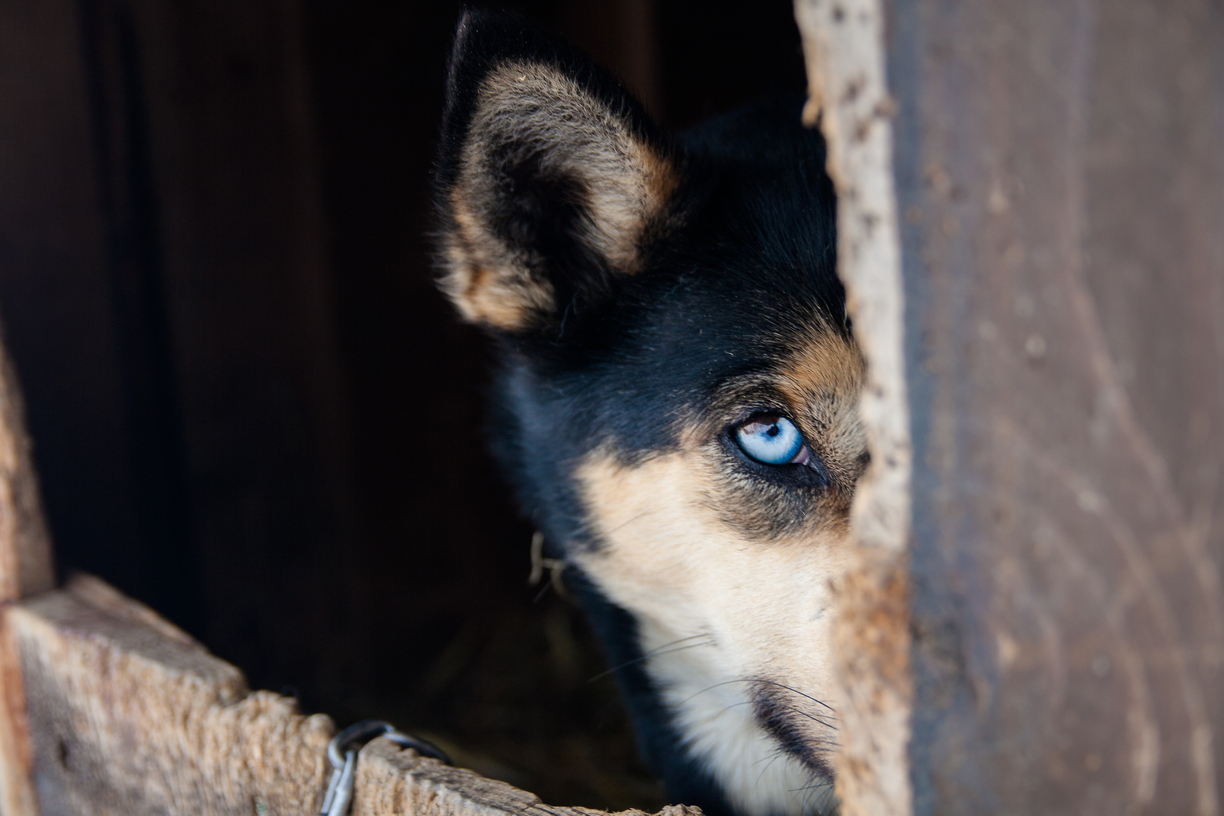
A husky hides in his kennel in Munkflohögen, Sweden, silently awaiting the next outing through the snowy forest.

April 2007