Home

Photo of the week: Manatee in Crystal River, Florida

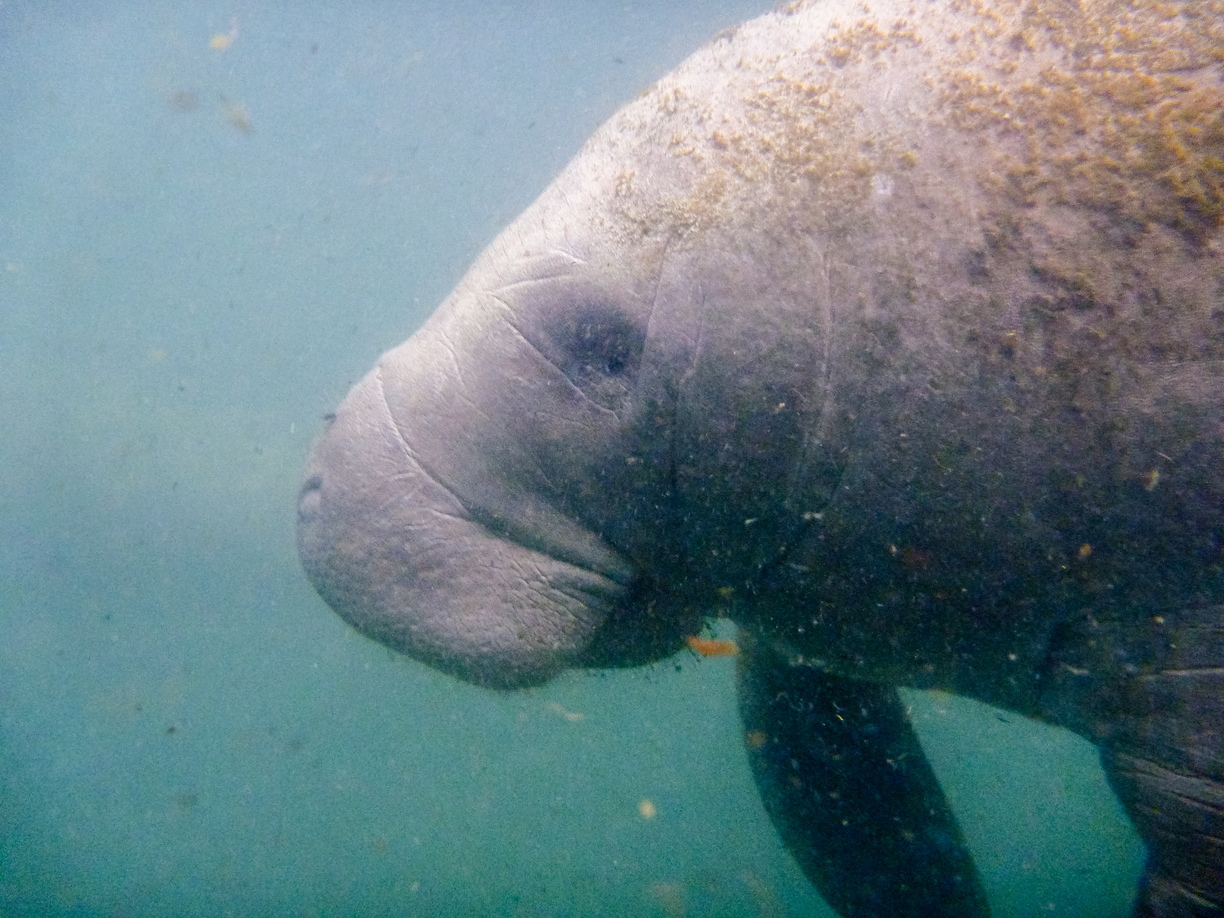
Manatee in Florida's Crystal River.

This image was not only my first ever attempt at underwater photography, but it represented a dream come true for me to swim with manatees (aka sea cows). These mermaids of Floridian canals and rivers had fascinated me ever since I first clamped eyes on a manatee at Sea World when I was a small child. I immediately fell in love with these huge giants, their vulnerability and their slow meandering paths through the murky waters of Florida. Frequently victims of power boat blades, these gentle giants spend most of their lives in shallow waters, dozing, swimming and eating contentedly. Favouring warmer waters, there are several regions of Florida where you can see and swim with Manatees, none more famous than Crystal River. That’s where Ali and I headed to celebrate one of our landmark birthdays in February 2010.

After squeezing into a wetsuit, goggles and a rubber bonnet, we slipped into the murky and ‘warm’ waters of Crystal River. Barely 5 foot deep, the river was home to dozens and dozens of manatees. Before I could even start to swim from the boat I felt manatees around me, under me, gently nudging me to get past. The water was so murky I could not see a thing, so somewhat nervously I swam through a narrow, dark channel, barely 1 foot deep in places, to reach a safe haven of the manatees. Here, in a clearing, the waters grew warmer and then cleared, enabling me to look eye to eye with my favourite animal for the first time ever.

We spent over 3 hours in the water with the manatees – it was the best £30 I have ever spent! It was an amazing opportunity to spend time interacting with the manatees and experiment with underwater photography and video.

We used a Panasonic Lumix DMC FT1 underwater camera/ video camera purchased especially for this occasion. Its performance underwater is supreme compared to its out of water performance when it can be slow to respond and can suffer camera shake from the need to firmly push the shutter release button to take a shot. Underwater, it was good – in unclear waters it focussed easily on the subject and was not distracted by floating particles in the water. It withstood being submerged for over three hours, and the absence of a protruding zoom lens enabled the manatees to get up close and personal with the camera – often coming closer for a curious look… sometimes even trying to take a friendly bite of the camera! The buttons are large enough to control underwater with wet gloves on, and it was easy to flit from photos to video camera settings. One bonus, is that you can interrupt filming to take a picture – which is exactly how I got this shot (above).

This image reminds me of trying new photography techniques and is a memory of a dream come true. That’s why it is my photo of the week.

Photo of the week: Peacock Butterfly at Blacktoft

Peacock Butterfly

What really inspired me at the Veolia Environment Wildlife Photographer of the Year 2010 exhibition at London’s Natural History Museum, were the shots that were taken in ‘back yards’. As photographers, we are more than guilty of assuming that we need to travel to far flung destinations to get the most iconic, most incredible and scenic shots – often overlooking the beauty that is in our local areas / our back garden / our local countryside.
This shot of a Peacock Butterfly was taken at Blacktoft Sands, a local RSPB reserve. Whilst we were there to observe and photograph the birds, what I really enjoyed were the walks between the hides amongst head height thistles, grasses and reed beds which housed a harmony of small and beautiful insects. I was easily distracted by the butterflies flitting from plant to plant. I was mesmerised…

Moving from a rural house with a back garden in Scotland to a city centre flat in York rendered us without any garden / outdoor space, and I long for exposure to the frogs, bees and butterflies which I took for granted every summer when living in Scotland. Blacktoft Sands was the perfect opportunity to mix birding with butterflies.

This shot was taken with an Canon EOS 7D at 400mm, exposure 1/250 at f/5.6, ISO 100.

This image reminds me to always be vigilant of the smaller insects and creatures, and to make the most of what opportunities which lie in your very own back garden. That’s why it is my photo of the week.

Photo of the week: The Peak Stands Proud

An abrupt rock peak rises into the snowy skies in the Lemaire Channel, Antarctica

This image was taken in Lemaire Channel, Antarctica -AKA Kodak Channel because of the photography opportunities it presents. It’s a beautiful, frozen channel, flanked by rocky outcrops, hills and icebergs. We visited over New Year 2006-2007 on the Akademik Shokalsky. Sailing through the channel at 6am, we were lucky enough to capture sunrise in this spectacular setting. We watched the morning light break through the clouds and kiss the tops of the mountains and their hillsides. It was a dark morning, moody and overcast. Any shafts of light that penetrated through the clouds cast shapes and images onto the still water and snow.

This one rocky hilltop caught our eye – seemingly standing proud and alone in the channel, it was cloaked in clouds and intrigue. Balancing our cameras on the side of the ship for stability, we braved Arctic temperatures in our PJs to capture this amazing image.
Many years after our visit to Antarctica we started to experiment with black and white photography, using Bibble Pro (5) to apply black and white plug ins to some shots. We’ve never before considered the impact of changing Antarctic images to black and white – it almost seemed to go against the grain of taking such care with our white balance and taking such effort to capture the blue of the ice.

However, we immediately loved the effect. To create this shot we used camera stock Kodak Kodalith and applied a black and white plug in via Bibble5. We also amended the exposure of the shot to emphasise the mood of the scene. It was taken with a Canon EOS 30D, exposure 1/160 at f/6.3, ISO 100 with exposure bias +2/3 EV.
This picture reminds me to change my perspective on ‘the perfect shot’ – to look a little beyond what expect from our photography and to learn to experiment with post production. That’s why this is my photo of the week.

Further black and white images of Antarctica are available in our online Antarctica gallery.

New Gallery – York Illuminated

York Minster, Illuminated

We’ve recently uploaded a new set of pictures to the website.  These pictures feature York Minster bathed in a light show which is narrated and set to music. It was featured as part of the ‘Illuminating York’ festival in October this year.  The festival was a great opportunity to quite literally see York Minster in a different light and get some really unique photos of this iconic building.  To see the pictures, please visit our Illuminating York gallery.

Photo of the week: Singing A Communist Song

Photo & Video Sharing by SmugMug

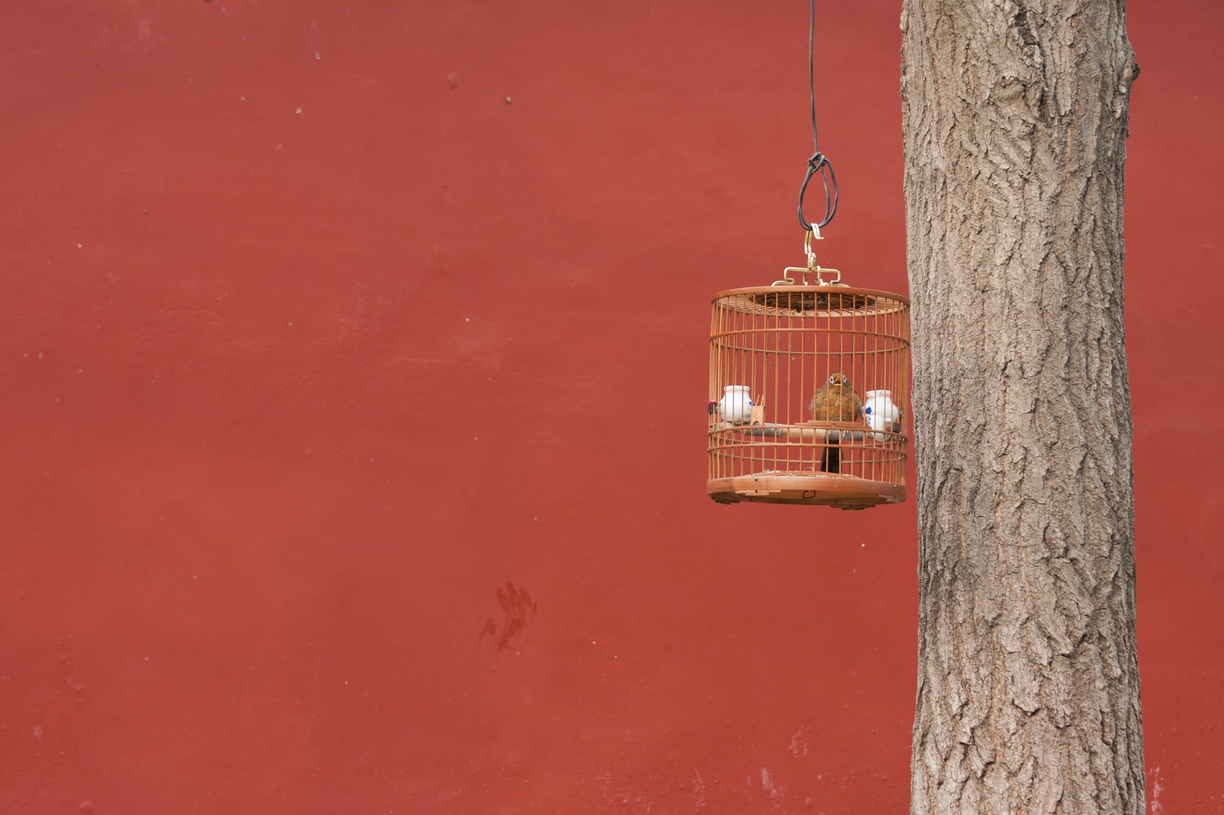
I love this image. The expression on the bird’s face never fails to raise my smile. It was taken in Beijing in 2008. We were wandering around the outside of the walls of the Forbidden City, surveying ramshackle neighbourhoods and their inhabitants.  We’d regularly come across small areas where the neighbourhood elders would gather to play mah-jong, converse and gather their songbirds.

Each elder would bring one songbird in a cage and hang it from a tree. The idea is that it provides the birds the chance to sing together and gather together as a group. This happened daily, from early to late morning and it filled the busy neighbourhood with the sweet sound of birdsong.

This one bird stood out, seemingly ostracised. Its companions had been removed, taken back home to their master’s house. The expression on the bird’s face captured our attention straight away. It looked almost pained and startled sitting there alone in its ornate cage in the freezing temperatures. Its expression seemed almost magnified against the bright red walls of the Forbidden City, and the absence of anything else in the picture seemed to highlight the birds’ plight more so.

We could not resist taking this picture, and it still tugs on our heart strings to this day. That’s why it’s my photo of the week.

New photobook now available: This White Wilderness

This photobook chronicles our travels in Antarctica, and focuses on the pristine nature of the Antarctic environment and those who inhabit it.  It’s a minimalist photographic exploration of the Antarctic peninsula, where white abounds, punctuated by elegant drama. It features shots from ocean and land, and explores the environment of the curious penguins, the majestic whales and the gigantic seabirds.

It’s been a long time coming – all of our other Antarctica photobooks have been in large hardback formats and less accessible to TarajiBlue fans.  By comparison, this book is a wee medium sized soft back, prices start at just £22.99 – and ideal Christmas present for nature and wildlife lovers!

We hope you enjoy it!

New photobook now available: Vulnerable giants

This photobook is a project close to our hearts. It features imagery of wild and orphan elephants taken during our visit to Kenya in September 2009.

After spending a marvellous week in the Maasai Mara watching herds of wild elephants graze, wander and socialise we were lucky enough to visit the David Sheldrick Wildlife Trust (DSWT) orphanage in Nairobi. Here we saw the devastating results of man’s influence on the natural world. Tiny, orphan elephants, separated from their mothers in the most horrendous of circumstances demonstrated that they were capable of love once more. Through the incredible trust and dedication of their keepers, we saw their strength grow back and witnessed broken hearts start to mend.  It was food for the soul and changed our perspective on the rehabilitation efforts of charities worldwide who strive to fix what man chooses to destroy.

We were moved to tears by our visit to DSWT and wanted to do something to help support the orphan elephants of Kenya. That’s why we decided to chronicle the lives of wild and orphan elephants in Kenya, and are dedicating all profits from the sale of this book to DSWT.

Help us save the ellies!

New photobook now available: Wildcats of Africa

‘Wildcats of Africa’ is a new photobook from Taraji Blue which celebrates the beautiful felines of the African Savannah. The images featured within the book were taken on a photography trip to Kenya in 2009. We spent a week in and around the Maasai Mara reserve, and were lucky enough to see cheetahs, leopards and prides of lions.

The leopard was a particular favourite of ours. We’d only managed to capture two glimpses previously – a fleeting glimpse of a young male leopard in Kenya in 2004, and a glimpse of a tail dangling from a tree earlier in the 2009 Kenyan trip. It was therefore a delight to be able to track and then spend time with the leopard on the last day of our trip. We spend over 2 hours waiting for a sight of the elusive animal. We finally saw her, in the undergrowth of a small forest. In the fading light we did what we could to capture once in a lifetime shots. She seemed unperturbed, almost stopping to pose for us at one point.  In the heat of the moment I neglected to pay attention to my camera settings, and by chance, the best shot we took was of the leopard in the fading light, moving through the dark undergrowth at 100 ISO – not something I’d usually recommend!

Some of the cheetahs featured in the book are of Shakira, the female cheetah made famous by the BBC Big Cat Diary. She had two healthy cubs with her and was proving to be an excellent mother. We had the privilege of seeing them hunt and bring down a large deer right before our very eyes. What a spectacle!

Also featured in this new photobook are lion cubs or all shapes and sizes. We were lucky to spend a lot of time with many Africa Lionesses and their cubs, and we got extremely up close and personal with them. My heart would pound and my pulse would race as the lionesses approached us with intrigue. I can definitely say that you never forget the sound of a lioness roar- especially when it’s barely a meter away from you.

Wildcats of Africa is a new size photobook – small and square, it represents great value for money and is an ideal stocking filler! A full preview of the book ‘Wildcats of Afica’ is available on our website. We hope you enjoy it.

New photobook now available: Take to the sky

‘Take to the sky’ is a new photobook from Taraji Blue, featuring birds from across the world and at home. It was inspired by the fact that many of our recent bird shots are becoming firm favourites among Taraji Blue fans so we decided to celebrate the best shots in one new book.

For many years we were guilty of overlooking birds – we favoured larger more iconic animals and mammals, often neglecting to look towards the sky. A holiday to Ecuador in 2006 changed all that – we had an amazing opportunity to spend a day with hummingbirds. These stunning fairies of the cloud forest impressed us with their agility, their speed and their beauty. It changed our mindset forever and took us down a new path for our wildlife photography projects.

The same year we were lucky enough to visit Antarctica and we were blown away by the immense size and beauty of the Wandering and Great Albatross which followed our boat across the Drake Passage. It was there that we experienced with a new type and style of bird photography, spending many hours on the windy deck of the ship, learning to track the birds in flight, hoping for that one perfect shot. It’s a technique which Ali mastered early on, and this led him to produce some amazing pictures – most recently of the ‘Fulmar in Greenland’.

Take to the sky is a new size photobook – small and square, it represents great value for money and is an ideal stocking filler! A full preview of the book ‘Take to the shy’ is available on our website. We hope you enjoy it.

New photo gallery now available: Kenya in black and white

Lioness stalking through grass

Recently we’ve we visited the Veolia Environment Wildlife Photographer of the Year 2010 exhibition at London’s Natural History Museum. Always an inspiration, the exhibition never fails to make me want to grab my camera and head out into the wilds. There were some very spectacular shots this year. Those from the young photographers particularly impressed me.

Of all the submissions, of particular interest to me were the black and white images that had been submitted and exhibited. Black and white wildlife photography is a subject close to my heart. In October 2009 I created a black and white book about Kenya’s wildlife called “Kenya – Memories of the Maasai Mara.” It’s a monochrome view of the Maasai Mara, telling the stories of the wildlife that inhabit this great plain, through good times and bad. The creation of my black and white photobook was inspired by the images of Alain Pons and Phillippe Huet in “Impressions of Africa.”

I found that by transforming full colour wildlife images into black and white, the eye is forced to reassess its expectations of wildlife photography and can be forced to notice patterns, textures and expressions often overlooked in full colour images. In particular, I find that black and white can add ‘mood’ and atmosphere to an image. It can also bring to life images that you might discard for reasons of sharpness or noise. I find black and white imagery can be more forgiving for the amateur photographer, more atmospheric and more dramatic.

For wildlife shots, I’ve experimented with different black and white applications through Bibble5, trialling different applications of luminance and applying red tints / curves to a black and white plug in to create sepia shots. I also like to add different ‘look profiles’, favouring ‘wedding’ for wildlife profile shots and ‘product’ settings for capturing wildlife in their environment.

For landscape shots I have trialled different print stock with black and white plug ins, finding Kodak Kodalith a difficult setting to apply, but when you get it right it can add drama and atmosphere to extreme landscapes like Arctic and Antarctic landscapes.

We’ve recently added black and white wildlife shots to the end of our Kenya Gallery, available online now. This allows for the visitor to compare colour and monochrome versions of the same image(s). We hope you like them and learn from them. Please do let us know what you think.