Home

A photographers’ paradise

Wanderers explore the bay at Sydkap, eastern Greenland, surrounded by vibrant tundra vegetation.
Greenland – a place of which we had little or no expectation, but were humbled and shaken by. It’s a land of outrageous scenery, a place that makes you feel alive again – like a child again. Immense 150 foot icebergs adorn every corner of your vision, colours penetrate your vision and you feel like it’s the first time you’ve seen true blue and white colour.
What’s more, it’s a place where time stops. Arctic wildlife being as elusive as it is means that you have time to fall in love with the landscape, compose your shots carefully and contemplate and test your settings. For me – that was ideal. I am used to taking wildlife shots, and am therefore used to quickly framing pictures, working with high speed ISO, wide aperture and servo setting, mainly working at full zoom. For the first holiday in years, I started to work with the full range of my camera settings – testing my exposure compensation, aperture, ISO, flash compensation, playing with multiple autofocus settings, my white balance and focus settings. It seemed odd to me to be in such a remote place on a once in a lifetime holiday and use this as an opportunity to extend my skills and the use of the camera – but time was a luxury we had and I loved experimenting with my settings and composition.
I found myself frequently at ground level, crawling in mud and heather to correct my depth of field and capture the full spectrum of the landscape in my shot. I was frequently working at aperture 18+, ISO 100 and exposure compensation at -1. This meant I could capture the smallest arctic flower in the forefront of the shot whilst still capturing the distant mountains in the background (and everything else in-between).  Working on a central focus setting with an aperture of 20+ allowed me to choose my exact reference point in the picture whilst also capturing the wider arctic scene. I enjoyed the fact that good photography became a result of time and consideration – opposed to adrenaline and fast shutter speeds. I enjoyed wandering amongst the arctic tundra and up the mountain sides to capture vertical (top down) views of 200 foot high icebergs, or frame arctic moss alongside a mountain top.
It’s a place where you can learn a lot, not only about yourself and nature, but also about photography.
Never put your camera down!

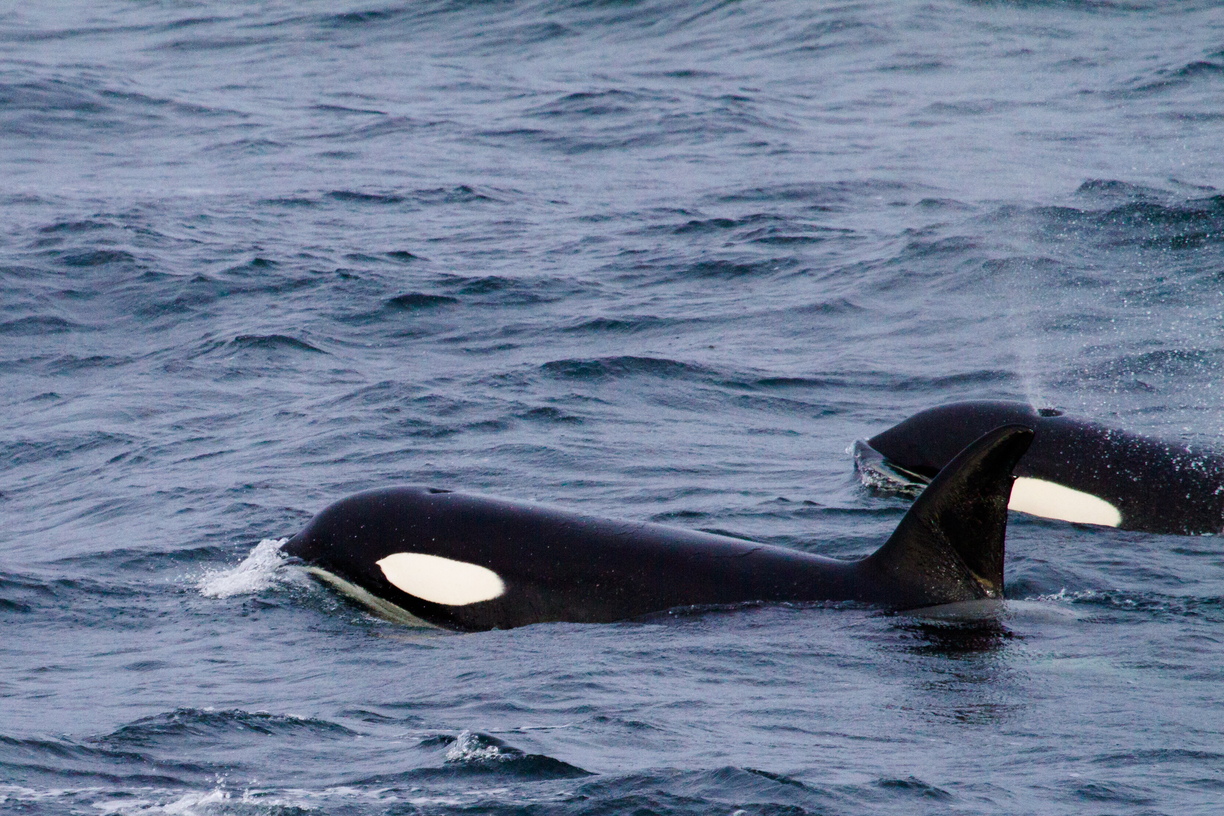
Orca whale at sea

Carrying a 28-300 or 100-400 Canon lens round for two weeks is no mean feat – Especially when you are ‘working’ 20 hour days sometimes, scrambling up mountainsides and getting in and out of zodiacs into the sea daily. What we’ve learned is that by goodness the Canon L lenses are robust. They’ll take a heck of a lot – extremes of hot and cold, rough seas and arctic winds, bumps up arctic mountains and rolls around the cabin floors (accidental and we would not recommend this for testing purposes!)

They are also remarkably versatile. Whilst we love and treasure the 100-400 (which has served us well for wildlife shots worldwide), we found the 28-300 had an excellent range for landscape shots. Capable of capturing ‘wide angle’ for landscapes (bearing in mind the cropped sensor of our SLRs) and working at a satisfactory level of zoom for wildlife. For the first time in years, the selection of lenses resulted in us not zooming in full – instead working on 200mm zoom for wildlife shots – because once you are in the Arctic, it becomes essential to capture your subject in its environment.

Shake can be an issue with the weight of the equipment – The 28-300 lens was 1.6kg without the weight of the SLR body. But the beauty of mountainous and rocky landscapes is that you can always find makeshift tripods – from rocks to boulders, knees to heather.  I should point out that we did take a carbon fibre tripod, but used this exclusively on the Canon 7D and 100-400 lens to ensure we had stable video footage and close up shots when needed.

I am conscious that all of this sounds very composed, whereas in fact we were running around like madmen a lot of the time. You can guarantee that for the 5 minutes we left our cameras in our cabin or took time for a cuppa, that we’d be caught needing to run back to collect the equipment as whales would magically appear on the horizon. We soon learned never to be without our cameras for any amount of time and that things happen when you least expect it with the elusive arctic wildlife.

A few of our fellow passengers remarked how hard we were working and how prepared we always were – I’m glad we hid the inner turmoil from any witnesses as we were often caught out by nature!

New gallery: Arctic – Greenland, Spitsbergen and Iceland

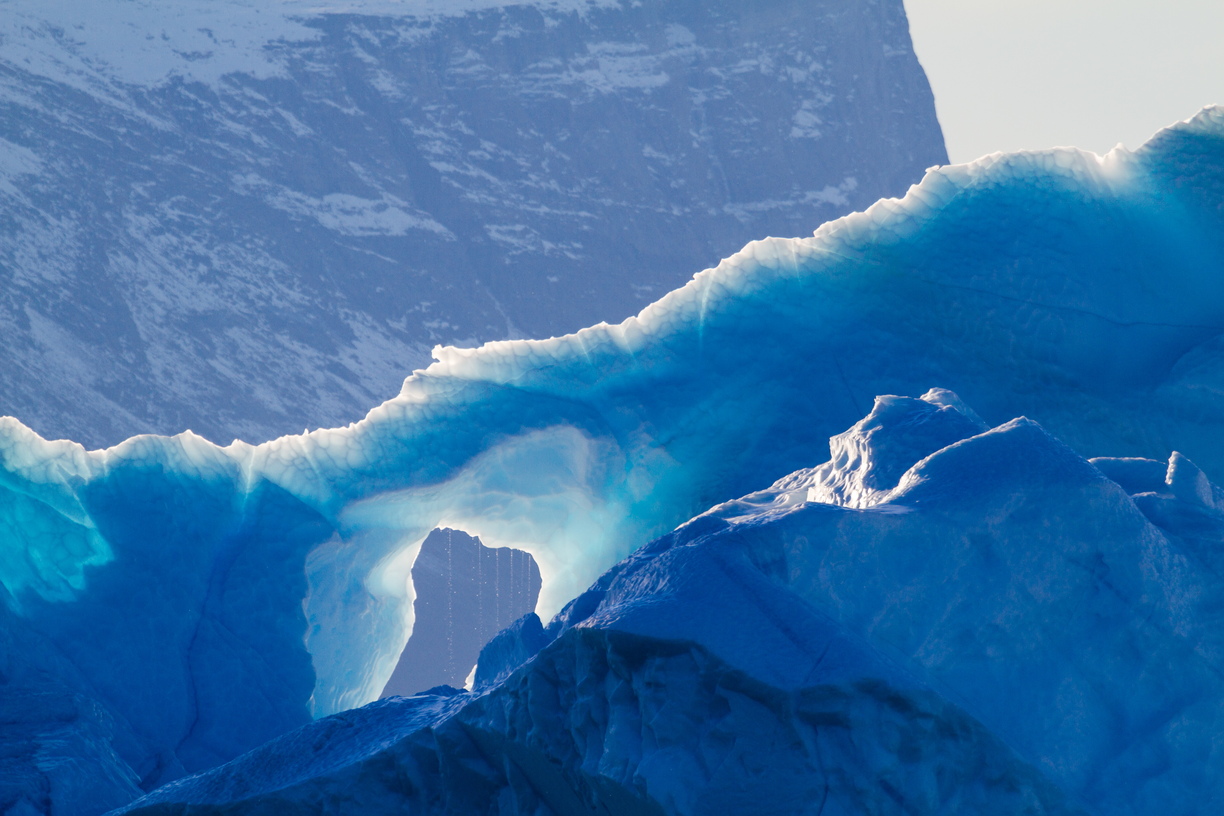
Exploring Scoresbysund by zodiac provided an opportunity to get up close and personal with the towering icebergs. Captured here in the morning sunlight, the ethereal iceberg is slowly melting, droplet by droplet

Our photo gallery containing shots from Greenland, Spitsbergen and Iceland in September 2010 is now online.

This is one of two shots of a beautiful iceberg melting in Scoresbysund, Greenland (a landscape orientation also available). It’s hard to show the scale of Greenland in single photographs, but for me this at least captures the beauty – huge snow-dusted mountains surround the boat, while intricate icebergs react to the sunlight in ways that range from bright white through to deep blue. This thin ice wall contains a texture almost like reptile skin, which in one area has melted through to form a window, droplets still trickling down from the arch.

Textures can be deceiving – in the lit area on the right of the image, four dimpled areas look just like paw prints… a bear? Or just a freak melt?

Photo of the week: Last ever space shuttle night launch

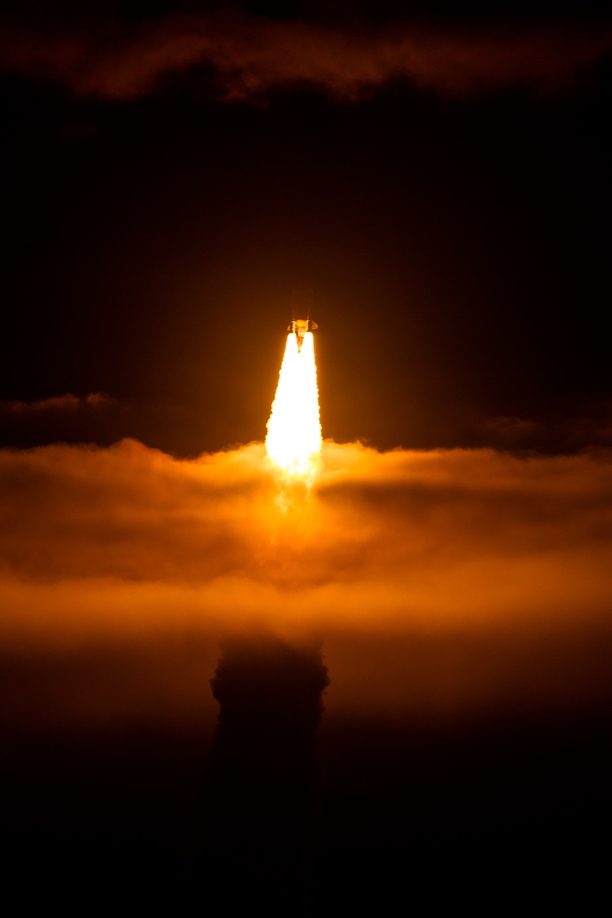
NASA's baby space shuttle, Endeavour, bursts through the clouds during its launch from Cape Canaveral on mission STS-130, the last scheduled night launch of the shuttle.

I have chosen this image as my photo of the week because it was quite literally one of the ‘last ever opportunities’ for us to witness and photograph a night launch of the NASA space shuttle programme.

The launch of Endeavour STS -130 was delayed by 24 hours, meaning we’d end up spending three nights and 4 days without any sleep. We spent two full nights at Kennedy Space Centre on cold February evenings, anticipation building as we wondered will it / won’t it take off this time? We followed the astronauts on the big screen as they got suited and booted and took the ride to the launch pad and scaled the mighty launch towers. Commentary was provided by ex-astronauts who joined us in the cold evening air, fielding questions from the eager crowds as anticipation mounted.

28 hours after we first arrived at Kennedy Space Centre, she took to the sky. It was like nothing we’d ever experienced. Night instantly turned to day as the flames lit up the sky, creating an artificial dawn at 3:45am.  My knees literally gave way and I was grateful for my tripod as I slid to the ground in wonderment.

I was in charge of video – the husband took photos. This photo of the week is credit to him – his ability to capture a speeding rocket travelling faster than sound through heavy cloud cover. It was always going to be a hard shot to get right, but we did it, and we’re proud of it. That’s why this is my photo of the week.

Photo of the week: Confident Steps

Tiny yellow duckling, full frame, walking across grass

This tiny little chap was wandering near Central Hall in the lakeside campus at the University of York, just down the road from where we live. He’s a great example of just how good cameras and lenses can be, and why it’s worth investing that little (or lot) extra, particularly in the lens. This is taken with Canon’s EOS 7D digital SLR, which has an 18 megapixel sensor producing images with 5,184 x 3,456 pixels. If you click through on this image and use the Photo Info tab, you’ll see the EXIF information that describes the technicalities behind the photograph, and that it hasn’t been cropped from the original image. The lens used here is Canon’s 100-400mm L IS USM, one of Canon’s professional series lenses. While there are reports of variable image quality from these lenses, and more credible claims that prime – lenses with a fixed, rather than zoom focal length – deliver sharper results, in real world examples the difference is almost indiscernable.

The photograph was taken with the lens’s maximum aperture of f/5.6, and a very fast shutter speed of 1/4000 thanks to the bright sunlight on the day, and the high ISO value of 800. 1/4000 is much too fast than strictly necessary here, given I was lying on the ground and so had good support along with image stabilisation. Ordinarily I wouldn’t shoot with this level of sensor sensitivity, but moving frequently from shadow to sunlight and with the lens often at its fullest extent, I wanted to make sure that the images of these birds would always be crisp. The 7D handles noise very well until around 2000 ISO, after which it’s acceptable but only really for use when really needed. In contrast, I would never have been comfortable using our 30D and 40Ds at ISO 800 unless really necessary – and I’d certainly never have used a film camera with this sensitivity.

The photographer is the most important part of the equation when it comes to creating high quality, beautiful images of the natural world. But it helps to have high quality kit – Canon’s L lenses here are in an entirely different league from the cheaper, kit-like lenses, and in this shot the lens is the most important component. The 7D’s high resolution helps but I think would still have been a sharp and usable shot when taken with the 30D at 8 megapixels, even up to A3. The bonus the 7D has given here is the extra shutter speed thanks to being usable at ISO 800 – even if higher than really necessary – but there are still plenty of similar shots left on the floor which just don’t have the same composition or sharpness. It doesn’t matter how much expensive gear you have – you’re the one that makes the shot.

Photo of the week: The chase

Cheetah hunt a baby gazelle

This is my photo of the week. It’s a shot taken in Kenya of a family of cheetah cubs learning to hunt from their mother. We watched for half an hour as they chased the baby gazelle. Time after time they brought it down only for the resilient little foal to jump up and escape again.

It was harrowing to watch but at the same time brought home the rawness of Africa – the wildness of wildlife. This is reality, it’s the circle of life, and we had a chance to experience it first hand – what a privilege.

I like this image because it captures the intensity of the moment, the desperation in the face of the predator and the hope in the eyes of the prey. It freeze frames a  second of live action and allows you to stare into the eyes of pursuer and victim before the inevitable happens. That’s why it’s my photo of the week.

Fun exploring EXIF data with Tableau!

Woke up this morning to a tweet from Vanya Tucherov about extracting the EXIF data from photographs and plugging into the information visualisation software Tableau. Worth a try! An hour later, we had the following charts up on the web, currently just using a sample of 450 photos:

How to

We use Bibble as our RAW convertor/DAM, and a peek inside their image library files shows that it’s all stored in SQLite, a portable/flat file database format. That’s good – it means it should be easy to transform it into a format Tableau understands. For this purpose I’m using Tableau Public rather than Desktop, and Public is happy working with Excel, Access and CSV files.

First up I used the SQLite Browser to get into the library files, and exported the Exif table from the base file into CSV format. I also exported the Master tables as I’d hoped there were some datestamps in there, but as I was working from a JPEG library on my laptop they correspond to the date the JPEGs were output, rather than the capture date of the shot.

I imported the CSV into Excel and did some manipulation – the Exif data is all stored inside a simple XML record, so it’d be neater to set up a script that parses the records and outputs a more strongly structured CSV file, but for this test we just throw some formulae at it (messy but it worked: to start at the right place, =MID($C2,FIND(D$1,$C2)+2+LEN(D$1),100), where C2 is the record, and D1 is the label you’re looking for, and the following to stop the output after the double quotes in the previous cell =MID(D2,1,FIND(“”””,D2,1)-1)). Thanks to FlyingBinary‘s quick thinking, I was able to convert the unfamiliar aperture (39/8) and focal length (300/1) values into decimal format using =VALUE(LEFT(J2,FIND(“/”,J2)-1))/VALUE(MID(J2,FIND(“/”,J2)+1,LEN(J2))).

Just about ready for Tableau – we now have an Excel file which gives us camera Make, Model, ImageWidth, ImageHeight, ISO, Exposure Bias/Compensation, Aperture, Focal Length, and Shutter Speed. I downloaded Tableau Public, installed and opened up the Excel workbook as a data source. After a bit of playing around and excluding null/invalid values, I came up with the above. It’s clear that most shots are taken at the minimum or maximum extent of the lenses we’ve used over the years: 18-55, 70-300, 100-400.

Later, I’ll run the same process over all our RAW files and extract some more data, particularly the datestamps, to see what – if anything – has changed over time.

Photo of the week: Red Square, Moscow

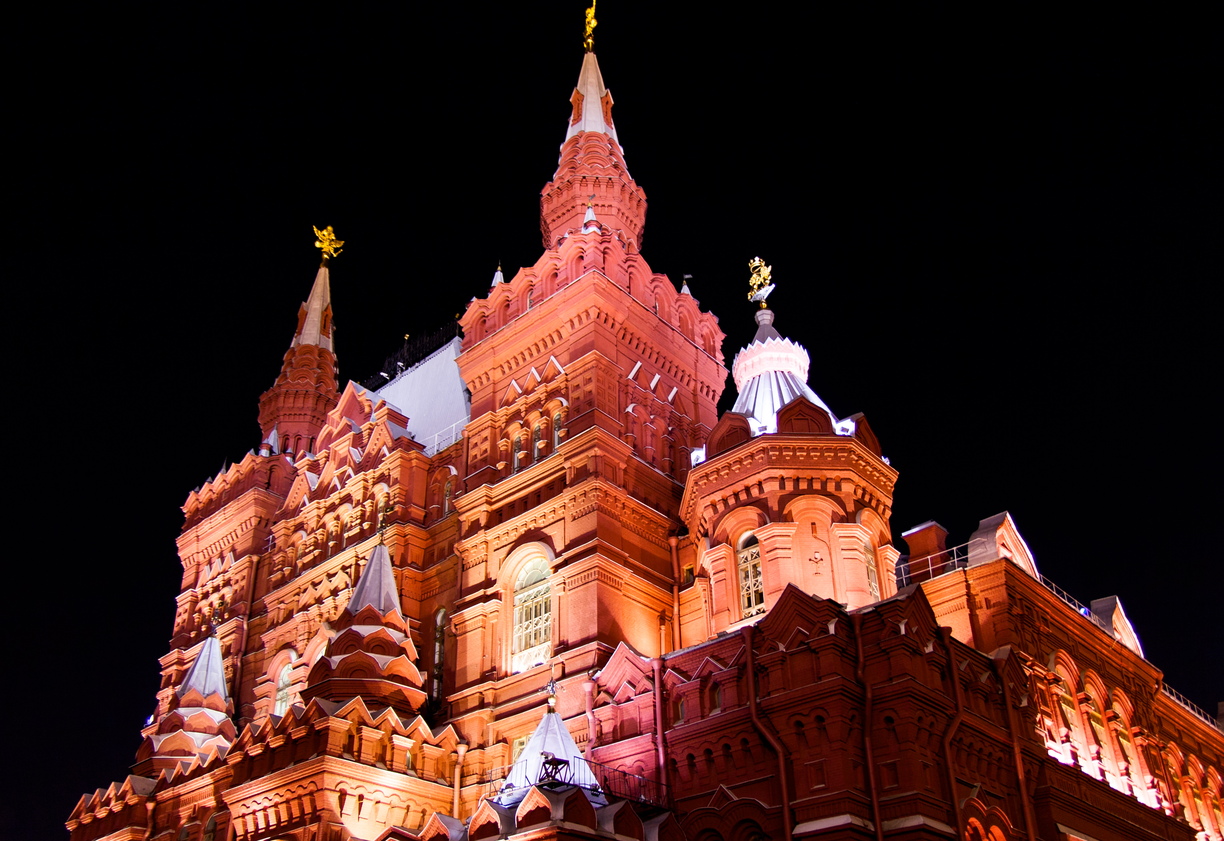
Red Square at night

I have chosen this image as my photo of the week, because it reminds me of a great moment when you discover something new in photography, something which alters your perspective and photographic style.

Heavy rain had fallen that afternoon, so several puddles were strewn across Red Square.

Now Red Square is a place we adore – one of our most favourite cityscapes. We have spent many an hour oggling the square and its amazing architecture, morning, noon and night. On this particular visit we were with family and were reveling in the experience of people seeing Red Square for the first time at night. Having the square to ourselves late at night meant we could take time to get the perfect shot. Tutoring our family on photography, we stooped to ground level to shoot up towards the rooftops of the National History Museum. It’s then we noticed the refections in the puddles – glorious, still and a perfect replication. We embraced the moment and lay the cameras on the ground, shooting into the puddles. Within 10 mins, we had passers by, tourists and strangers stopping to ask what we were doing and to copy- all discovering a new way / new ideas / new experiences with photography. The result – a great chance to share a new discovery with like-mined photographers from across the world.  That’s why this is my photo of the week.

Photo of the week: escaping this weather and heading to the desert

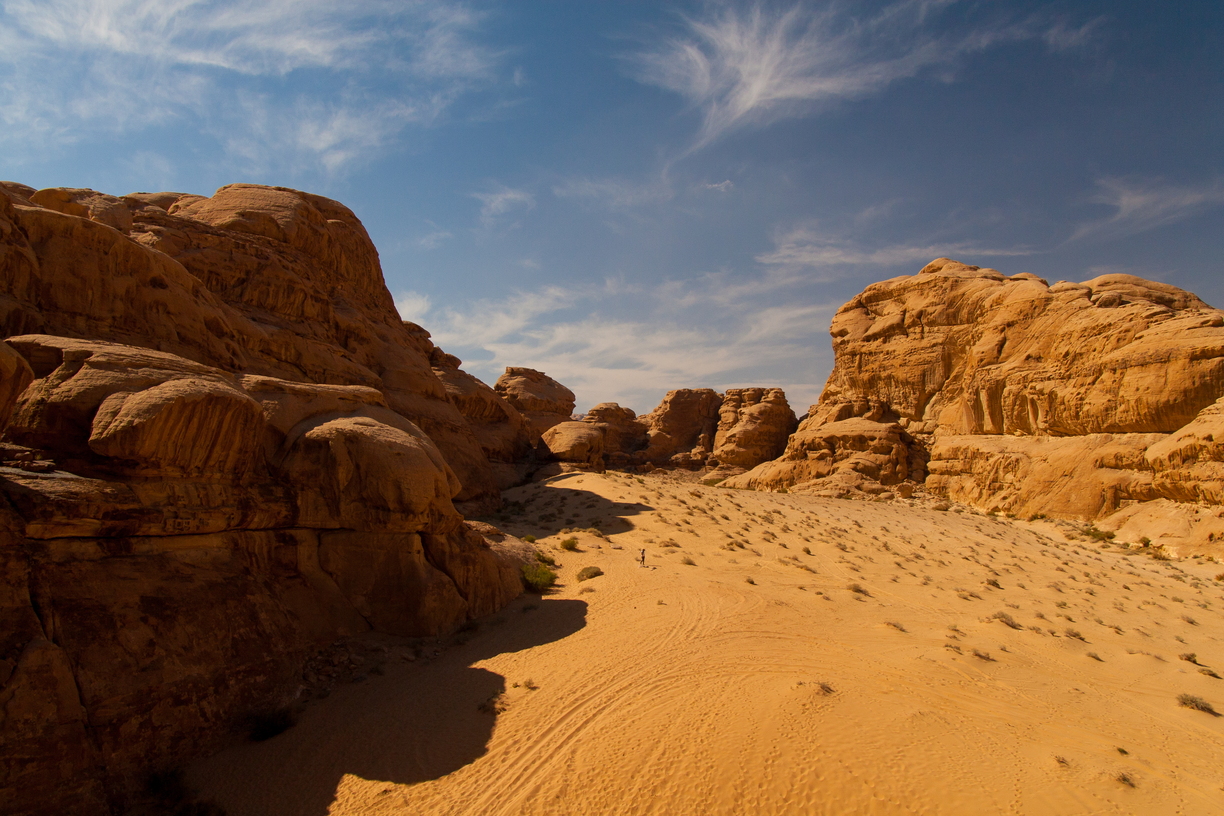
People disappear amongst the sandstone blocks of Wadi Rum, Jordan.

Given the weather we’re having these last few weeks, I have chosen an image that takes us back to sunny and far off shores. This is Wadi Rum in Jordan, home to Lawrence of Arabia and wandering nomads. Its a place we expected to like, but instantly fell in love with.  Free to explore the deserts, we wandered for hours on end, climbing rocks and exploring caves. This picture was taken from a natural stone bridge, looking out across the peaceful desert vista. In the centre left of the image is a lone woman, exploring the desert in her own time, just as we did. It’s a shot that takes me back to the moment – and for that reason its my photo of the week.

Antarctica – with the benefit of hindsight

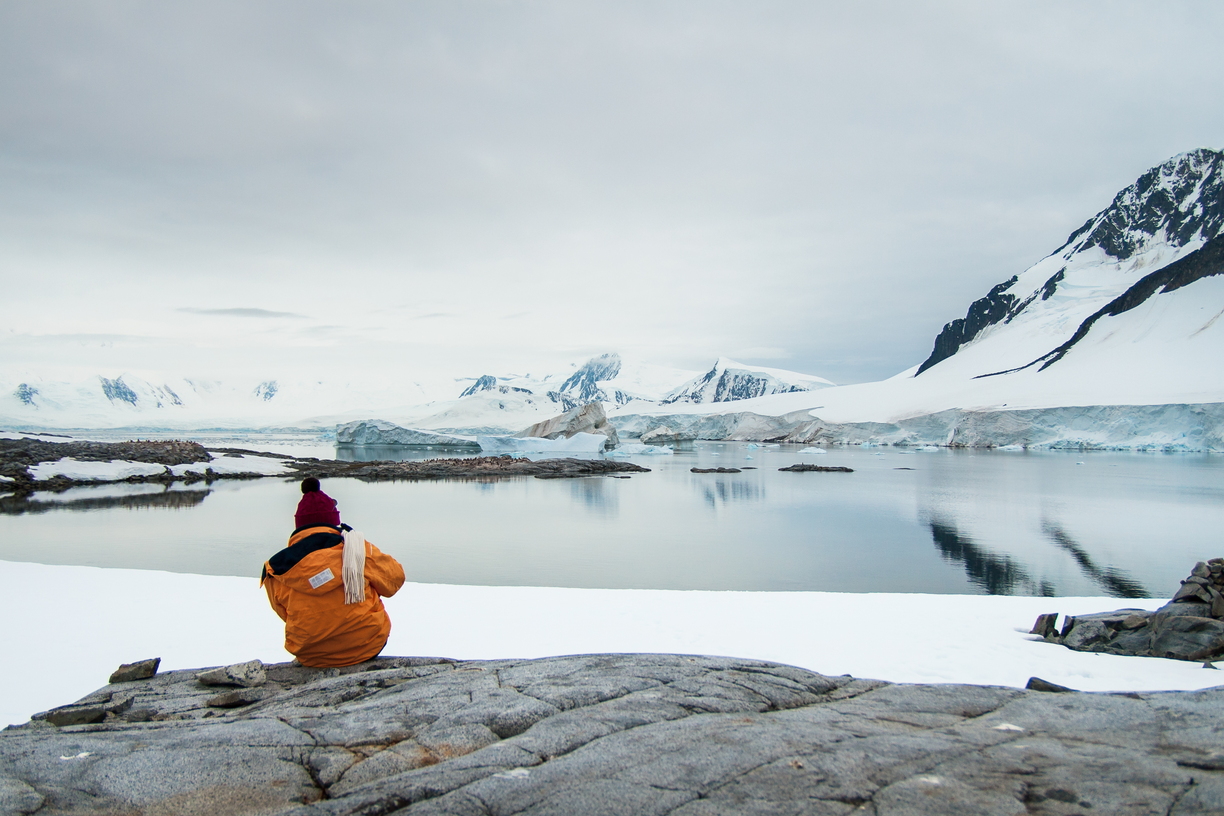
Marie Knock takes time to enjoy the view of icebergs and gentoo penguins in Dorian Bay, Antarctica.

Antarctica, the trip of a lifetime and the chance for us to snap some memories that would last forever. We embarked on our trip to Antarctica as novices with a relatively new inventory of photography and video equipment. We had all the technology we needed, but it’s fair to say that we had not yet fully developed our ‘eye’ and photography styles.

On a small boat in the Antarctic Peninsula, there was very few people on our trip – just 40 passengers in total. What this meant was that we had lots of time to take photographs in solitude, choosing the composition to suit, taking blissful landscapes uninterrupted by human presence. This is where the benefit of hindsight comes in – the vastness of the polar landscapes is such that without the occasional human in shot it becomes difficult to ascertain any sense of scale. We put a lot of effort into ensuring no humans were in shot, but for those occasional pictures where we included an expedition leader, a zodiac pilot or a fellow passenger, it really helped to bring the landscape alive and give a sense of dimension to what is an alien but beautiful landscape. This is a valuable lesson and one which we’ll certainly be taking into consideration on our pending trip to the Arctic.