Home

It’s National Braai Day Today, lets braai, braai, braai!

The braai at Killiekrankie camp in the Kalahari

Yes, you read that right, it’s national braai day…so come on, grab your wellies , umberella and BBQ tongs and lets celebrate like we’re South African 🙂

I am happy to admit that I have become  a bit of a braai enthusiast….ok.ok….I’m an obsessive braaier.

Ever since our first trip to Kruger in January this year I fell in love with outdoor cooking – I’ve never happier than when I am covered in soot, have  a fat juicy steak on the fire and a glass of cape red in my hand watching the fire burn and the african night descend.

After a long day in the field witnessing the most incredible wildlife and landscapes of Africa I love throwing on my braaing outfit (the most smelliest one!) and starting a fire. I am fiercely territorial of my braai too – my husband is barely allowed to touch my precious flames without permission. It’s so primeval to light a fire and cook meat….I love it.  And when I discovered Potjie…  wow! 🙂 My braaing experience was complete.

This is my most favourite braai – it’s at Killiekrankie Dune camp in the Southern African Kalahari and it is the most peaceful and wonderful place to cook up a feast. As a fence-less camp, Killiekrankie provides the opportunity to braai in the presence of big cats, owls, wildcats, hyhena and bok. It’s a magical setting and one that I hope to return too one day.

And to reassure you I can start a damn good fire…here’s some of my best 🙂


A potjie on the braaiA braai in South Africa at sunset


And Here’s Something A Little Different…

A sneaky treat

Here’s a little something special, which I oiginallly produced for Google Plus’s +African Tuesday  #africantuesday  and their “Wonderful women of Africa” theme curated by +Morkel Erasmus and +Johan Swanepoel

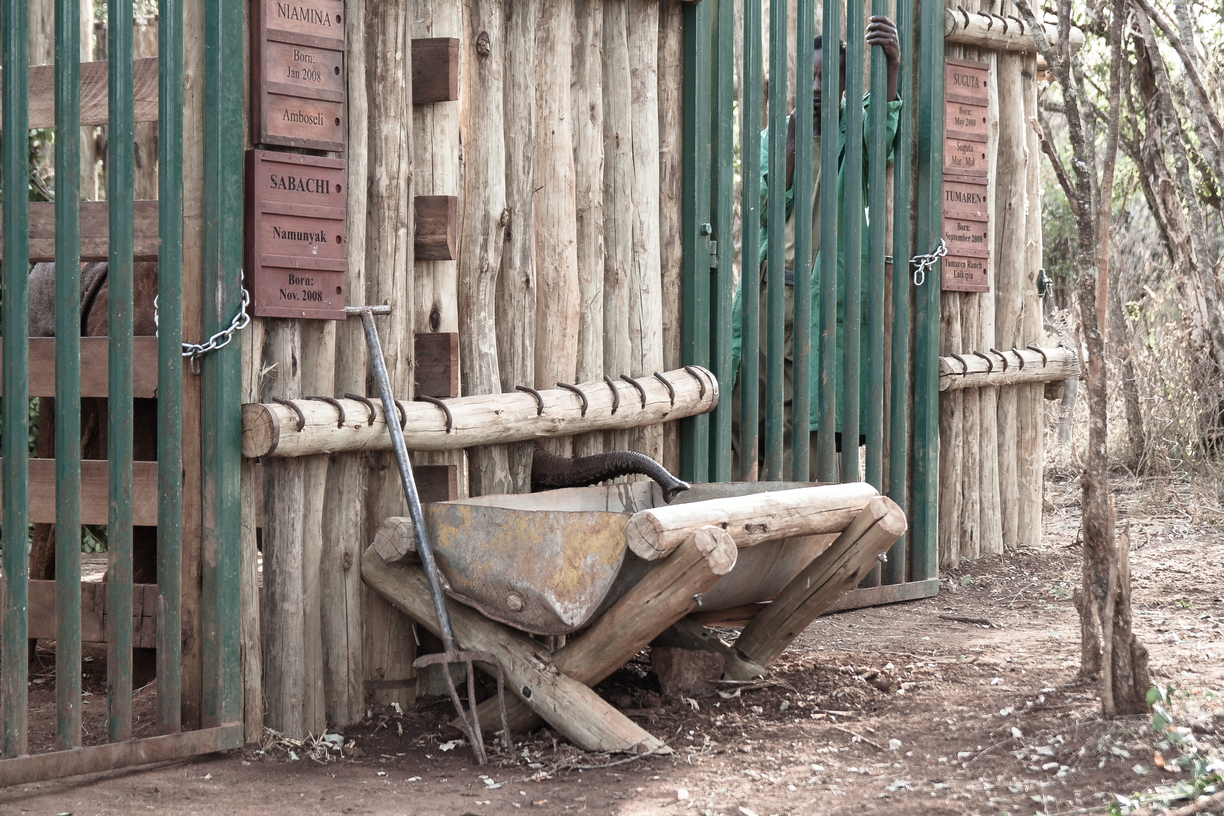
It’s a brief video from our visit to the David Sheldrick Elephant Orphanage in Kenya 2009. There we were lucky enough to witness Angela (Sheldrick) calm and nurture a baby elephant called Shaba….just days old and petrified, the wee ellie was crying out having witnessed its mother be cruelly removed from him. The calming influence of Angela was palpable – the work her and Daphne do is surely worthy of any accolade of great women of Africa? If only I could do something half as worthy!

The Lost Parade

The Lost Parade

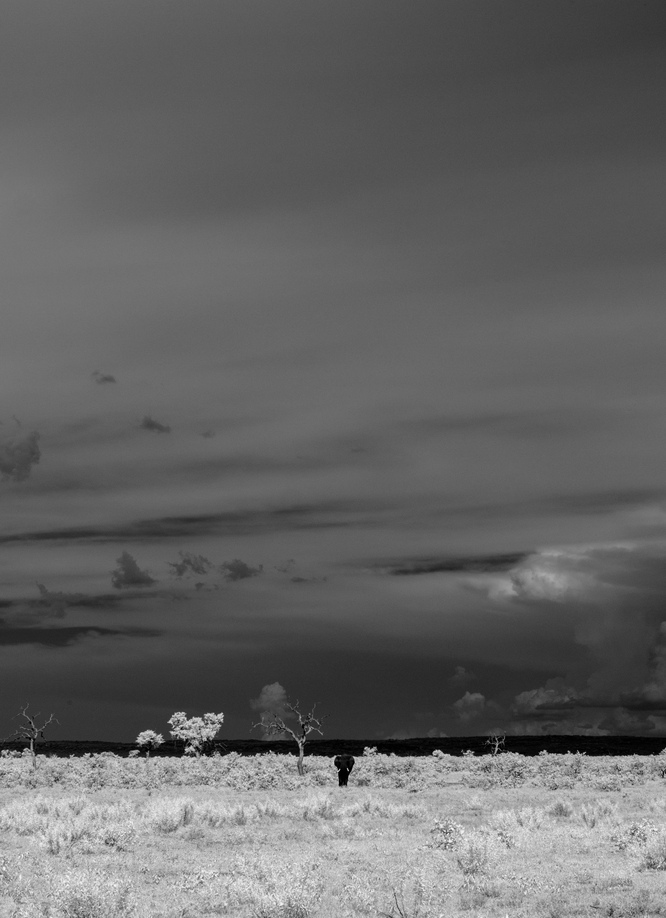
A herd of elephant disappear amongst the tall trees and vast skies in the Tsavo National Park, Kenya.

This is from way back to our first trip to Kenya – and our first real safari – back in 2004. It’s a single shot crop-panorama (the skies are just too big in Kenya and need to be reined in in post) from a drive in Tsavo East, famous for its red dust. I like the rainbow of colour, the jagged heights of each of the elements included, and the fact that you don’t notice there’s a herd of elephants right there in the middle. African elephants – largest land animal on earth, you know. Totally dwarfed by, well, nearly every tree around. Go trees!

For me this is a personally memorable shot too, as it was shot back in our film days with cheap EOS 3000s and kit lenses, not really knowing what we were doing, coming back from our trips with 20 films between us, taking them to the processor, waiting, coming back to find the £150 bill (!) and then spending the weekend sat on the floor sifting through the 700 7″x5″ prints we’d lugged back home. Few stood out – some things never change – but occasionally you’d come across something and this was one of them. It’s grainy, there is a thin pull mark that tracks across the whole bottom of the frame, corners are soft and the scan could be better – BUT! A few years later +Marie Knock and her sister conspired for my birthday and produced a series of box canvas prints, two of which put together formed this panorama, and I love it to this day. The quality is great for that purpose and it is a perpetual sunny day that hangs around the house. Often we see the technical defects in an image more strongly than we see the emotion and beauty, so next time your finger is wavering over the reject button, wonder if you’d treasure what Getty would reject. It’s only bits and silver halide after all.

The most incredible place to stay – Kieliekrankie Wilderness Camp

If Only All Days Would End Like This

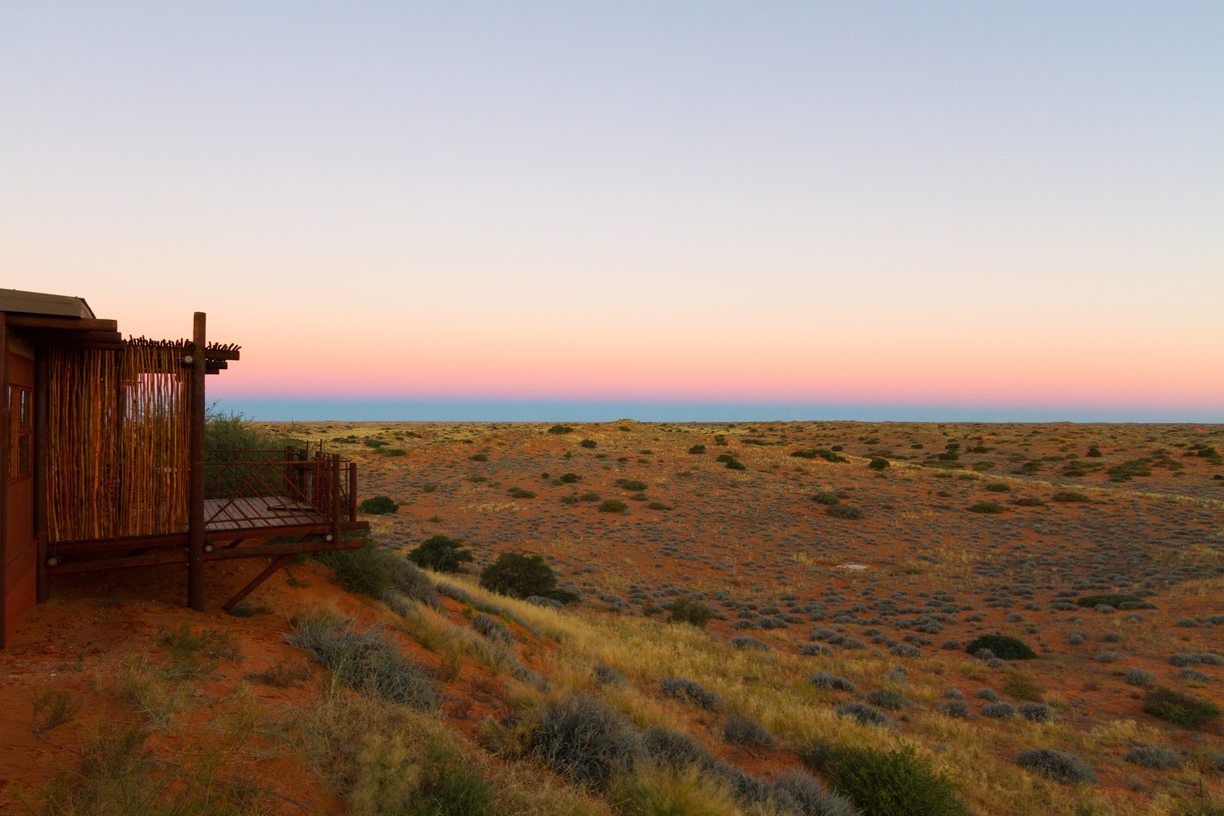
Kieliekrankie Wilderness Camp in  Kgalagadi Transfrontier Park is, by far, one of our most favourite places to stay in the world.Imagine just 4 guest cabins, perched on-top of a sand dune, sensitively positioned so you’re not intruding on each others’ privacy, but close enough to allow searchlights to share sightings between the residents.

Each cabin faces endless rows of gently undulating dunes which glow brightly in the sunset each evening.  It’s part of the the Sanparks network and offers incredible value for money and a romance very few places can match.It’s a wilderness camp so there are no fences and safety is taken very seriously. You’re ‘locked down’ into your cabin after dusk and cannot emerge until dawn – but the tailor made decking allows guests to braai outside under the endless starts of the milky way, searching for wild animals by spotlight whilst being visited by resident barn owls.

The skies here are huge and they stretch beyond your vision, rendering you speechless as the blackness is replaced by twinkling stars, satellites, the magellanic clouds  and shooting stars. Without going OTT, this is a place to rediscover yourself, get a bit of perspective and realign your worries, stress and perspective on the world. Life doesn’t need to be as complicated as we make it – for two weeks of the year we should slow down in a place like this and recall what it is like to experience life without wi-fi, tv, facebook and other unnecessary distractions. It’s pure and unadulterated bliss. Further photos from our stay at Kieliekrankie Wilderness Camp  are available in the Taraji Blue Kalahari Photo Gallery.

Less Perfect, More Reality.

Gulls swoop and fight for seed

I spend so much time trying to capture the perfect wildlife portrait that I sometimes forget the most interesting shots are often those that represent reality i.e what you see, when you see it.

I have started to wonder if photography could or should be less about what the camera sees, and whether the photograph should represent what your eyes see / would have seen if your eye was not glued to the viewfinder.

A herd of impala run to safety

That’s why is have taken to trying to capture disruption and movement in photography…it’s a huge challenge. To cease waiting for the perfect capture and instead going with the flow of what emerges and when..it causes for a rethink of key disciplines but also leads to a ‘no regrets’ attitude that I love. It’s also a more raw form of photography for me – one which needs much less post-processing time, and for this I am grateful. I dislike post processing – I’d much rather be in the field than sitting in front of a PC.

Here’s some of my attempts to date. They are work in progress, but it’s a step forward at least, and it is always fun to learn a new skill.

A Rabbit escapes

A butterfly gets ready for takeoff

I welcome your thoughts. Additional images are available in the Taraji Blue ‘movement’ gallery. 

Close Encounters With HumanKind

Collecting sticks for the local community on a morning walk allowed us to introduce ourselves to a local family who invited us to their tent for tea. We gave the daughters our camera to show them where we'd been in Jordan to date - they giggled none stop at the fact we'd taken pictures of their goats.

Whilst staying at feynan EcoLodge in Wadi Dana (Jordan) we took the opportunity to wander the valley floor. We amused ourselves for an entire afternoon, tracking musical songbirds in the dry trees of the once riverbed and locating crickets in the sparse and thorny undergrowth. It was hard work and we stopped after an hour or two to rest by a lonely boulder above the desert floor and surveyed the scenery around us. We’d been so busy looking for bugs and birdlife that we’d failed to see a young girl who’d been gradually approaching us, collecting the few dry twigs she could find for firewood. I didn’t hesitate to raise my hand and offer a friendly wave – she did likewise and then continued about her business. Feeling brave, I decided to go and meet her, and Ali and I started to gather any twigs we could find, approaching her a wee while later with arms full of bundles of sticks. As we approached and held them out to her, she beamed with happiness and enthusiastically offered our gifts, thanking us over and over in Arabic. She gestured for us to follow her across the sands, and we did so, continuing to collect twigs and sticks on the way. We saw in the haze of the valley, an silhouette of a tent in the distance.

So generous, was the family of two teenage girls, one baby and the mother, that they greeted us quite literally with open arms and immediately paraded their goat through the tent and offered us its milk followed by Jordan tea. Ali and I nodded wholeheartedly, keen to experience more of the Jordanian hospitality.

Whilst enjoying the tea and cooling off in the shade of the tent during the heat of the day, we chatted on our own native languages, yet seemingly understanding each other. As comfortable in our chatter as we were in our collective silences, we got to know one another. I took the opportunity to suggest that we hand them our digital camera to show them the images we’d taken on the holiday to date. They gently took the heavy camera from us, bemused at to what was to come next. Ali showed them the screen and how to navigate the images and we took them through a little slideshow of Petra, Amman, Jerash and Wadi Rum. Their eyes widened as the pictures unfolded and then they hooted with laughter as they saw the pictures we’d taken that morning. They could not believe we’d spent the morning taking pictures of crickets, common birds and most of all, their goats – they could not stop giggling. Assuming we had some uncontrollable goat fetish, they then proceeded to introduce us to all their goats which had, by this time, surrounded the tent in curiosity. I felt almost embarrassed – but their laughter was well intended and served to break any cultural and language barriers that might have existed. We laughed together until the heat of the afternoon calmed and we bid then farewell, thanking them immensely for their generosity – and them thanking us once more for the sticks and goat pictures. As we walked away into the distance I kept turning to see the tent once more, and they’d still be stood there, waving us goodbye. They were a lovely family, so kind, so hospitable and so gentle. I felt privileged and proud to have met them. They had really ‘made’ my holiday and gave me lifelong memories, lessons and experiences to cherish.

More images from our travels to Jordan are available in our Taraji Blue Jordan photo gallery.

Reflecting on our time in Kgalagadi Transfrontier National Park

Black and white image of a cheetah's face

That, folks, is the end of my Kgalagadi Transfrontier National Park Trip Report. I only wish I would have been there for longer so I’d have more experiences to share.

I’ve loved sharing it with you… it’s helped me relive memories and kept my passion for Africa well and truly alive. Needless to say, we will be back to KTP, it has captured our hearts and our souls and it is one of the few places in the world that we hope to return too time and time again!

I thought it’d be a fitting end to share with you my top 5 experiences and some photos that didn’t naturally ‘fit’ into the trip report.

My top 5 experiences:

1. Braaiing! I cannot communicate just how much it means to me (a ‘city career’ girl) to be able to stand in the open air, getting smoky, with hair unbrushed and feeling the sand brush against my face in the wind whilst making a fire and braaing. It’s the real me, one few people see and one I have so little chance to embrace at the moment. It makes me feel alive, it reminds me that gadgets, gizmos and designer dresses are not the ‘norm’, that I am a nature lover who thrives on the great outdoors…and I am proud of it.

2. The cheetah chase….not because of what we saw (which was amazing!) but because we were ‘brave enough’ to take a risk and make a decision to leave a sighting to find the herd and see what would happened. It was a huge gamble and one that, thankfully, paid off.

3. Killiekrankie camp (killie) – isolation and solitude at its best. The perfect mix of luxury and wilderness. The sunrises and sunsets tore my heart in two when I realised this was a limited time sighting, on that I would have to live without at the end of the holiday.

4. Finding the barn owls in the water tank at Killie. Not the ‘idyllic’ wildlife sighting, but I was so, so, so close to the bird I most admire and I was crying into the lens with joy. It was overwhelming to be so close to a dream sighting and for the owl to be so at ease with my presence.

5. This is going to sound really odd…..but to stand at the KTP entry point with one foot in Botswana and one in South Africa was surreal. I have always wanted to visit Botswana..the travel brochures and websites do a great job of making it sound like an impenetrable water world that’s VERY expensive to navigate/ visit and impossible to visit on a self drive – and here I was, at a border post, with my right toes peeping into this country that had been on my wish list for many years!

This probably presents a very different view of the Marie Knock that’s written the trip report to date, but I hope it communicates just how much I love being in Africa….despite being an amateur wildlife photographer, it’s not only the wildlife sightings that keep me returning, it’s the country too!

And what’s next? ….. well, we’ve sold our house and are buying a place further from a city and closer to nature….the main criteria being I have a have a garden where I can braai daily.

Here’s a few photos that didn’t ‘fit’ into the TR, but I thought you might like to see them…

A close up of a cheetah's face covered in blood 

All these photos from KTP and more are also available in our TarajiBlue Kalahari photo gallery.

My  Kgalagadi Transfrontier National Park Trip Report is available in full here.

(Near naked) Close Encounters with the Arctic Ocean…Behind The Scenes Of An Arctic Adventure


Marie with Polar Bear


Taking pictures of tiny trees

I’m conscious that a lot of the images we’ve published of the Arctic give visitors / readers a good idea about the beauty of the Arctic and the incredible landscape – but what  is it like to live on-board for 10 days with a bunch of strangers and what do people get up to when they’re not behind a lens? Well, hopefully this blog post will give you a little bit of a feeling for life in the Arctic.
In summary – It’s great fun! One of the great things about adventure trips is that you’re surrounded by like -minded crazy people who throw themselves into any task and given situation with gusto. We share experiences, learn from one another and take any opportunity to experience something new – whether it’s embracing macro photography on land or swimming in the Arctic ocean, there’s always one crazy loon who’ll lead everyone else to embrace some kind of madness.

No idea or endeavour is too silly – you want to skinny dip in the arctic waters…done! You want to walk on an iceberg …done! You want to lie on deck in your pyjamas in the middle of the night and stargaze…done! You want to watch killer whales with a beer in hand…done! You want dinner served at 80 degrees north over a glass of champers…done!


Maries' Polar Plunge

Ali's polar plunge

Take the Arctic plunge for example –  you have an opportunity at least once on your Arctic trip to strip and launch yourself into the Arctic waters alongside icebergs. All passengers stand by to watch you launch yourself off the gangway and the expedition leaders fulfil two very important roles a) they stay indoors handing you vodka once you’ve plummeted into the icy depths 2) they wrap up in more layers than are imaginable and head off in the zodiac to capture your heroic (read ‘crazy’) moment on camera.


When you are not launching yourself off the side of the boat you’ll spend your days in zodiacs, cruising the Arctic waters alongside rolling icebergs 200feet high and numerous in volume. You’ll spend every spare minute on deck, ‘squishing’ glaciers and sharing sightings of polar bears, whales and sea birds with fellow passengers.


Marie squishing a glacier
Passengers on MS Expedition

You’ll cry together, eat together, laugh together, dance and sing together, learn together, drink together and form lifelong friendships with people whose lives you’d never cross otherwise. You’ll hold dear the precious memories you have together and will recall and recount them for years to come. You’ll meet up again in other counties, talk endlessly on social media sites and continue to inspire each other long after the trip has ended and the photos have been shared.  This is why travel is so great and why I’ll do everything I can to continue to explore the world with my husband and the thousands of people we meet along the way.

If you have a chance to visit the polar regions I’d urge you to do so…this goes against the grain a little for me as I’d rather they remain untouched and be ‘our little secret’, but if you visit I promise you’ll emerge a different and better person for it.

Photos from our trip to the Arctic are available in the Taraji Blue Arctic Photo Gallery.


Ali on a custom made ice-chair

Marie with Arctic FoxMS Expedition       The Polar Plunge Crew


The Circle of Life (Memories of the Maasai Mara Series)

A baboon captures a fawn

The African plains are a dangerous place. Lured by fresh green grass shoots in a drought ridden environment, this young gazelle had wandered away from the watchful eye of its mother into the hands of a hungry baboon. The death was unceremonious and postponed – baboons are one of the species that choose to eat its prey alive. First they gore the carcass to stun it, then they feast on the entrails, starting at the rear of the animal, leaving the prey very much alive. The scream of this young gazelle could be heard above the roar of the vehicle engine – this was the first time in Africa that we’d ever heard screams of protest during a kill.

We are often asked if it’s hard to watch…it’s not pleasant, but it’s Africa at its most raw and that’s the reality of life on the plains.
The circle of life is never more apparent than in Africa…one gazelle dies, another is born.


This post is the third in the series “Memories of the Maasai Mere” and is an extract from the Taraji Blue book “Memories of the Maasai Mara” …

Privileged to spend eight nights in the Maasai Mara in October 2009, we relished the opportunity to revisit our land of dreams.

Ever since our first visit to Kenya in 2005 we’d fallen in love with the continent and had longed to return. For four years we’d played our Africa CDs daily and viewed our photos longingly, anticipating the day we would return. Back in 2009 we had our chance…

Each morning we bounded out of our beds and into the wilderness, eager and hopeful of what the day would bring. We owe much of our success to the fantastic guides and staff of the Kicheche Bush Camp, Mara Safari Club and David Sheldrick Wildlife Trust, who we cannot praise enough and to whom we long to return.

It is through our experiences and time in Kenya that we tell, and re-live, our memories of this amazing continent, and above all, of the Maasai Mara.