Home

The View From The Sky (Memories of the Maasai Mara series)

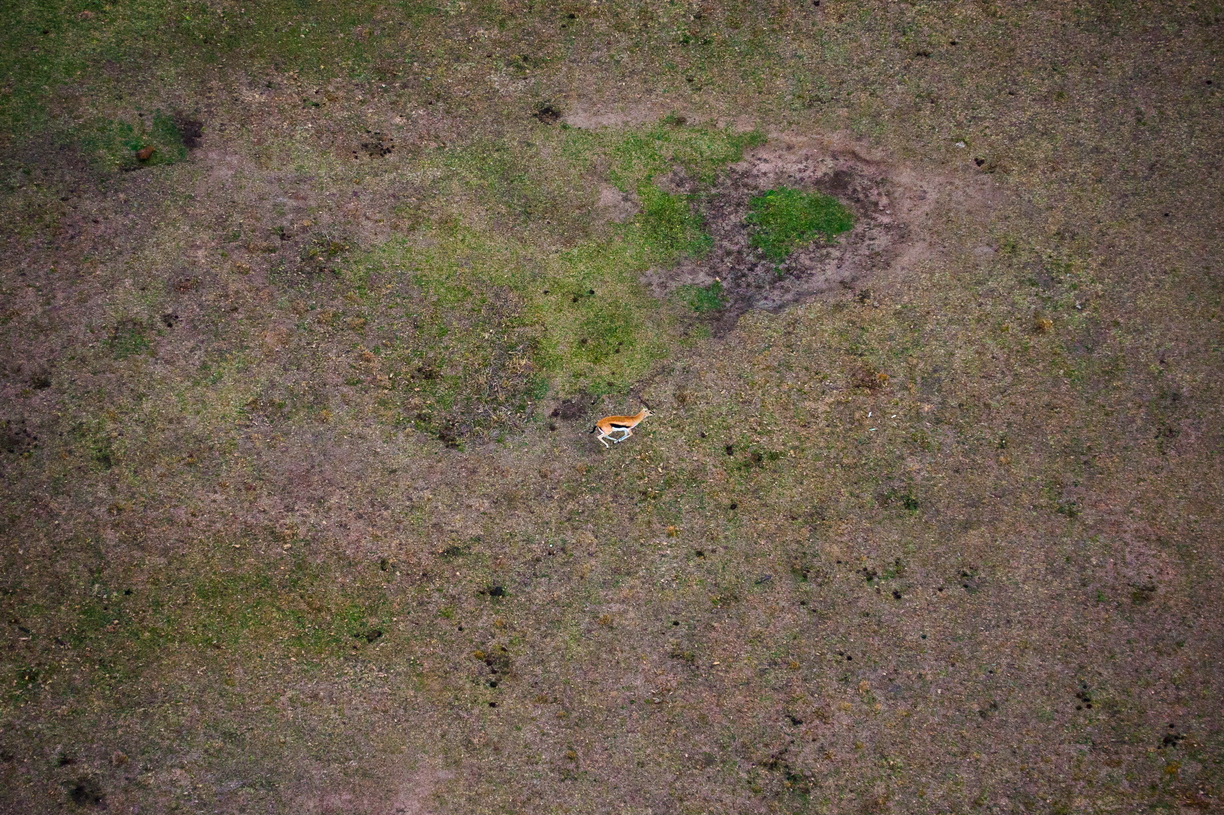
Whilst in the Maasai Mara we were lucky enough to take a hot air balloon ride over the plains at dawn to witness the wildlife awakening and experience the blissfull silence.

Scientific name: Aepyceros melampusLocation: The Maasai Mara National Reserve, KenyaDescription: A dawn hot air balloon ride offered a unique perspective on smaller African wildlife. Here I captured a male Impala, running across the grasslands. Hanging as far out of the balloon as I could, I tracked the Impala as it bounded over the grasslands. Notes: From a hot air balloon at sunrise

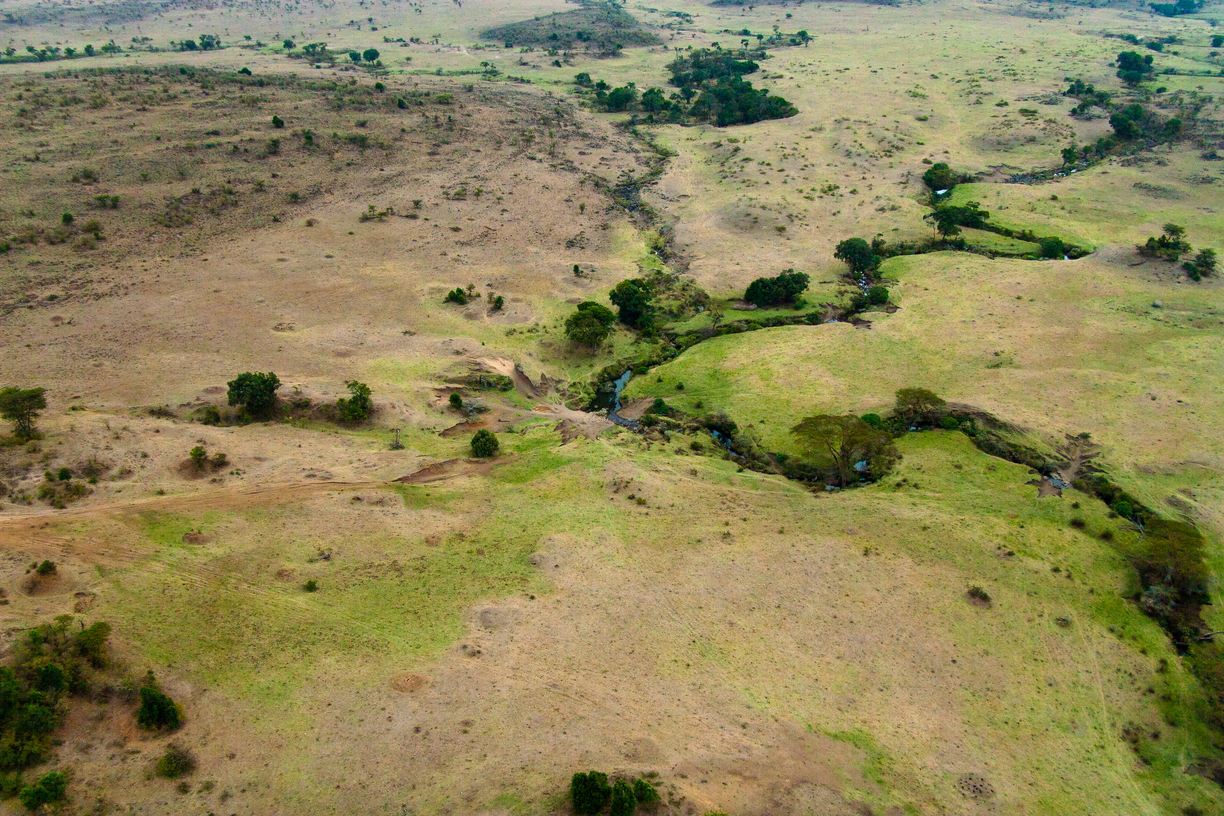
We witnessed the rolling, vast landscape, following meandering rivers and waving at locals in the villages beneath us.

Narrow rivers twist around the undulating landscape of the Maasai Mara, as seen from a hot air balloon in the skies above Kenya.

Wildlife was surprisingly camouflaged, take this hyena for example. Somewhat panicked by the presence of the balloon he ran  and ran, trying to out run us, occasionally stopping to glance skywards.

A Hyena viewed from the sky

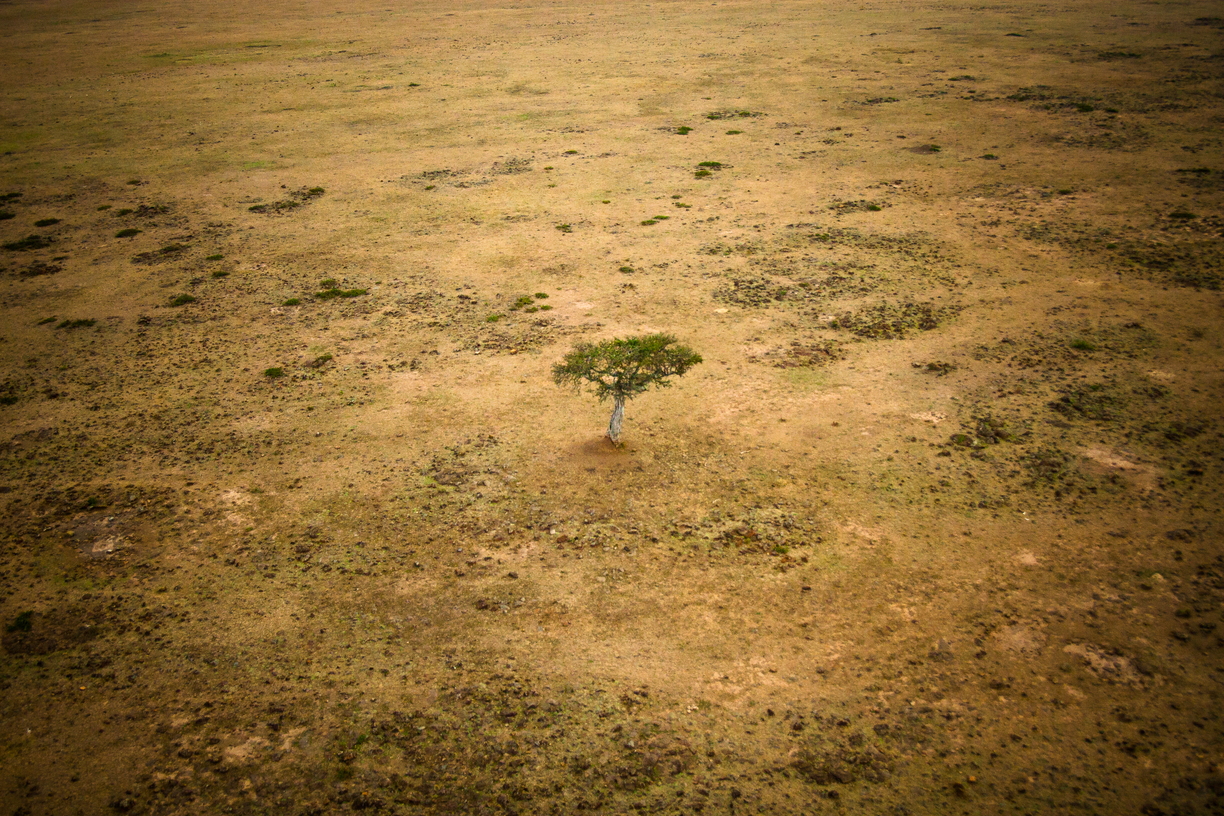
The bleakness of the landscape was very apparent, but hauntingly beautiful.

A lone acacia tree is rounded by empty scrubland in the Maasai Mara, Kenya.

This post is the 13th in the series “Memories of the Maasai Mara” and is an extract from the Taraji Blue book “Memories of the Maasai Mara” …

Ever since our first visit to Kenya in 2005 we’d fallen in love with the continent and had longed to return. For four years we’d played our Africa CDs daily and viewed our photos longingly, anticipating the day we would return. Back in 2009 we had our chance…

Each morning we bounded out of our beds and into the wilderness, eager and hopeful of what the day would bring. We owe much of our success to the fantastic guides and staff of the Kicheche Bush Camp, Mara Safari Club and David Sheldrick Wildlife Trust, who we cannot praise enough and to whom we long to return.

It is through our experiences and time in Kenya that we tell, and re-live, our memories of this amazing continent, and above all, of the Maasai Mara.

Happy Halloween

Happy Halloween all!

I thought I’d share some of the more gruesome TarajiBlue  shots I could find…but before I do, I want to salute the true guardian of all horror photography, my friend, the incredible Marian Hilditch. See, and buy her work here..http://www.redbubble.com/people/mmortah/collections/162898-halloween

Not that I can live up to her work…but here’s a few natural horror pictures from mother nature which might raise a few chills this evening… If you are squeamish or don’t like creepy crawlies… turn away now.

1. Halloween wouldn’t be Halloween without a few creepy crawlies… here’s a vampire spider who has mummified his prey, (a grasshopper), within his web and he is now going in for the kill – to drink the blood of the grasshopper. Gruesome.

A spider mummifies his prey and drinks the bloof

2. The photo below is of a cheetah. Blood drips from his mouth after killing and feasting on a wildebeest. Yum!

Blood drips from a cheetah's mouth after killing and feasting on a wildebeest

3. These hungry, hungry crocodiles feast on the entrails of wildebeest.
Crocodiles feast on wldebeest


More photos are available in our online TarajiBlue photo gallery.

Never mind ghosts and ghouls… this is real horror!

This is a re-share of a post that is so important to me. First posted on Sunday 21st October it suffered from a lack of an audience online so I welcome your support in helping me spread the word. I feel oh so strongly about this and implore you to help the bile bears of China…

This year’s Wild Photos event was, as ever, an inspiration. The most shocking lesson learned came from the power of photojournalism and in my opinion, no one does this better than Britta Jaschinski, whose images of China’s captive performing animals living  in appalling condition’s in zoos and parks were shocking, horrific and sickening.Her portrayal of the bile bears of China gave her a standing ovation.

She documented the practice of farming bears in crush cages (no bigger than a small coffin) for their bile which is used in Chinese medicine in the belief that the spirit of the bear will pass into the human through the consumption of this bile. A metal ‘door’ is strapped to the bear’s stomach and a rudimentary metal pipe is pushed straight into the gall bladder of the bear to harvest the bile. The bears live like this, in incredible pain, unable to move or protest because the ‘door’ has a huge metal spike that lodges itself under the neck of the bear.

Many of the bears have bald patches on their head and arms where they have repeatedly rubbed themselves against the cages in distress. Those bears who can move, do so to eat themselves in response to the pain and distress they feel.

Many of the bears are dwarfed, through the practice of keeping them in cages so small that they stunt growth. Many of the bears have also had their paws and /or claws removed too, as this is a delicacy in China.

There was not a dry eye in the house by the time Britta finished. I still cannot recall the presentation without crying and barely slept a wink last night. This is an horrific practice that many of us are blind too.

The pictures are not easy viewing, and this is not easy reading, but I implore you to look at at a selection of the images  “Made in China” now available on Britta’s website http://www.brittaphotography.com/projects.php

Her images also document the practice of performing animals in China, where ligers, tigers and lions have had heir claws and teeth removed and are beaten until they learn stupid tricks.

Elephants are beaten until they sit on chairs, stand on their hind legs or do handstands – all tricks that cause unimaginable pain.

Bears and monkeys are forced to ride bikes and tightrope walk. If they perform correctly this is the only time they receive a morsel of food. All other times, they live in cramped cages or horrifically sparse enclosures fed off junk food that visitors throw into the enclose.

It is not often that i am bold enough to directly ask people to share my posts, but I urge you to share this post to help educate people of these horrific practices. I am not sure what else I can do to help stop this. But I want to do something!

Don’t just take my word for it… further information on these horrific practices are also available on;

PLEASE JOIN ME AND DO YOUR BIT…please(!)

Please join Animals Asia in asking the Prime Minister of Vietnam to stop the unjust eviction of Animals Asia’s Vietnam Bear Rescue Centre in Tam Dao National Park.
The sanctuary is home to 104 bears that have been rescued from a life of torture on bear bile farms. A relocation would have devastating affects on the welfare of the bears – mentally and physically.  Sign this petition and tell the Prime Minister to honour his government’s original agreement with Animals Asia and allow the rescue centre to remain in Tam Dao National Park.

Danger Lurks (Memories of the Maasai Mara series)

Determined

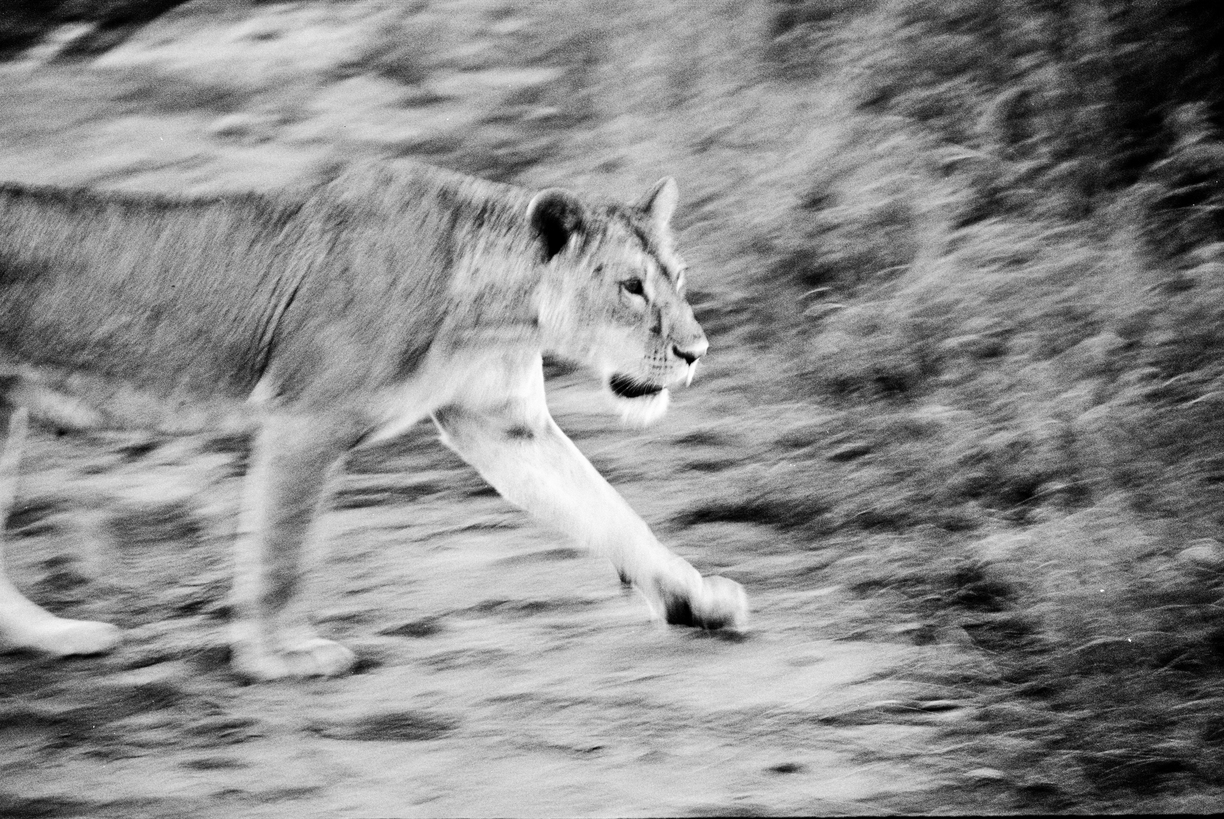
The male impala walks warily across the horizon. Unbeknown to him, he was leading his females directly into the path of a hungry lone lioness returning to her cubs after an unsuccessful night’s hunting.

Impala are unaware of the approaching lioness

We watched helplessly, but transfixed, from our camp in the dawn light. With every minute the light provided an additional glimpse – an additional insight into what lies ahead. Cameras at the ready we set off in the direction of the lion for a dawn walk to see what might become of the impala.

This post is the 12th in the series “Memories of the Maasai Mara” and is an extract from the Taraji Blue book “Memories of the Maasai Mara” …


Ever since our first visit to Kenya in 2005 we’d fallen in love with the continent and had longed to return. For four years we’d played our Africa CDs daily and viewed our photos longingly, anticipating the day we would return. Back in 2009 we had our chance…

Each morning we bounded out of our beds and into the wilderness, eager and hopeful of what the day would bring. We owe much of our success to the fantastic guides and staff of the Kicheche Bush Camp, Mara Safari Club and David Sheldrick Wildlife Trust, who we cannot praise enough and to whom we long to return.

It is through our experiences and time in Kenya that we tell, and re-live, our memories of this amazing continent, and above all, of the Maasai Mara.

The More Eyes the Better (Memories of the Maasai Mara Series)

Flip Flop

The more pairs of eyes and ears you have, the better the chance you have of seeing another day.

Zebras communicate with each other with high pitched barks and whinnying. A zebra’s ears signify its mood. When a zebra is in a calm, tense or friendly mood, its ears stand erect. When it is frightened, its ears are pushed forward. When angry, the ears are pulled backward. When surveying an area for predators, zebras will stand in an alert posture; with ears erect, head held high, and staring. When tense they will also snort. When a predator is spotted or sensed, a zebra will bark (or bray) loudly.

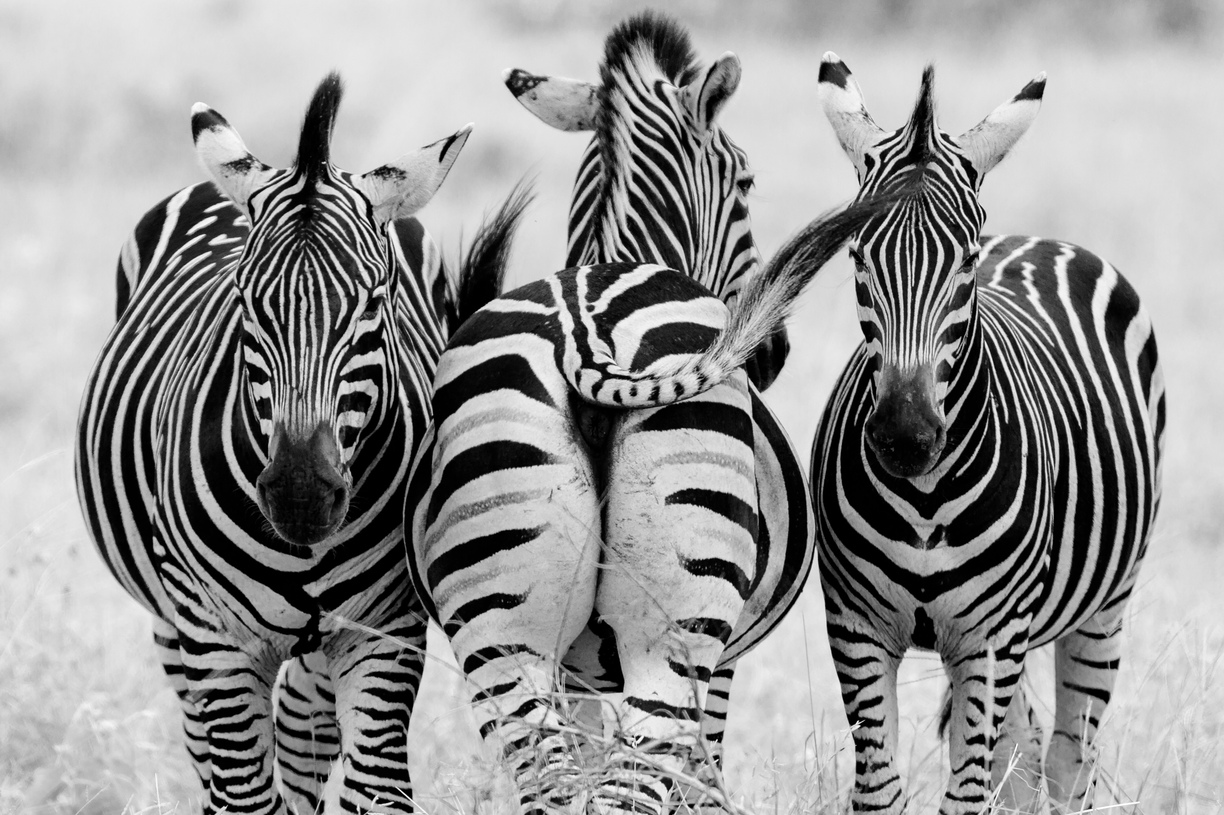
Zebras ‘top and tail’ each other as they sleep standing up during the day.  This allows 360 degree viewing of any potential predators. One zebra will quite literally scratch the back of the other to share the burden of the observation.

Two zebras stand side by side
This post is the 12th in the series “Memories of the Maasai Mara” and is an extract from the Taraji Blue book “Memories of the Maasai Mara” …


Ever since our first visit to Kenya in 2005 we’d fallen in love with the continent and had longed to return. For four years we’d played our Africa CDs daily and viewed our photos longingly, anticipating the day we would return. Back in 2009 we had our chance…

Each morning we bounded out of our beds and into the wilderness, eager and hopeful of what the day would bring. We owe much of our success to the fantastic guides and staff of the Kicheche Bush Camp, Mara Safari Club and David Sheldrick Wildlife Trust, who we cannot praise enough and to whom we long to return.

It is through our experiences and time in Kenya that we tell, and re-live, our memories of this amazing continent, and above all, of the Maasai Mara.

An Alternative Angle

The trouble with wildlife photography / photography in general is that it’s very hard to find a new angle on things. A lot has already been done and explored – so you are constantly challenged to look at things differently, to find a different angle, an alternative perspective on subjects.

Most of the time I take photos that I enjoy taking – not being a professional photographer I have the luxury of time and being selfish, photographing what I want and when I want. However, every now and then I force myself to try new things, to think outside the box and try a fresh take on something.

Whilst on a macro photography trip to the grounds of York University I lost patience with an especially lazy but camera shy bee who evaded every opportunity I had to take a close up of him. He was so stunningly beautiful – clear, glossy eyes, a fuzz free yellow and black ‘coat’ and a slow amble which would have been ideal for macro photography. But every time I got close he’d turn and show me his bottom. I tried everything, feigning no interest, hiding behind trees, lying on the floor to try and photograph him from below – but he saw through everything 🙁  After a frustrating hour, inspiration struck and  I realised how I can turn this to my advantage – why not capture the character of the bee as a shy character, as one reluctant to be photographed. That’s when I caught this shot below.

Whilst it is not what I originally set out to capture, I do like it. I think the glimpse of the bee through the thistle provides a rare view of this insect – one I have not seen before. The contrast of the sharpness of the bee’s eyes and fur against the bokeh of the thistle and background serves to possibly provide more of an insightful focus on the subject than if they’d been full frame. I swear you can almost see a smile on the bee’s face too.

A bee hides behind a thistle

Let me know what you think… I welcome feedback on the new approaches I try.

Further macro photography is available in the TarajiBlue photo gallery.

Safety In Numbers (Memories from the Maasai Mara series)

An elephant herd

Elephant herds are capable of moving silently across the African plains. Travelling in a large family group comprised largely of females and young bull elephants, this herd sought water and opportunities to graze.

The youngsters in the group travelled close to their mothers and sisters, using this as an opportunity to learn to control their trunk by mimicking the action of their elders.

Once they’d found a spot to graze and relax we did likewise and spent a very pleasant morning breakfasting with the herd.


Elephants communicate with a spoken language that they need to learn from other elephants, and with body language that is instinctive at birth. Being so close to these gentle giants you can often hear their rumblings as they communicate to one another as they graze and travel.

As they move silently past you, your respect naturally turns to fear. Providing you remain totally silent and still, they’ll not harm you, or even glance at you, but on the rare occasion that you find yourself accidentally invading their space there’s no mistaking their trumpet calls – often used as a sign of distress or as a show of strength. The noise is unmistakable and terrifying. It’ll make every hair on your body stand on end as you brace yourself for the charge.


When observing elephants at length you can also begin to obtain insight about their behaviour. Here (below), the mother’s ears are spread to the side in a show of strength. Comparatively, the young calf’s ears are flush to its body, a sign that the calf is relaxed in our presence, despite its mother’s concerns. The smile on the young calf’s face needs no translation: it is enjoying and learning from its afternoon stroll, safe in the knowledge that the herd will protect it.

A mother elephant and calf

This post is the 11th in the series “Memories of the Maasai Mara” and is an extract from the Taraji Blue book “Memories of the Maasai Mara” …

Ever since our first visit to Kenya in 2005 we’d fallen in love with the continent and had longed to return. For four years we’d played our Africa CDs daily and viewed our photos longingly, anticipating the day we would return. Back in 2009 we had our chance…

Each morning we bounded out of our beds and into the wilderness, eager and hopeful of what the day would bring. We owe much of our success to the fantastic guides and staff of the Kicheche Bush Camp, Mara Safari Club and David Sheldrick Wildlife Trust, who we cannot praise enough and to whom we long to return.

It is through our experiences and time in Kenya that we tell, and re-live, our memories of this amazing continent, and above all, of the Maasai Mara.

A Lesson Learned (Memories of the Maasai Mara series)

A mother deer and fawn

Becoming ever more startled by the presence of our vehicle, the lone baby started to whine and ran sporadically across the plains.

After an anxious few minutes the child was reunited with its mother. It was a stark lesson in life not to wander too far, especially within the wide open plains where predators prowl in the cool, late afternoon light.

Anxious to ensure the young gazelle had not come to any harm, the mother immediately checked and comforted the baby before they bounded off across the plains in search of a place to conceal themselves and collect their breath.

This post is the 11th in the series “Memories of the Maasai Mara” and is an extract from the Taraji Blue book “Memories of the Maasai Mara” …Ever since our first visit to Kenya in 2005 we’d fallen in love with the continent and had longed to return. For four years we’d played our Africa CDs daily and viewed our photos longingly, anticipating the day we would return. Back in 2009 we had our chance…

Each morning we bounded out of our beds and into the wilderness, eager and hopeful of what the day would bring. We owe much of our success to the fantastic guides and staff of the Kicheche Bush Camp, Mara Safari Club and David Sheldrick Wildlife Trust, who we cannot praise enough and to whom we long to return.

It is through our experiences and time in Kenya that we tell, and re-live, our memories of this amazing continent, and above all, of the Maasai Mara.

Our ‘losing’ wild dog Veolia Environnement Photographer Of the Year photograph

Family

I put ‘losing’ in quotes because no submission, no photograph can be counted as a loss. These beautiful wild animals that roam the earth in playful groups, caring for each other and their families, protecting their own species, so animated and enjoyable to watch and so ignored by tourists seeking the ‘big five’ which basically do nothing all day.

I also say ‘losing’ because this triangular family shot was one of our submissions to the Veolia Environnement Wildlife Photographer of the Year competition and were rightly rejected in favour of (amongst 48,000 others!) Kim Wolhuter’s wonderfully graphic and metaphorical shot of species fragmentation visible at http://www.nhm.ac.uk/visit-us/whats-on/temporary-exhibitions/wpy/photo.do?photo=2813&category=45&group=3

It needs a bit of back story, and we were privileged to have Kim talk at #wildphotos in London this weekend – I dare say more than a few were in tears at his evocative story of tracking a group of wild dogs, finding them gradually become infected by rabies (likely from tame dogs near the perimeter), and have to put each dog down himself in order to protect the group. Inevitably, this continued until there was only one.

Imagine seeing a family dissolve until there was only one, and then poof, it’s gone.

Imagine seeing a species dissolve until there was only one, and then poof, it’s gone.

Simple things can be done. Vaccinate tame dogs against rabies. Allow enough free range of land to prevent reliance on single areas of food and water which may become risky.

I must be honest: when I went to Kruger last year for the first time since our honeymoon in 2002 (when we had an OK experience) my expectations were that I would perhaps see one or two lions, or leopard; elephant I dearly hoped would be populous (and they were), but two species I knew would be unlikely: rhino and wild dog. Yet we saw all of these species, and many of each, and on the last day were totally surrounded by wild dog on the banks of the road for over an hour, relaxing, playing with each other, ripping an antelope apart (it’s food, remember), and chasing eagles up to the horizon. An incredible privilege.

Imagine seeing a species dissolve until there was only one, and then poof, it’s gone.

Wild dogs are endangered on the IUCN Red List – they estimate *6,000* remaining. Estimates will vary, but we saw 20 around our vehicle in a small area of Kruger. Statistically, that means roughly 299 other packs scattered around Africa – and Africa is big, you know? We could be wrong about our monitoring, but I’m not happy waiting.

There are things you can do:

Donate to African Wildlife Conservation Fund – http://www.africanwildlifeconservationfund.org/

Learn about wild dogs Neil Aldridge’s Underdogs book which includes a donation to African Wildlife Conservation Fund – http://www.conservationphotojournalism.com/awcf.html

Na’ankuse, a group which includes a wildlife sanctuary – http://www.naankuse.com/

Donate to the Botswana Predator Conservation Trust – http://www.bpctrust.org/wild-dog-conservation.asp

Donate to the Endangered Wildlife Trust in SA – http://www.ewt.org.za/

I’m not kidding – in 5 years we will have a major mammalian extinction due to human encroachment. If all we have ready is an apology then we are already on the way to disaster.

The Bile Bears of China – please help me raise awareness

This year’s Wild Photos event was, as ever, an inspiration. The most shocking lesson learned came from the power of photojournalism and in my opinion, no one does this better than Britta Jaschinski, whose images of China’s captive performing animals living  in appalling condition’s in zoos and parks were shocking, horrific and sickening.Her portrayal of the bile bears of China gave her a standing ovation.

She documented the practice of farming bears in crush cages (no bigger than a small coffin) for their bile which is used in Chinese medicine in the belief that the spirit of the bear will pass into the human through the consumption of this bile. A metal ‘door’ is strapped to the bear’s stomach and a rudimentary metal pipe is pushed straight into the gall bladder of the bear to harvest the bile. The bears live like this, in incredible pain, unable to move or protest because the ‘door’ has a huge metal spike that lodges itself under the neck of the bear.

Many of the bears have bald patches on their head and arms where they have repeatedly rubbed themselves against the cages in distress. Those bears who can move, do so to eat themselves in response to the pain and distress they feel.

Many of the bears are dwarfed, through the practice of keeping them in cages so small that they stunt growth. Many of the bears have also had their paws and /or claws removed too, as this is a delicacy in China.

There was not a dry eye in the house by the time Britta finished. I still cannot recall the presentation without crying and barely slept a wink last night. This is an horrific practice that many of us are blind too.

The pictures are not easy viewing, and this is not easy reading, but I implore you to look at at a selection of the images  “Made in China” now available on Britta’s website http://www.brittaphotography.com/projects.php

Her images also document the practice of performing animals in China, where ligers, tigers and lions have had heir claws and teeth removed and are beaten until they learn stupid tricks.

Elephants are beaten until they sit on chairs, stand on their hind legs or do handstands – all tricks that cause unimaginable pain.

Bears and monkeys are forced to ride bikes and tightrope walk. If they perform correctly this is the only time they receive a morsel of food. All other times, they live in cramped cages or horrifically sparse enclosures fed off junk food that visitors throw into the enclose.

It is not often that i am bold enough to directly ask people to share my posts, but I urge you to share this post to help educate people of these horrific practices. I am not sure what else I can do to help stop this. But I want to do something!

Don’t just take my word for it… further information on these horrific practices are also available on;