
The hyena who thinks he’s batman!

The hyena who thinks he’s batman!

The long weekend is upon us! Have a great Easter weekend everyone.
🙂
If you are interested in wildlife conservation then here a few of my favourite books and websites to get lost in over the long Easter weekend…
Books I recommend:
An absolutely incredible book which had me laughing, gasping and crying in equal measure. It charts the highs and lows of life as a safari ranger, but is most harrowing and powerful when discussing the safari group that was brutally attached and murdered under his care in Uganda. Quite how he managed to pick himself up and carry on what he does after that experiences I don’t know. Just reliving the book whilst writing this review brings tears to my eyes and causes goosebumps on my arms.
A must read. I cannot recommend highlight enough. he’s an incredible man and an incredible author. If I could give it 6 stars I would!
Further reviews are available on Goodreads
2. The Wilderness Family by Kobie Kruger
This is one of my favourite books of all time. I have read it several times.
It evokes the spirit,passion and unpredictability of south africa.
It’s written by a game ranger’s wife and charters her life as she adopts various wild animals, learns to live in her husband’s shadow and gets used to bringing up her children in life’s most amazing environment. She’s a heroine like no other. I defy you to read this book and not want to emigrate to Africa.
Further reviews are available on Goodreads.
3. A Zoo in My Luggage by Gerald Durell
It takes a few chapters to warm up, but after that it’s gripping. I read it all in one afternoon. It’s not for those who are used to fiction or controllable life tales, but for anyone who is remotely interested in wildlife and conservation it’s a must read. It charts how zoo used to be populated – Gerald travels to a host of wonderful places and quite literally collects animals along the way. Shocking but a very interesting read – this is how life used to be.
Further reviews are available on Goodreads.
4. The Elephant Whisperer by Lawrence Anthony
This is a heartbreaking and simultaneously heart warming book. It’s written by one of the world’s greatest conservationists. It tells the tale of how he habituates a heard of elephants on his game reserve and his constant battle to protect them from poachers. I cannot recommend this book enough and will not say anything more for risk of spoilers.
Further reviews are available on Goodreads.
Websites I recommend:
Enjoy!
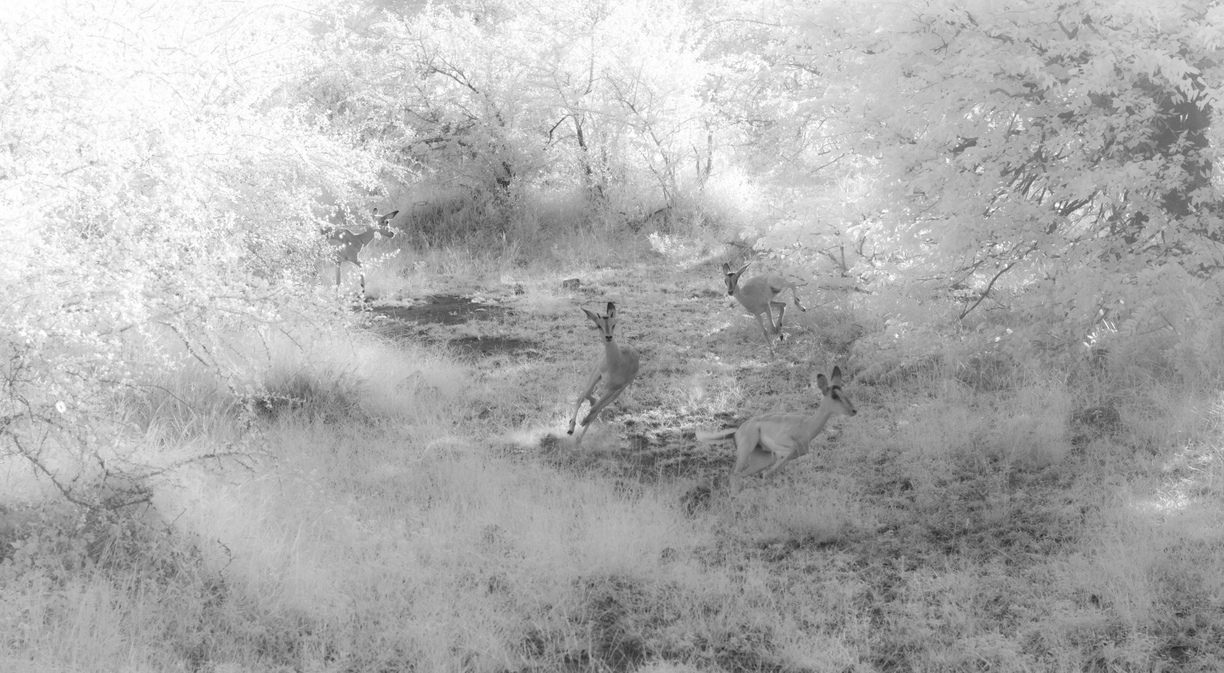
I have taken a new and dramatic turn in 2013 – I have (temporarily?) ended my love affair with sharp shots and I am instead an exploring a softer style of photography – one more akin to art. One which conveys the softness of nature, the gentle caress of her grass and the kiss of her sunlight on the trees. I must confess, it’s not an easy affair – to turn your back on convention and look for blur, motion and softness is a total mind change, but one which I started to explore on our recent trip to South Africa.
The car we hired was very high – very high indeed – so we often found ourselves looking down into the grass to see the wildlife. At first I though this would be a huge disadvantage, but after a few days I noted how, at dusk and dawn, the soft light would assist the camouflage of the animals (especially the antelope and cats) and that I was getting some very unusual shots shooting through the grass. The image above was a key turning point for me because it really conveys a sense of being there… it shows exactly how the animals conceal themselves and how they so naturally fit into their environment opposed to towering over it. Previously I had never thought about using the grass as a key component of the image but in infrared it takes on a new dimension and a softer texture.
The image above is my favorite and is now showcased in the Taraji Blue South Africa photo gallery, but below I have also shared some images that did not make the grade, but I still quite like because they explore this new photography style in a little more detail.
This is Mr Crotchety Pants, he lives around Lower Sabie in Kruger National Parks and he does not like me one bit! When I say he doesn’t like me – it’s not like he’s taken a slight dislike , he REALLY does not like me – to the extent that he almost ran us off the road. Here’s how I lived to tell the tale…
It was a lovely afternoon – the sun was beginning to lower and the temperature had become very pleasant. We set out from camp for a game drive and decided to take a nearby loop road to enjoy the last few hours of the day. Barely a few km down the road we saw a HUGE bull elephant standing beside this tree. Due to the low vegetation height we saw him in plenty time and parked a very respectful distance from him to see if he’d walk on. I was the driver that afternoon and really did not want to scare the mother-in-law too much by driving too close (she was in the front passenger seat beside me).
As the elephant started to amble toward the road it became evident that we’d need to wait this out – as there was no way I was going to try and squeeze past him to continue our drive – nor was I too keen on getting any closer. So I popped the engine into neutral and we waited patiently. After about ten minutes we’d started to form quite a queue of traffic behind us and I was worried that, on this single track road, the other drivers might start getting very impatient (unfortunately not many people are that respectful of elephants and will happily drive on quickly by). It was at this exact moment that I recalled how closely packed the row of cars behind us was that the elephant took an immediate dislike to me. He swung to face us head on. Standing in the middle of the dirt track, ears spread wide he raised his trunk towards us. The sense of annoyance was intense. With a very meaningful and not well intentioned gait he started to stomp towards us – throwing out his right front leg to the side as he approached. It became very clear that this was a very unhappy ellie. I had no chose but to start the engine up – something that rattled him even more and he sped up, coming closer every second. My heart was racing and adrenaline was pumping through my body – I threw the car into reverse gear but had no where to go as the car behind was right up my jacksie. I started to gesticulate to the driver behind – but he seemed oblivious – it was only when he saw the elephant through our front window that he realised that hulk of grey was not bad weather in the sky, but a very angry bull. Regardless, I decided that I could not afford to wait any longer – I was petrified. I started to reverse, figuring that the worst that could happen is that I forcefully push the guy behind me back and have a dented rear-end for the pleasure. Thankfully the driver behind got the message – and he too started to reverse into the guy behind him – it felt like the slowest chain reaction in the world.
After reversing a good distance back we thought that might placate the elephant. It didn’t. We had a glorious couple of minutes to settle our beating hearts before the whole scenario repeated itself… three more time! I desperately wanted to do a three point turn – but the road was so narrow there that I could not afford the time to turn – in seconds he’d be bearing down upon us again. It’s on this day that I became very accomplished at reversing!
After what felt like a very long time, and many grey hairs later, I was afforded a few minutes to turn the car around on a slightly wider piece of road – this allowed all the cars behind to get a good view of Mr Crotchety Pants and caused an immediate reaction – three cars turned on their heels and sped off, dust billowing behind them. I wasted no time in following suit. Mr Crotchety Pants became the undisputed king of the road!
Further trip reports from Africa are available here.
Photos from our trip to Kruger National Park are available in our Taraji Blue online photo gallery.


Regular followers of the Taraji Blue blog will know that I have recently become obsessed with infrared photography. For Christmas, Ali bought me a compact digital camera complete with infrared filter and I was immediately hooked. After first experimenting with the style of photography in Lapland over Christmas, I took to the streets of York every available weekend to hone my skills further. The wee compact was fun to use and gave some really great results – the only issue was that because the screw on infrared filter was so black you could not focus using it. You therefore had to unscrew the filter, focus and compose the shot, then replace the filter to take the image. Very fiddly and time consuming. Not an issue for landscape photography – but much more so when attempting to photograph wildlife or humans. Regardless, my main aim was to build up my skills with the equipment before the real test – South Africa in March 2013.
However, Alistair delighted me with a lovely birthday present just days before we traveled – a second hand Canon 550D which had been chipped to take only infrared stills and infrared HD video. Needless to say, it had not been out of my hands for the entire trip to South Africa. It is a fantastic wee camera and I really loved using it. I spent most of my time using a prime 50mm canon lens – a lens that I have never really used / appreciated before, however I found it really made me alter my perspective on Africa – I’d shift my focus from the Big 5 to the endless skies and textures of Africa. I’d take more notice of the light and the way it illuminates plants and trees. I’d spend time waiting for the right light tunnels though forests, or waiting for shadows to dance across the sands and waters of Kruger. It gave me an entirely new focus.
I’d love to be able to share some real tips with you on infrared photography – but to be honest, I am still learning and don’t want to show myself up. I thought I had got to grips with it quite quickly – but then after using it intensively in Africa I became more and more attuned to the subtle differences in light and texture that would result when you altered your focus from landscape to sky, or from light to dark subjects, but the results were not consistent and I have been unable to draw firm conclusions. The time of day also had a huge impact – I expected the raw midday sun to yield the most dramatic results, but instead I found myself drawn to the light at dusk and on overcast days when the sky would be covered in thousands of tiny clouds of cotton wool.
Twhree wee tips I can, however, offer is to:
a) buy a pair of very tinted sunglasses. I used some reasonably cheap ones with a sepia type tint which illuminated the light in the clouds, sky and landscape in a similar way to infrared – offering me a glimpse of what shots might work before I even lifted the camera to my eye.
b) Turn the photo preview on your camera to monochrome (opposed to displaying the images in infrared) as this gives you a much better ‘feel’ for how the picture will turn out once post processed.
c) Use a small aperture. I used F18 a lot, as this enabled me to capture a huge amount of depth in the texture of the foreground as well as the endless cloud filled skies. It also allowed for many different variants of light to be captured in the image – illuminating plants, skies and the ground in unique ways.
Above is my favorite shot from Africa taken with my Canon 550 infrared camera. Further images are also available in the Taraji Blue infrared online photo gallery. I welcome any feedback on my images – and any tips – because, as I say, I am still learning and have a long way to go!
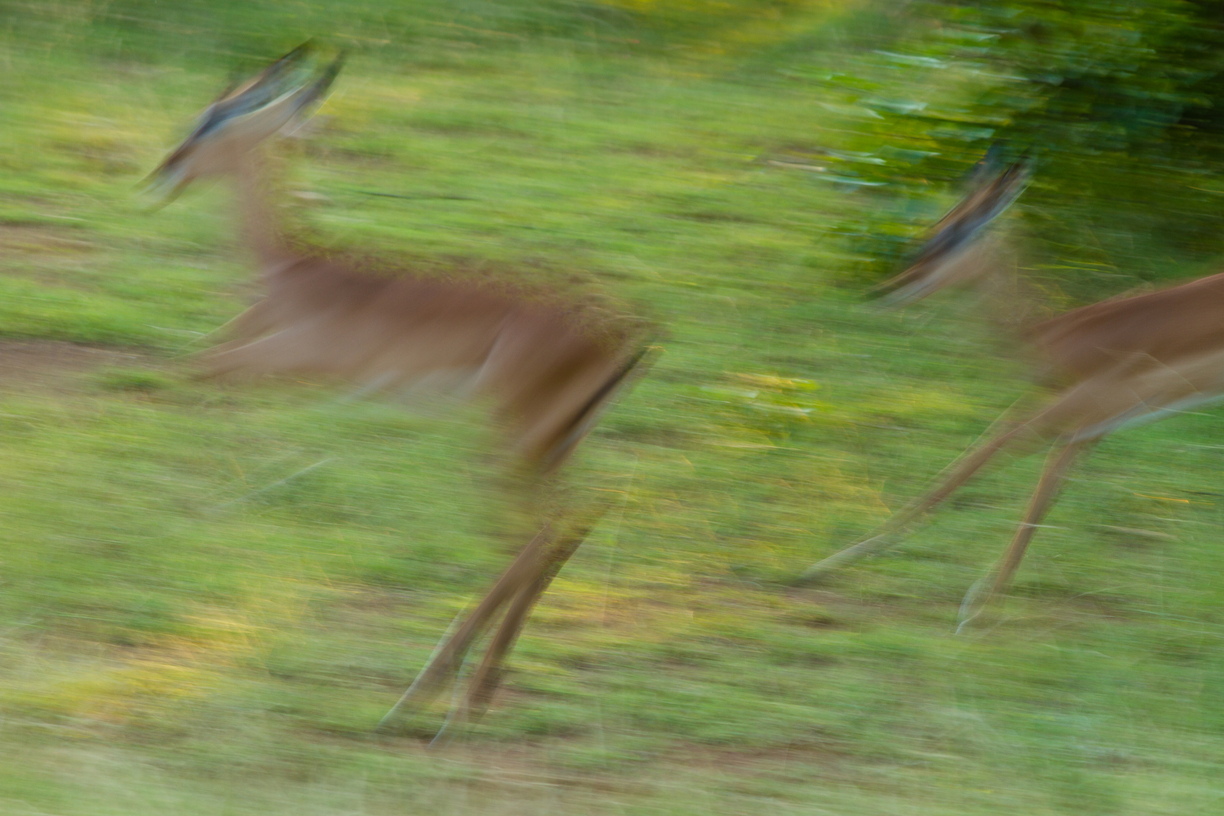
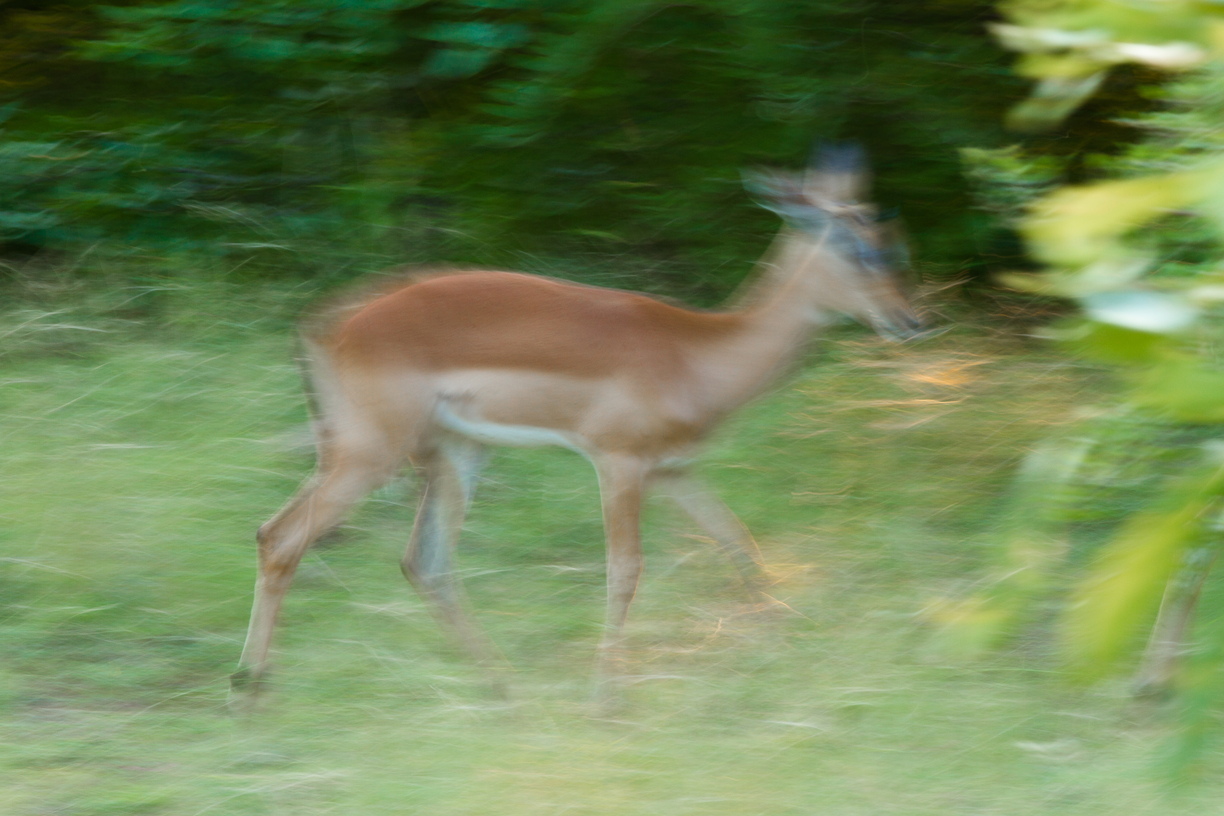
I’m chuffed that we seem to have some very different shots from our time in Kruger National Park this time round – and not just because of my shiny new infrared camera. Alistair has taken some stunning paint-like images of impala (above), capturing their movement and grace in a new light, and I had a great time capturing the creativity of mother nature as she created patterns and shapes in water (below).
I must admit, I don’t find it easy to reinterpret the usual photographic suspects – I am all too tempted to grab the zoom lens to capture the big cats, beautiful birds and graceful elephants in all their glory – but I was also aware that this was our third time in Kruger and our third time to Africa in just 14 months so we already had plenty of ‘stock shots’ and there was no point in duplicating these. The challenge was, therefore, to capture Kruger in a different light and shed another perspective on the incredible African landscape and wildlife that inhabits it.
Two of my favorite images have been showcased in this blog. More photos are available in our Taraji Blue South Africa gallery – and we will also be sharing them regularly on our facebook page http://www.facebook.com/tarajiblue
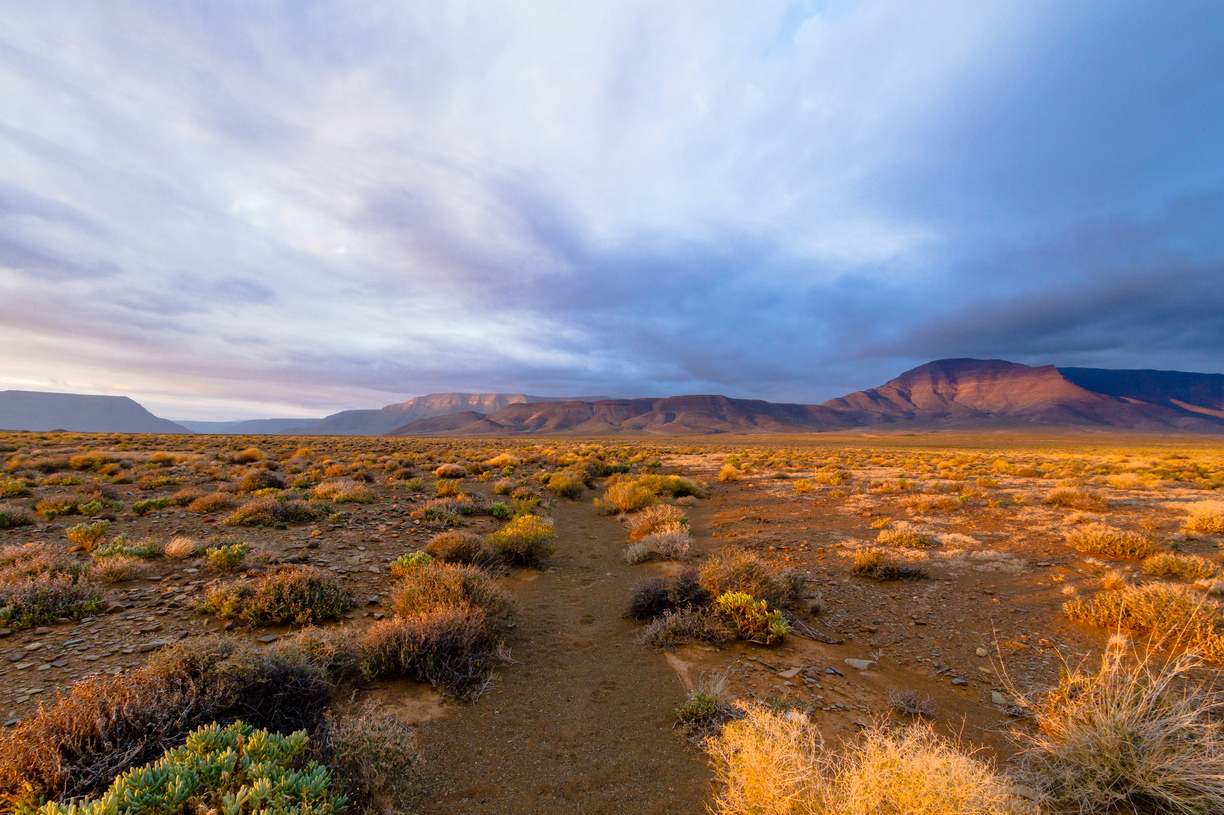
So focused, were we, on our wildlife photos that we totally omitted to upload some of our favourite landscape shots from when we went to the Western Cape of South Africa last June. Here’s one of my favourites (above), it was taken in Tankwa Karoo National Park, a small but stunning park in which you are free to roam on foot and by car as you please. We had the pleasure of staying in a stunning century old cottage with no electricity. Hot running water was provided only via a donkey boiler – for which you had to build and maintain a fire. The only bath provided was a rusted old bath placed to the side of the cottage in the grand open air, which you filled with boiling water from pans, and then enjoyed the most scenic bath possible (see below). It was, in one word, heaven.
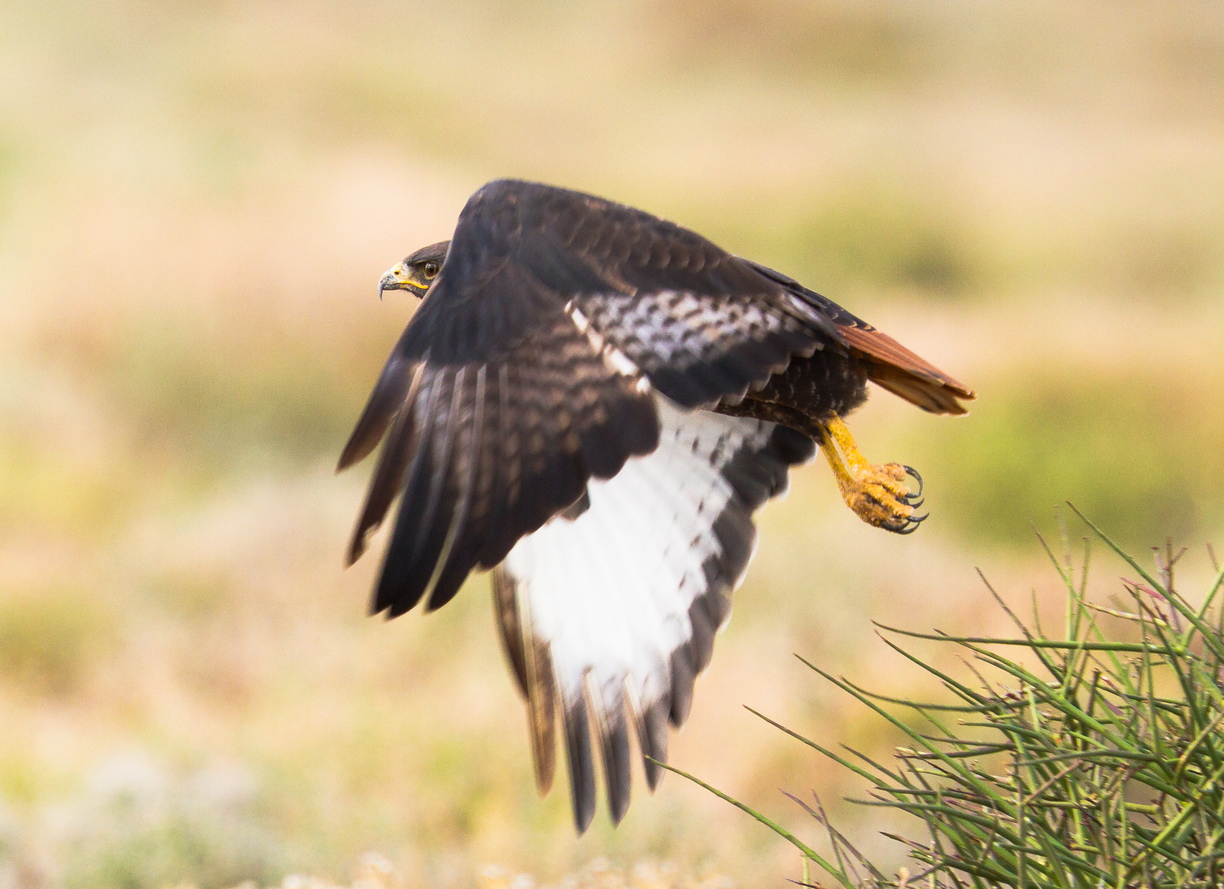
Tankwa is not a hugely popular park, and what little accommodation is available is very private and spread out, so for the three nights we stayed there we saw just 3 others cars and 2 motorbikes. Only one car drove near the cottage that entire time. However, we did have regular visitors in the form of eagles, antelope and small birds, all who appreciated the wee water hole in front of the cottage.
Tankwa was at it’s best just before sunset – the image taken above was captured about an hour before sunset during the ‘golden hour,’ during which time the sun kissed the mountains and fauna, bathing them in a stunning amber light which was amply reflected against a stunning blue sky. It was an absolute privilege to witness it each night. The image conveys the utter stillness and silence of the place. Even insects quieten at this time of the day. If I lived in South Africa this would be my bolthole – my place to escape too and be reminded of the wonder of the natural world.
Further images from Tankwa Karoo are available in the Taraji Blue South Africa photo gallery.
I would say:
1. Braai, Braai and Braai some more
2. Take yourself to the darkest part of the camp at night and lie on your back and marvel at the wonderful night sky (Take a star chart with you!)
3. Drink pineapple fanta (not available in the uk and very refreshing!)
4. Shun hairdryers and hairstyles for the entire holiday
5. Spend as much time as possible outside
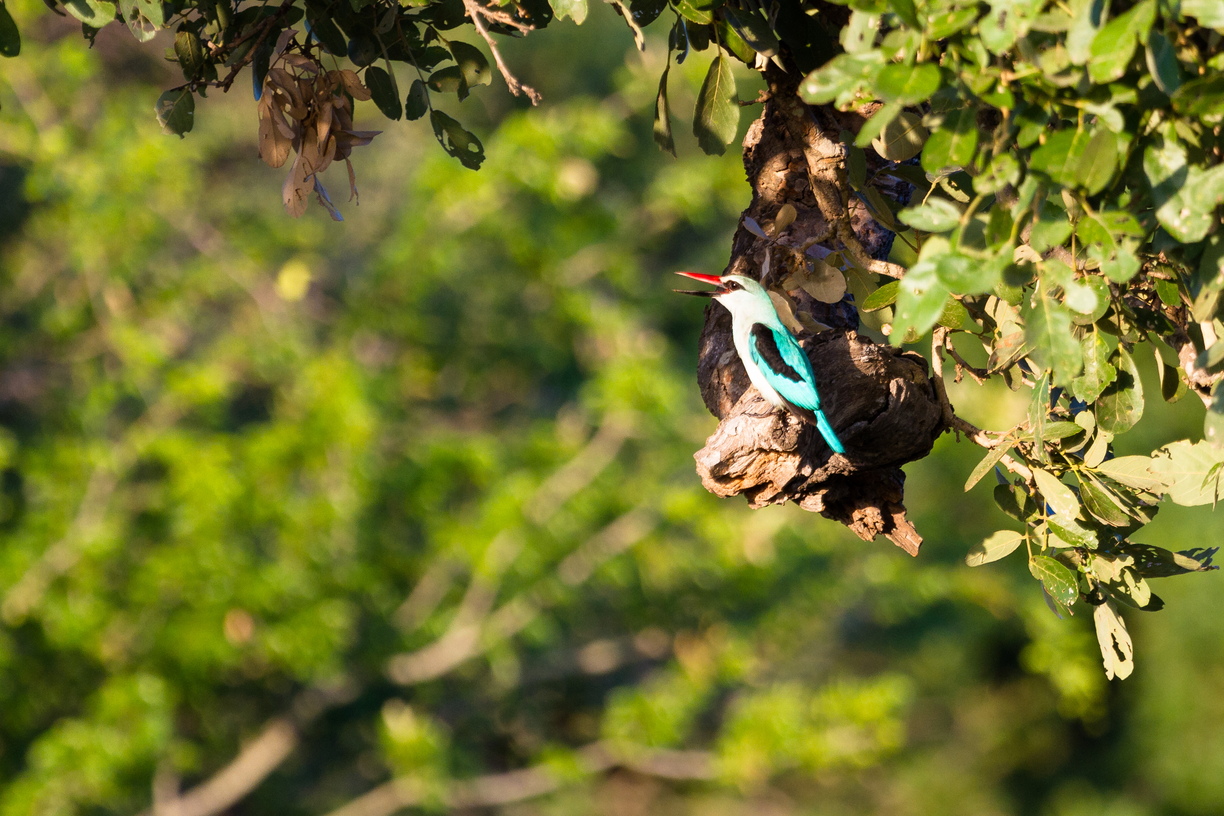
6. Allow your heart to soar everytime you hear the cry of the kingfisher
7. Appreciate the novelty of the go away birds and hornbills trying to steal your lunch
8. Go on a night drive
9. Go on a morning walk
10. Marvel at the beeeaters and rollers… stunning birds
11. Make friends with an elephant
12. Stay at Tamboti (in the tents)…in fact, stay in tents whenever you can
13. Marvel at the size and variety of the bugs during your stay in Bataleur
14. Picnic at Pafuri
15. Ruin the suspension of your (hired) car on the non tarred roads (by acident, of course)
16. Head out early at gate opening hours and make the most of the silent mornings and excellent game viewing
17. Drink an Amarula in the light of the camp fire at the end of an amazing day
18. Meet the locals and take heed of their advice
19. Slow down! It’s not a race and many animals die from speeding motorists
20. Avoid all contact with the ‘real world’ and make this alternate reality last as long as it can 🙂
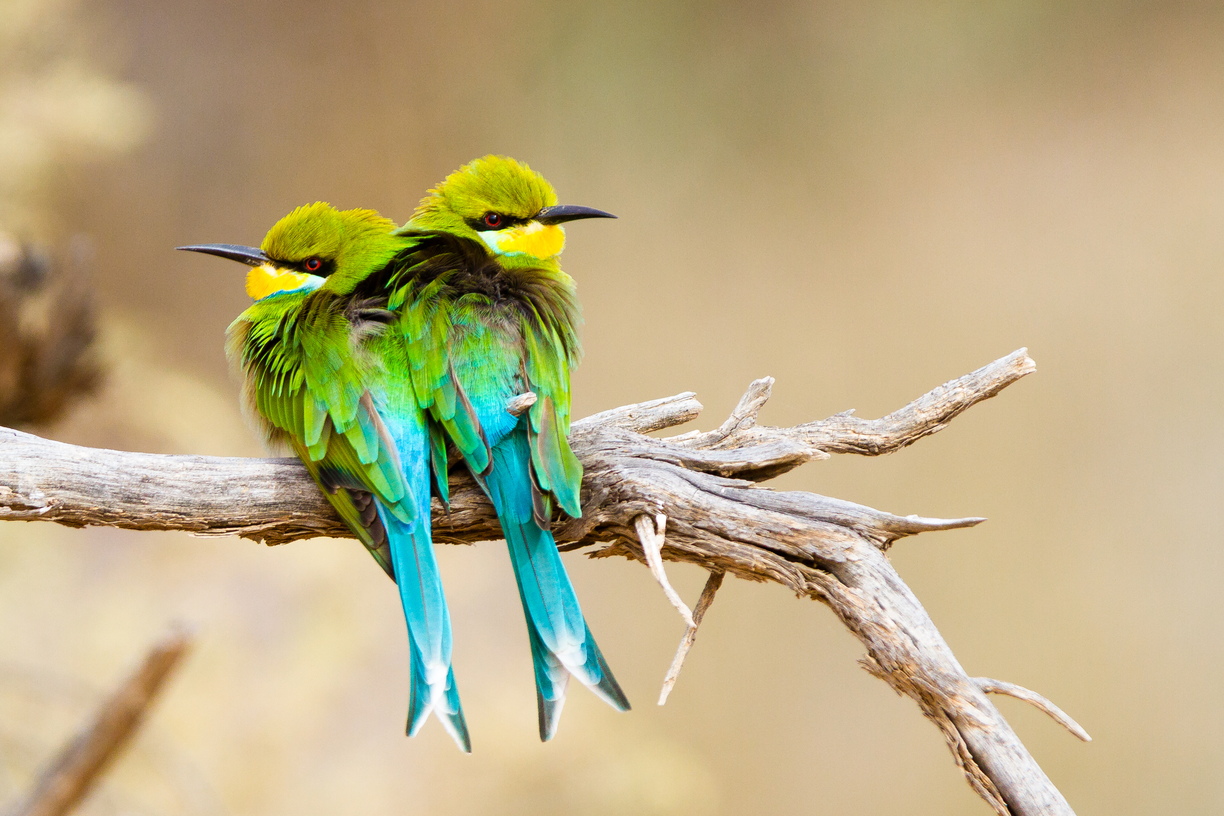
One of my favourites from our recent trip to Kgalagadi Transfrontier Park, two swallow-tailed bee eaters spent half an hour flitting around the trees surrounding our vehicle in the Kalahari. Unmissable streaks of colour about 20cm long, bee-eaters are a delight to watch and caused frequent emergency stops as the cry ‘just one more picture’ rang out on discovery of yet another species by the roadside.