Home

Bumping into an old friend

A blue whale surfaces in the Greenland Sea

Whilst visiting the Arctic in 2010 we were incredibly lucky to see this Blue Whale off the bow of the ship. It is a rare sighting – confirmed as such by the excited squeals and announcements by our crew on the ship’s tannoy. At that evening’s lecture we reflected on the sighting and the crew described it as being as rare as bumping into an old friend out here in the middle of the ocean.

The crew informed that the whale was likely 70 feet long. It was immense. We stayed with the whale for about 15 minutes, watching him blow and swim along until he submerged. This was on route to 80 degrees north – a milestone reached over dinner that night. It was an incredible day.

If you like this picture, please feel free to share using the social media links provided below.

This image is the last in this week’s “Arctic” theme here on Taraji Blue. But there are plenty more where this came from. For more of our images from the Arctic, please visit the Taraji Blue Arctic photo gallery.

You can also show your support for Taraji Blue by liking us on facebook at http://www.facebook.com/tarajiblue following us on twitter https://twitter.com/TarajiBlue and connecting with Alistair and myself on Google+

The world’s comfiest mountainside

Low lying vegetation explodes out of the slopes around Sydkap in eastern Greenland.

This is, without a doubt, the world’s most comfiest mountainside. It’s in Greenland and this shot was taken as I lay on the bed of red heather with the sun beating down on me, a gentle breeze ruffling my hair and a huge smile on my face.

I was alone.

I’d hiked up here from the shoreline with my camera with the aim of having a damn good sit down to enjoy the view. It was a stunning sight to behold. I found myself chatting away to myself, remarking on the immense icebergs dotting the horizon, saying goodbye to our ship as she moved offshore to anchor in the deeper waters. Even the presence of a crew member wielding a large rifle (in case of polar bears) did nothing to detract my mood or focus. I simply sat and stared. Bliss.

This image is the penultimate one in this week’s “Arctic” theme from Taraji Blue.  If you like this picture, please feel free to share using the social media links provided. We also welcome feedback and comments on our website.

For more images, visit the Taraji Blue photo gallery.

You can also show your support for Taraji Blue by liking us on facebook at http://www.facebook.com/tarajiblue following us on twitter https://twitter.com/TarajiBlue and connecting with Alistair and myself on Google+
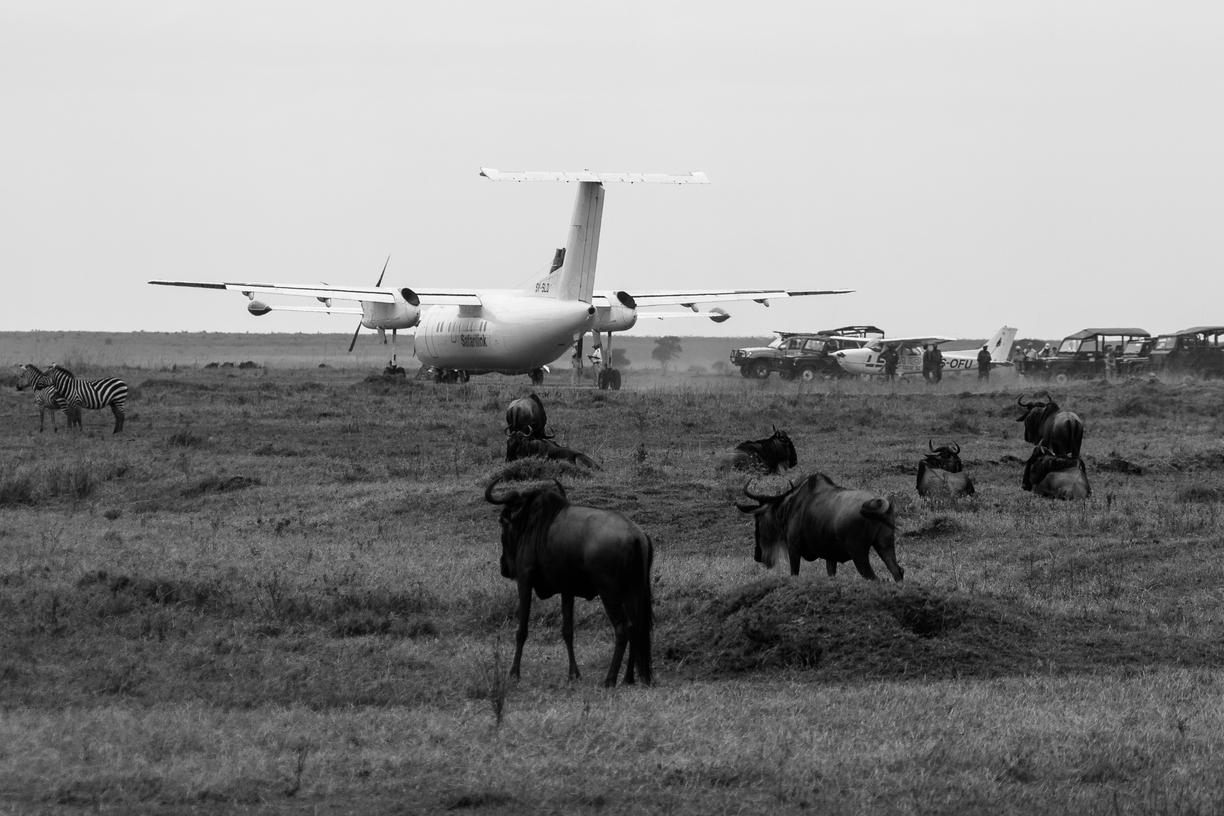
Tiny plants of the Arctic

Small plants stretch up to the fading winter Arctic light in Alpefjord, Greenland

When you are surrounded by the immense landscape of Arctic Greenland it can be really difficult to tear your eyes away from the rugged mountains, the endless calm ocean and the glistening icebergs to look at the floor – but it is worth it. At your feet you’ll find a surprising array of tiny plants that somehow manage to survive in the cold, rugged ground. Thankfully one crew member of MS Expedition was a keen botanist and he was always pointing out stunning wee plants that we were about to crush with our huge feet. It’s nice to take a different perspective on this incredible landscape and stop to appreciate the smaller things in life.

This blog post is a continuation of this week’s “Arctic” theme here on Taraji Blue. If yo’re enjoying following us, please do share our post and photos using the social media links provided.

For more photos of Arctic plant-life, visit the Taraji Blue Arctic photo gallery.

You can also show your support for Taraji Blue by liking us on facebook at http://www.facebook.com/tarajiblue following us on twitter https://twitter.com/TarajiBlue and connecting with Alistair and myself on Google+

Welcome to Longyearbyen

Reflected In Myself

This is Longyearbyen. It’s the largest settlement and the administrative centre of Svalbard, Norway. It’s most known to tourists as the gateway to the Arctic and home of the polar bear. It has a small town centre and a large abandoned mine sits high on the hills surrounding the town.

It is an incredible place to fly into. The flight from Tromso to Longyearbyen lasted about 2 hours and took us over the most incredible scenery. Glaciers and white topped mountains rolled on endlessly. Everywhere you looked there was jagged peaks and rolling valleys full of snow. It was the most beautiful flight ever.

Upon landing in Longyearbyen you are further reminded of the remoteness – stuffed polar bears great you in the baggage hall, and signs outside the stores in the town remind you to leave your guns at the entrance.

We spent one lovely night in Longyearbyen in the Basecamp hotel before boarding our ship for our Arctic Expedition.

This image continues the week’s “Arctic” theme here on Taraji Blue.

If you like this picture, please feel free to share using the social media links provided below.

For more Arctic images, visit the Taraji Blue Arctic photo gallery.

You can also show your support for Taraji Blue by liking us on facebook at http://www.facebook.com/tarajiblue following us on twitter https://twitter.com/TarajiBlue and connecting with Alistair and myself on Google+
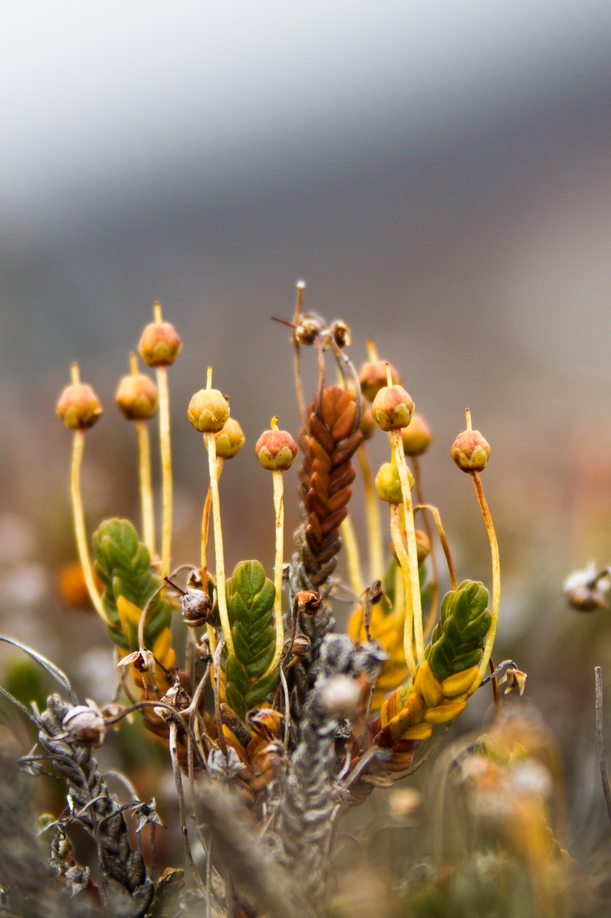
The enormity of Greenland is astounding

Exploring Greenland’s fjord systems, I stumbled upon this wild and immense landscape which immediately stole my heart. The singular pinnacle of rock nestled among blue skies, was framed by blankets of cloud, and dwarfed passing icebergs which paraded past. It was like nothing I’d ever seen before.Notes: From the deck of a ship

Greenland is immense in every way possible. The oceans, the fiords, the geology, the skies, the icebergs, the mountains – everything fills your vision and stretches on endlessly. Huge bergs are dwarfed by jagged mountain tops, large seabirds are daunted by the 200 foot high icebergs. Flocks of Kittiwakes are lost against the glistening white backdrop of the groaning glaciers, which carve huge chunks of ice into the waters as if they were pieces of dust. This is why Greenland takes a firm hold on your heart – it has to be seen to be believed.

This image continues this week’s theme of “The Arctic” here on Taraji Blue, when we share our favourite photos and experiences from the Arctic.

If you like this picture, please feel free to share using the social media links provided below.

For more photographs of Greenland, visit the Taraji Blue Arctic photo gallery.

You can also show your support for Taraji Blue by liking us on facebook at http://www.facebook.com/tarajiblue following us on twitter https://twitter.com/TarajiBlue and connecting with Alistair and myself on Google+
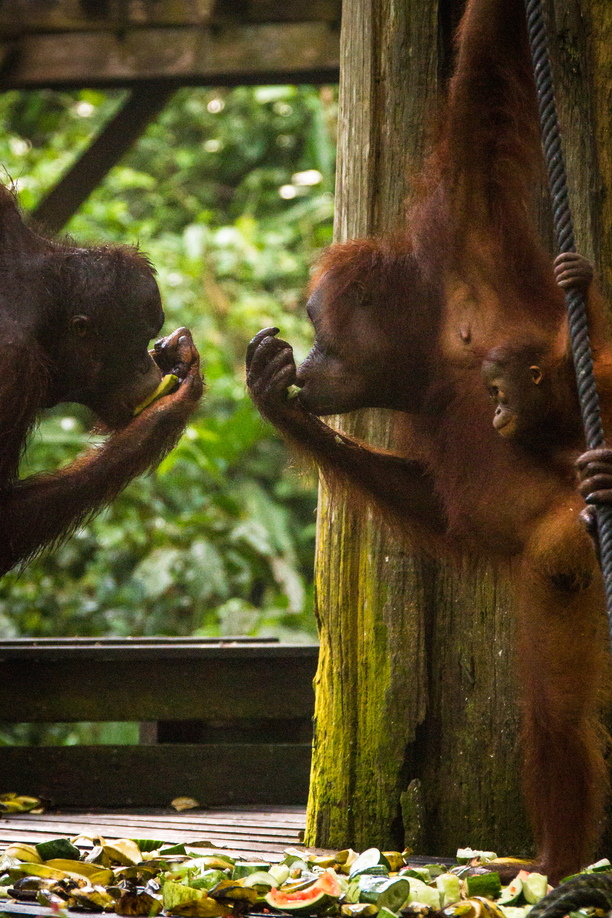
Sneaking up on Musk Ox

Believe it or not, it is possible for 50 people to sneak up on a Musk Ox – we proved it!

On our Arctic expedition, one of our landings provided us with the opportunity to take a guided walk on the shores of Svalbard. About 50 of us jumped at the chance to stretch our legs and explore the rugged mountain side. About 15 minutes into our walk the guide spotted a pair of Musk Ox high on the hillside. They were quite far away and we were all eager to get a little closer to obtain the prized photo of these hairy beasts. The guide set a few ground rules… not to step in front of him, to allow him to lead the pace and direction and the requirement for absolute silence.

It must have looked an incredibly odd sight to the folk watching us from the deck of the ship – 50 people huddled together into a small group and periodically crept up the mountainside. Crouching and hiding behind strategically placed boulders we, very slowly, progressed ever closer. Thankfully the Musk Ox seemed oblivious and started fighting between themselves – we stopped to observe this spectacle before continuing uphill on tip toe.

It took about 20 minutes to get ourselves into position and we then sat down to watch the show.

This post continues this week’s theme of the “The Arctic” here on the Taraji Blue website.

If you like this picture, please feel free to share using the social media links provided.

For more Arctic images, visit the Taraji Blue photo gallery.

You can also show your support for Taraji Blue by liking us on facebook at http://www.facebook.com/tarajiblue following us on twitter https://twitter.com/TarajiBlue and connecting with Alistair and myself on Google+
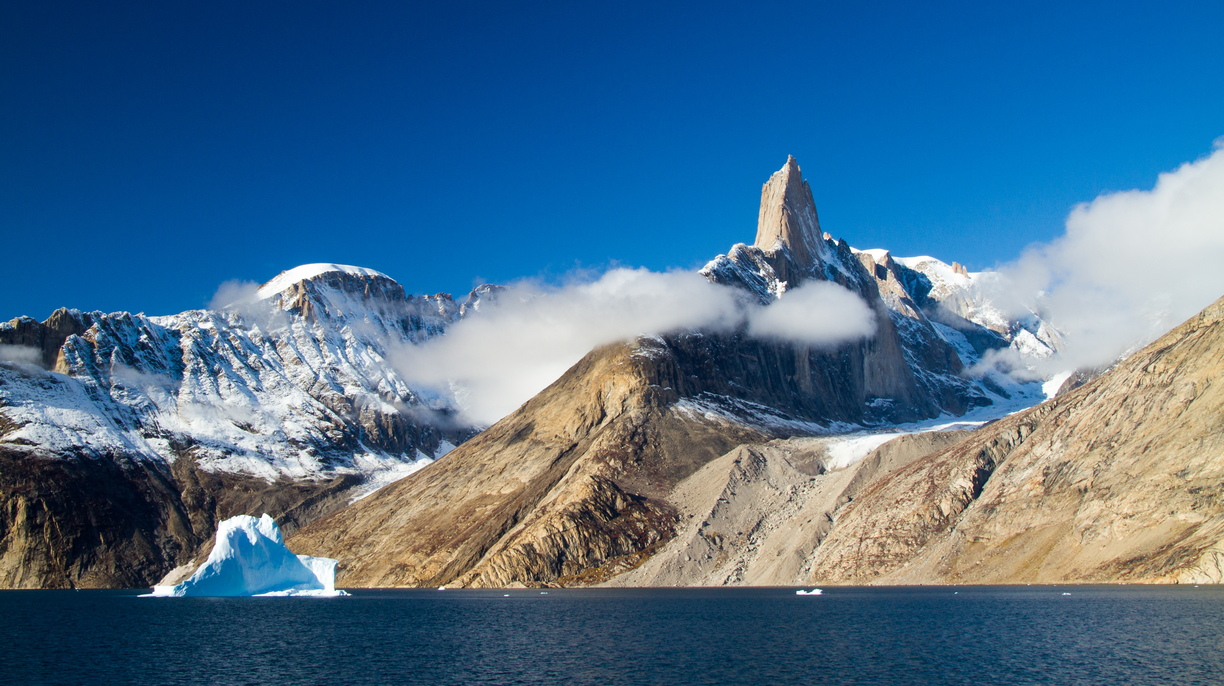
The Birth of an Iceberg

A gothic ice formation resembles a waterfall both above and in the descent, in St Jonsfjorden, Svalbard.

This week on Taraji Blue our theme is “The Arctic” We’ll be sharing our favourite pictures and experiences. I’ll kick off with “The birth of an iceberg”…

This is how bergs are born. Huge pieces of ice are calved off the face of the moving glacier. Groaning almost with the effort, a sharp gunshot like crack signals that the glacier is about to split. In a split second you could miss it. Pieces of ice 100 feet high glide almost silently into the water, casting a wave across the otherwise calm waters of the Arctic fiords. Birds scatter to escape falling shards of ice and patiently wait for the phenomenon to end. In time they will return to perch on the sides of the glacier  – a brave few will even choose to ride on the crest of the new iceberg as it wobbles its way across the water. It does not take long for calm to return.

If you like this picture, please feel free to share using the social media links provided below.

For more photos, please visit the Taraji Blue photo gallery.

You can also show your support for Taraji Blue by liking us on facebook at http://www.facebook.com/tarajiblue following us on twitter https://twitter.com/TarajiBlue and connecting with Alistair and myself on Google+

My photo of the week: a spotlight on Bryce Canyon, USA

Here at Taraji Blue photography we’ve been looking back over our photography archive and releasing some of the shots taken in years gone by (even in the years before we went digital!).
I wanted to share this image (above) because it was one taken with a Canon Powershot Pro back in 2004, well before we had got our hands on any digital SLRs. It’s a shot taken in Utah, West USA at Bryce Canyon. The odd but beautiful rock formations are called Hoodoos and are very similar to those known and loved at Cappadocia in Turkey.  Here’s the sciency bit (courtesy of Wikipedia)…

Hoodoos form typically form in areas where a thick layer of a relatively soft rock, such as mudstone, poorly cemented sandstone or tuff (consolidated volcanic ash), is covered by a thin layer of hard rock, such as well-cemented sandstone, limestone or basalt. In glaciated mountainous valleys the soft eroded material may be glacial till with the protective capstones being large boulders in the till. Over time, cracks in the resistant layer allow the much softer rock beneath to be eroded and washed away. Hoodoos are formed where a small cap of the resistant layer remains, and protects a cone of the underlying softer layer from erosion. Further erosion of the soft layer causes the cap to be undercut, eventually falling off, and the remaining cone is then quickly eroded.

Typically, most hoodoos are formed by two weathering processes that continuously work together in eroding the edges of a rock formation. The primary weathering force at Bryce Canyon is frost wedging. The hoodoos at Bryce Canyon experience over 200 freeze/thaw cycles each year. In the winter, melting snow, in the form of water, seeps into the cracks and then freezes at night. When water freezes it expands by almost 10%, pries open the cracks bit by bit, making them even wider, much like the way in which a pothole forms in a paved road.

In addition to frost wedging, rain also sculpts these hoodoos. In most places today, the rainwater is slightly acidic which allows the weak carbonic acid to slowly dissolve limestone grain by grain. It is this process that rounds the edges of hoodoos and gives them their lumpy and bulging profiles. Where internal mudstone and siltstone layers interrupt the limestone, you can expect the rock to be more resistant to the chemical weathering because of the comparative lack of limestone. Many of the more durable hoodoos are capped with a special kind of magnesium-rich limestone called dolomite. Dolomite, being fortified by the mineral magnesium, dissolves at a much slower rate, and consequently protects the weaker limestone underneath it. Rain is also the chief source of erosion (the actual removal of the debris). In the summer, monsoon type rainstorms travel through the Bryce Canyon region bringing short duration high intensity rain.

Here at Taraji Blue we’ve become quite interested in geology and over the past 4 years or so have been really taken by some of the incredible rock formations that we have seen. I have previously written a blog post which shares some of our favorite geology photos. The post is available here on the Taraji Blue blog archive.

You can show your support for Taraji Blue by liking us on facebook at http://www.facebook.com/tarajiblue following us on twitter https://twitter.com/TarajiBlue and connecting with Alistair and myself on Google+
Taraji Blue on Location… on safari

Well hello there

I thought I’d take you behind the scenes to give you feel for what it’s like on safari with Taraji Blue. The photos supplied here have not been modified. Instead, they aim to give you a feel for what it is like on safari.

Well, naturally we try and get up close and personal with the animals…but we also need to respect boundaries and consider the safety and comfort of the wildlife – and ourselves!

Getting you up close
A herd passes by
Too close?
Rhino crossing
Well Hello Mr Buff
A picnic spot

After a hard day’s wildlife spotting we find a nice spot for a picnic…

Just Chilling

When the heat of the day hits there is only one thing for it – a nice relax in a shady spot

Tyres are my favourite

In the late afternoon we will head out there again and see what we can see. We’re lucky to find these wee hyenas, which had taken quite a fancy to munching on the tyres of (thankfully) other cars. (not sure how I would explain that to our car rental company otherwise!)

At the end of the day...

And, of course, there is the obligatory sundowner at the end of the day, celebrating the sights we’ve seen in the shadow of the braai.

Photos courtesy of Helen and Stuart Hammond who travelled with us to South Africa, March 2013.

Mini beasts (not the for squeamish)

It seems that a lot of my posts recently have been about the big mammals and birds of Africa, so I wanted to share a post where we celebrate some of the mini beasts of the world too. If you are at all squeamish of creepy crawlies you might wish to look away now 🙂
I think the sexy wee fella in the top image is an Armoured Ground Cricket(?) He was the welcoming committee on our doormat each afternoon on our return to the Killiecrankie camp in Kgalagadi Transfrontier Park. I kind of grew to like him and I put great faith in him not to leap on my face as I lay down next to him to get this shot with my macro lens.
A freaky wee beastie

I think that the wee beastie in the photo (left) is a  wind scorpian. He’s a solifugae. We found him scuttling in our torchlight one night when wandering back to our chalet in Letaba, South Africa. He’s not the best looking beast I have seen – but he certainly gets points for originality.


The handsome chap (left) is a grasshopper, found lurking in a field of sunflowers in France. I instantly fell in love with his toothy grin. He was most obliging as a photography subject.


This quite terrifying looking (and large!) spider is not to be feared. It’s a golden orb-web spider and is not poisonous. We found it calming waiting in the centre of its web in Cape Town’s beautiful Kirstenbosch Gardens, backed by colourful ferns.  The webs these spiders weave are golden in colour – hence their name. It’s not uncommon to see many males on the web too – though they are much, much smaller then this lady.


Left wanting more?

If you are brave enough to delve further into the world of mini beasts, then there are many more up close and personal photographs of insects in the Taraji Blue macro photography gallery.